
Mount Rainier
Mount Rainier, also known by indigenous names such as Tahoma, is a towering stratovolcano in the Cascade Range of the Pacific Northwest. It is the highest peak in Washington State and the most topographically prominent mountain in the contiguous United States. Revered by numerous Indigenous peoples for millennia, its imposing presence has shaped local cultures and traditions, while its active volcanic nature poses significant risks to surrounding communities.
Key Facts
- ›Mount Rainier is an active stratovolcano located in Mount Rainier National Park, approximately 95 km south-southeast of Seattle.
- ›It is the highest mountain in Washington State and the most topographically prominent in the contiguous United States, reaching an elevation of 4,391 meters (14,406 ft).
- ›The mountain is considered one of the most dangerous volcanoes globally due to its high eruption probability and proximity to major urban areas.
- ›Mount Rainier is heavily glaciated, with 26 major glaciers and extensive snowfields, making it the most glaciated peak in the lower 48 states.
- ›Indigenous peoples have inhabited the area for thousands of years, with over 20 documented indigenous names for the mountain.
- ›The mountain is a Decade Volcano, recognized for its potential to cause significant loss of life and property.

Tahoma, XʷAq̓ʷ, TəQʷUbəʔ, Tacoma, Tacobet, TəX̣ʷúMa, TəQʷúMen, Tax̱úMa, Pooskaus, Mt. Regniere
Indigenous Spiritual Traditions
- Significant Spiritual and Cultural Importance To Numerous Indigenous Peoples of the Pacific Northwest.
- Its Imposing Presence Has Been A Landmark For Millennia, Shaping the Cultural Landscape of the Region.
- the Mountain's Various Indigenous Names Reflect Its Deep Historical and Spiritual Connection With Local Tribes.
About Mount Rainier
Mount Rainier, also known by indigenous names such as Tahoma, is a prominent stratovolcano located in the Cascade Range of the Pacific Northwest in the United States. Situated within Mount Rainier National Park, it stands as the highest peak in Washington State and holds the distinction of being the most topographically prominent mountain in the contiguous United States. Its majestic presence, reaching an elevation of 4,391 meters (14,406 ft), has been a focal point for Indigenous peoples for millennia, who have bestowed upon it numerous names reflecting its significance.
Geographical and Geological Setting
Geologically, Mount Rainier is an active stratovolcano composed of lava flows, debris flows, and pyroclastic ejecta. Its early volcanic deposits are estimated to be over 840,000 years old, with the present cone forming more than 500,000 years ago. The volcano is heavily eroded and features a substantial ice cap, with 26 major glaciers and extensive snowfields, making it the most glaciated peak in the lower 48 states. The summit is crowned by two volcanic craters, and geothermal heat keeps parts of the crater rims free of snow and ice, fostering the world's largest volcanic glacier cave network.
Cultural and Spiritual Significance
For thousands of years, the lands surrounding Mount Rainier have been inhabited by various Indigenous peoples, including the Nisqually, Cowlitz, Yakama, Puyallup, and Muckleshoot tribes. These groups have deep spiritual and cultural connections to the mountain, reflected in their diverse languages and traditions. Archaeological evidence indicates human use of the mountain dating back over 8,500 years, with sites suggesting seasonal hunting, gathering, and travel.
Modern Significance and Risks
Mount Rainier is recognized as one of the most dangerous volcanoes in the world due to its potential for eruption and its proximity to densely populated areas like Seattle and Tacoma. Its massive glaciers pose a significant risk of generating catastrophic lahars that could inundate river valleys. The mountain is designated as a Decade Volcano, highlighting its potential threat. Despite these risks, Mount Rainier is a popular destination for climbers, with hundreds of thousands attempting ascents over the decades, though mountaineering accidents have also occurred.
Naming History
The mountain's name has a complex history. While officially named Rainier in honor of Admiral Peter Rainier by George Vancouver, indigenous names like Tahoma and təqʷubəʔ have been preserved and advocated for. For a period, the name Tacoma was also widely used, reflecting local preference, though the United States Board on Geographic Names officially designated it as Rainier in 1890.
Source: Wikipedia ↗
Frequently Asked Questions
What is Mount Rainier's elevation?
The summit of Mount Rainier, known as Columbia Crest, has been measured at various heights due to glacial melt. Recent surveys indicate the highest point is a bare rock on the southwest crater rim at approximately 4,389 meters (14,399.6 ft) above sea level.
Is Mount Rainier an active volcano?
Yes, Mount Rainier is an active stratovolcano. While the most recent recorded volcanic activity was between 1820 and 1854, there have been numerous eyewitness reports of eruptive activity since then, and it is considered to have a high probability of eruption in the near future.
What are the primary indigenous names for Mount Rainier?
Indigenous peoples have many names for the mountain. For Lushootseed speakers, names include xʷaq̓ʷ (meaning 'sky wiper') and təqʷubəʔ (meaning 'snow-covered mountain'). Cowlitz speakers call it təx̣ʷúma or təqʷúmen, which Sahaptin speakers adopted as Tax̱úma.
What are the main dangers associated with Mount Rainier?
The primary danger is the potential for massive lahars (volcanic mudflows) due to the large amount of glacial ice. These lahars could threaten river valleys and populated areas, and the volcano is also listed as a Decade Volcano due to its potential for destructive eruptions.
How many people attempt to climb Mount Rainier each year?
Between 1950 and 2022, over 470,000 people attempted to climb Mount Rainier. However, mountaineering accidents have resulted in fatalities, with approximately 84 deaths recorded between 1947 and 2018.
Related Sacred Mountains

Mount Shasta
Mount Shasta is a potentially active stratovolcano located in Siskiyou County, California, at the southern end of the Cascade Range. It is the second-highest peak in the Cascades and the most voluminous stratovolcano in the Cascade Volcanic Arc, known for its significant geological history and cultural importance. The mountain is a focal point for various spiritual traditions and legends, attracting both climbers and those seeking spiritual experiences.
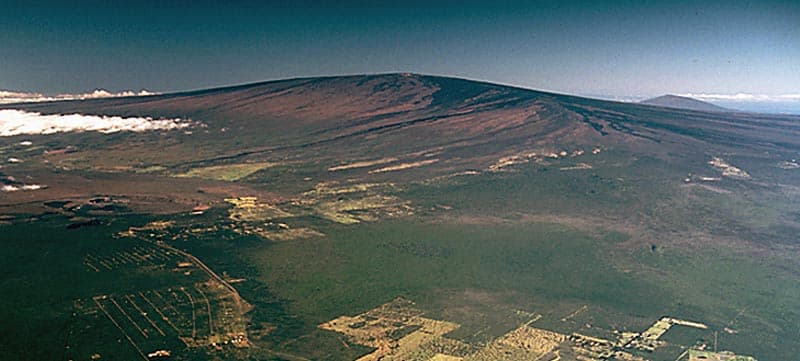
Mauna Loa
Mauna Loa, meaning 'Long Mountain' in Hawaiian, is one of the five volcanoes forming the Island of Hawaii and is recognized as Earth's largest active volcano by mass and volume. Ancient Hawaiians held deep spiritual connections to this massive shield volcano, admiring its sheer scale, though many of these traditions are less practiced today. Its geological history is marked by continuous eruptions for at least 700,000 years, driven by the Hawaii hotspot, and it poses significant hazards due to its potential to destroy populated areas.
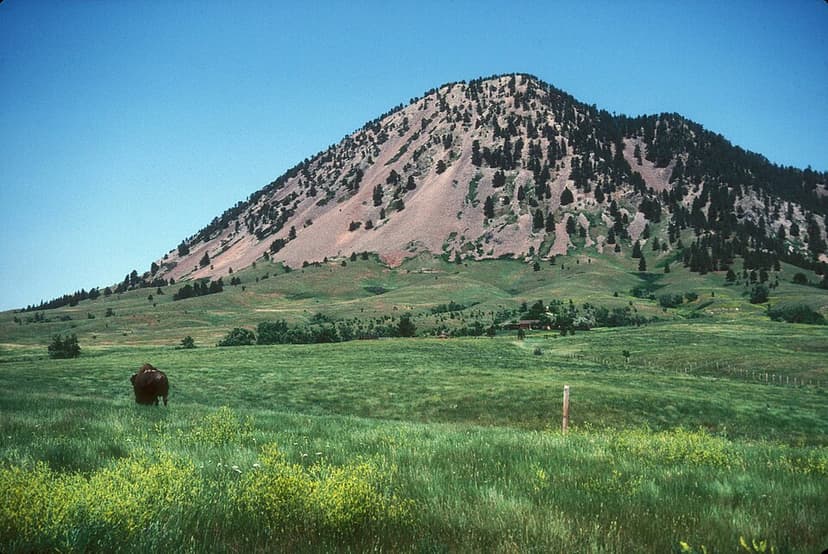
Bear Butte
Bear Butte, known to the Lakota as Matȟó Pahá and to the Cheyenne as Noahȧ-vose, is a significant geological laccolith and sacred site for Plains Indian tribes. It holds profound religious importance, particularly for the Cheyenne, who believe the Great Spirit imparted essential knowledge to the prophet Sweet Medicine here. The mountain is a place of prayer, meditation, and pilgrimage, where visitors leave offerings and participate in ceremonies.