
Mount Shasta
Mount Shasta is a potentially active stratovolcano located in Siskiyou County, California, at the southern end of the Cascade Range. It is the second-highest peak in the Cascades and the most voluminous stratovolcano in the Cascade Volcanic Arc, known for its significant geological history and cultural importance. The mountain is a focal point for various spiritual traditions and legends, attracting both climbers and those seeking spiritual experiences.
Key Facts
- ›Mount Shasta is a potentially active stratovolcano, the second-highest peak in the Cascade Range.
- ›It is the most voluminous stratovolcano in the Cascade Volcanic Arc, with an estimated volume of 85 cubic miles.
- ›The mountain features four overlapping dormant volcanic cones, including the main summit and the satellite cone of Shastina.
- ›Seven named glaciers are present on Mount Shasta, with Whitney Glacier being the longest and Hotlum Glacier the most voluminous in California.
- ›Mount Shasta has a history of significant volcanic eruptions, with the last major eruption occurring approximately 200 years ago.
- ›It is a popular destination for climbing and backcountry skiing, requiring summit passes and wilderness permits.

Waka-Nunee-Tuki-Wuki, úYtaahkoo, Jesus Maria, Rogers Peak
Native American Spirituality, Buddhism, New Age Beliefs
- Central To Legends of the Spirit of the Above-World, Skell, and His Conflict With Llao.
- Focal Point For Non-Native American Legends of A Hidden City of Advanced Beings From Lemuria.
- A Significant Landmark Along the Historic Siskiyou Trail, An Ancient Native American Trade and Travel Route.
- Has Inspired Poets, Authors, and Presidents, With Literary Works Referencing Its Beauty and Mystique.
- Native American Rituals Practiced By Groups From the Mccloud River Area.
- Visits To Spiritual Sites and Institutions Near the Mountain, Such As Shasta Abbey.
Skell, Llao, Elias Pearce, Harriette Eddy, Mary Campbell Mccloud, John Rollin Ridge, James Hutchings, John Muir, Josiah Whitney, Clarence King, John Wesley Powell, Kim Stanley Robinson, Houn Jiyu-Kennett, Harvey Spencer Lewis, Robert A. Heinlein, Ray Merlo, Robin Merlo
Summit Pass Required For Climbing., Wilderness Permit Required For Climbing.
About Mount Shasta
Mount Shasta is a majestic and potentially active stratovolcano situated at the southern extremity of California's Cascade Range. Revered for its imposing presence and spiritual significance, it stands as the second-highest peak in the Cascades and the fifth-highest in the state, boasting an impressive volume that makes it the most voluminous stratovolcano within the Cascade Volcanic Arc. The mountain's origins and the exact meaning of its name are subjects of historical inquiry, with early Westerners encountering various interpretations.
Description and Geology
The complex edifice of Mount Shasta is formed by four overlapping dormant volcanic cones, the most prominent being the main summit and its visibly conical satellite cone, Shastina. Its surface, while largely free from deep glacial erosion, features seven named glaciers, including the longest glacier in California, Whitney Glacier, and the most voluminous, Hotlum Glacier. Geologically, Mount Shasta's formation is a testament to powerful volcanic activity, characterized by massive landslides and lava flows over hundreds of thousands of years. The volcano is monitored by the U.S. Geological Survey and considered a very high-threat volcano due to its explosive eruptive history, with evidence of ongoing volcanic gas emissions.
History and Exploration
The first written account of Mount Shasta dates back to 1817 by Spaniard Narciso Durán, who described it as a very high, snow-covered hill. Over the following decades, it served as a crucial landmark along the Siskiyou Trail, an ancient Native American travel route. The mid-19th century saw increased Euro-American interest, with the first recorded ascent in 1854 by Elias Pearce. Renowned figures like John Muir, Josiah Whitney, and Clarence King explored and documented the mountain, with Muir famously recounting surviving a blizzard near the summit by finding refuge in hot sulfur springs. The completion of the railroad in the late 19th century spurred tourism, leading to the development of resorts and further accessibility.
Spiritual and Cultural Significance
Mount Shasta holds profound spiritual and cultural importance for various groups. The lore of some Klamath Tribes associates the mountain with Skell, the Spirit of the Above-World. In more modern times, it has become a focal point for New Age beliefs, particularly concerning legends of a hidden city of advanced beings from the lost continent of Lemuria. Small towns near its base, such as Mount Shasta City and Dunsmuir, are centers for diverse spiritual practices, including a Buddhist monastery and ongoing Native American rituals.
Climbing and Modern Access
Today, Mount Shasta is a popular destination for mountaineers and backcountry skiers. The climbing season typically spans from late April to October, with permits required for summit attempts. Despite its popularity, climbing can be perilous, with an average of one to three climber deaths and a dozen rescues occurring in a typical season. Interstate 5, the modern successor to the Siskiyou Trail, provides direct access to the mountain for thousands of visitors annually.
Source: Wikipedia ↗
Frequently Asked Questions
What is Mount Shasta's elevation?
Mount Shasta reaches an elevation of 14,179 feet (4,322 meters) above sea level. This makes it the second-highest peak in the Cascade Range and the fifth-highest in the state of California.
What is the geological history of Mount Shasta?
Mount Shasta is composed of four overlapping dormant volcanic cones that formed over hundreds of thousands of years. The volcano has a history of significant eruptions, including large landslides and pyroclastic flows, with its last major eruption occurring about 200 years ago.
Are there glaciers on Mount Shasta?
Yes, Mount Shasta is home to seven named glaciers. The four largest, Whitney, Bolam, Hotlum, and Wintun, radiate down from the main summit cone. Whitney Glacier is the longest, and Hotlum Glacier is the most voluminous glacier in California.
What are the spiritual and cultural beliefs associated with Mount Shasta?
Mount Shasta is considered sacred by various spiritual traditions, including Native American tribes and proponents of New Age beliefs. Legends speak of a hidden city of advanced beings from Lemuria and it is associated with the Spirit of the Above-World, Skell.
Is Mount Shasta an active volcano?
Mount Shasta is considered a potentially active volcano. While it has been geophysically quiet in recent times, fumaroles at the summit indicate the presence of a deep-seated reservoir of partly molten rock, and it has an explosive eruptive history.
What are the climbing conditions and requirements for Mount Shasta?
The summer climbing season for Mount Shasta typically runs from late April to October, though winter attempts are also made. Climbers need to obtain a summit pass and a wilderness permit. It is a popular destination for backcountry skiing as well.
Related Sacred Mountains

Mount Rainier
Mount Rainier, also known by indigenous names such as Tahoma, is a towering stratovolcano in the Cascade Range of the Pacific Northwest. It is the highest peak in Washington State and the most topographically prominent mountain in the contiguous United States. Revered by numerous Indigenous peoples for millennia, its imposing presence has shaped local cultures and traditions, while its active volcanic nature poses significant risks to surrounding communities.
Mauna Loa
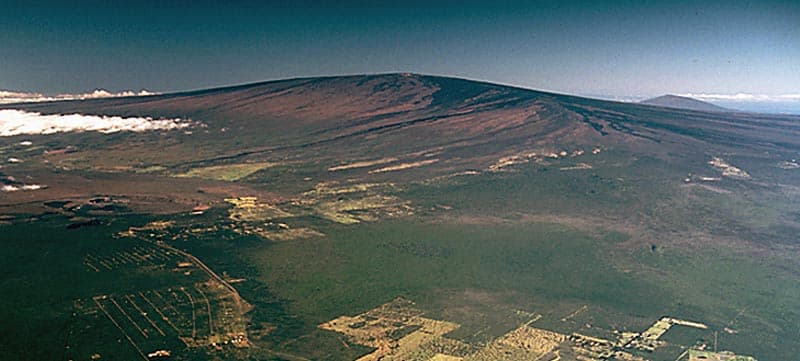
Mauna Loa, meaning 'Long Mountain' in Hawaiian, is one of the five volcanoes forming the Island of Hawaii and is recognized as Earth's largest active volcano by mass and volume. Ancient Hawaiians held deep spiritual connections to this massive shield volcano, admiring its sheer scale, though many of these traditions are less practiced today. Its geological history is marked by continuous eruptions for at least 700,000 years, driven by the Hawaii hotspot, and it poses significant hazards due to its potential to destroy populated areas.
Bear Butte
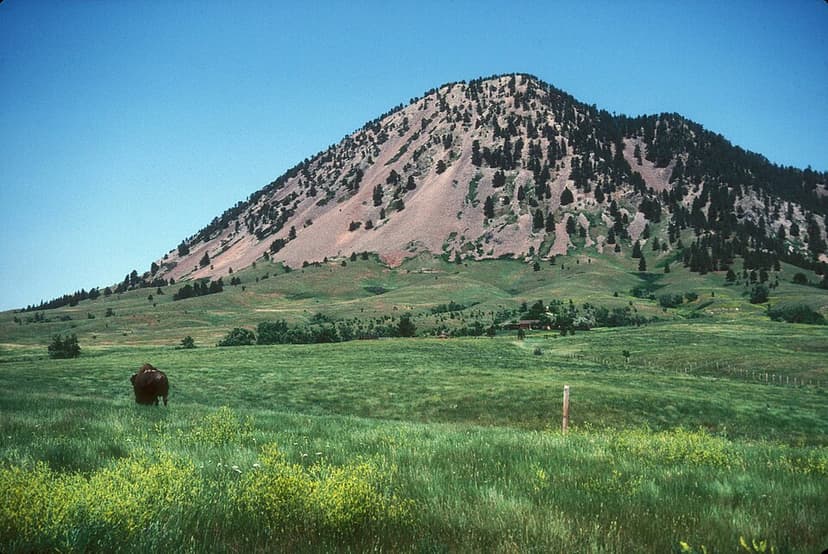
Bear Butte, known to the Lakota as Matȟó Pahá and to the Cheyenne as Noahȧ-vose, is a significant geological laccolith and sacred site for Plains Indian tribes. It holds profound religious importance, particularly for the Cheyenne, who believe the Great Spirit imparted essential knowledge to the prophet Sweet Medicine here. The mountain is a place of prayer, meditation, and pilgrimage, where visitors leave offerings and participate in ceremonies.