
Devils Tower
Devils Tower, also known as Matȟó Thípila or Bear Lodge, is a prominent laccolithic butte located in northeastern Wyoming. Renowned for its dramatic geological formation and deep cultural significance to Native American tribes, it was designated as the United States' first national monument in 1906. The tower holds profound spiritual importance for various Plains tribes, who share ancient legends explaining its origins.
Key Facts
- ›Devils Tower is a laccolithic butte formed by igneous intrusion approximately 40.5 million years ago.
- ›Its summit stands 5,112 feet (1,558 M) above sea level, rising 867 ft (264 M) from its base.
- ›It was established as the first United States National Monument on September 24, 1906.
- ›Indigenous names for the site include Matȟó Thípila (Lakota: Bear Lodge) and Daxpitcheeaasáao (Crow: Home of Bears).
- ›The name 'Devil's Tower' was given in 1875 by an expedition interpreter, reportedly misinterpreting a native name.
- ›Climbing is permitted but subject to a voluntary ban in June out of respect for Native American ceremonies.

Matȟó ThíPila, Bear Lodge, Bear's House, Bear's Tipi, Home of the Bear, Bear's Lair, DaxpitcheeaasáAo, Aloft On A Rock, Tree Rock, Great Gray Horn, Brown Buffalo Horn, Ptehé ǧí, Devil's Tower
- Central To Numerous Native American Geomyths, Particularly Those Involving Bears and Divine Intervention.
- the Site of Ancient Ceremonies and Spiritual Practices For Plains Tribes.
- Featured Prominently In the 1977 Film 'Close Encounters of the Third Kind,' Increasing Its Global Recognition.
President Theodore Roosevelt, Colonel Richard Irving Dodge, William Rogers, Willard Ripley, Fritz Wiessner, William P. House, Lawrence Coveney, George Hopkins, Jack Durrance, N. Scott Momaday, Arvol Looking Horse
- Voluntary Climbing Ban During June For Native American Ceremonies.
About Devils Tower
Devils Tower, known by indigenous peoples as Matȟó Thípila or Bear Lodge, is a striking laccolithic butte located in northeastern Wyoming, United States. This geological marvel rose to national prominence when it was designated as the nation's first national monument by President Theodore Roosevelt on September 24, 1906. Standing 867 feet (264 m) from its base to summit, with a peak elevation of 5,112 feet (1,558 m) above sea level, Devils Tower is composed of igneous rock that intruded into sedimentary layers approximately 40.5 million years ago.
Geological Formation
The surrounding landscape is primarily composed of sedimentary rocks laid down in ancient seas. The tower itself is a remnant of a laccolith, where magma pushed upwards into existing strata before cooling and solidifying. Over millions of years, erosion has stripped away the softer surrounding rocks, leaving the harder igneous core exposed. The distinctive columns forming the tower are a result of the cooling process of this magma, creating patterns of cracks and fissures that are actively shaped by weathering.
Native American Significance
Devils Tower holds profound cultural and spiritual significance for numerous Plains tribes, including the Lakota, Cheyenne, and Kiowa. These traditions are rich with geomyths explaining the tower's origin, often involving giant bears and divine intervention to protect young girls or boys. The deep claw marks visible on its sides are central to these legends, symbolizing the bears' attempts to reach those seeking refuge. These stories underscore the mountain's role as a sacred site for prayer and ceremony.
Historical and Modern Context
Non-indigenous visitors first documented the formation in 1859, with the name "Devil's Tower" being coined in 1875. Beyond its natural and spiritual importance, Devils Tower gained significant cultural recognition through its prominent role in Steven Spielberg's 1977 film "Close Encounters of the Third Kind," which led to a surge in tourism. Climbing the tower became popular, with the first known ascent in 1893. However, this activity has sometimes conflicted with the sacred status of the site, leading to a voluntary climbing ban during June to accommodate Native American ceremonies. Despite proposals to rename it to "Bear Lodge," the designation "Devils Tower" remains.
Source: Wikipedia ↗
Frequently Asked Questions
What is Devils Tower made of?
Devils Tower is composed of phonolite porphyry, a type of igneous rock. This material intruded into existing sedimentary rock layers about 40.5 million years ago and cooled, forming distinctive hexagonal columns.
What are the indigenous names for Devils Tower?
Several indigenous names are associated with Devils Tower. The Lakota call it Matȟó Thípila, meaning 'Bear Lodge,' and the Crow know it as Daxpitcheeaasáao, or 'Home of Bears.' Other names include Bear's House, Bear's Tipi, and Aloft on a Rock.
Why is Devils Tower considered sacred?
Devils Tower is sacred to several Plains tribes, including the Lakota, Cheyenne, and Kiowa. Numerous geomyths and traditional beliefs explain its formation and spiritual significance, often involving bears and divine intervention.
When was Devils Tower established as a national monument?
Devils Tower was established as the first United States National Monument on September 24, 1906, by President Theodore Roosevelt.
Can people climb Devils Tower?
Climbing Devils Tower is permitted, with hundreds of climbers scaling its walls each summer. However, there is a voluntary climbing ban during June out of respect for Native American ceremonies conducted at the site.
What is the geology behind Devils Tower?
Devils Tower is a laccolithic butte, meaning it was formed by magma rising through the Earth's crust and pushing up the overlying sedimentary rock layers without erupting. The igneous material then cooled and solidified, and surrounding sedimentary rocks have since eroded away, exposing the more resistant igneous core.
Related Sacred Mountains
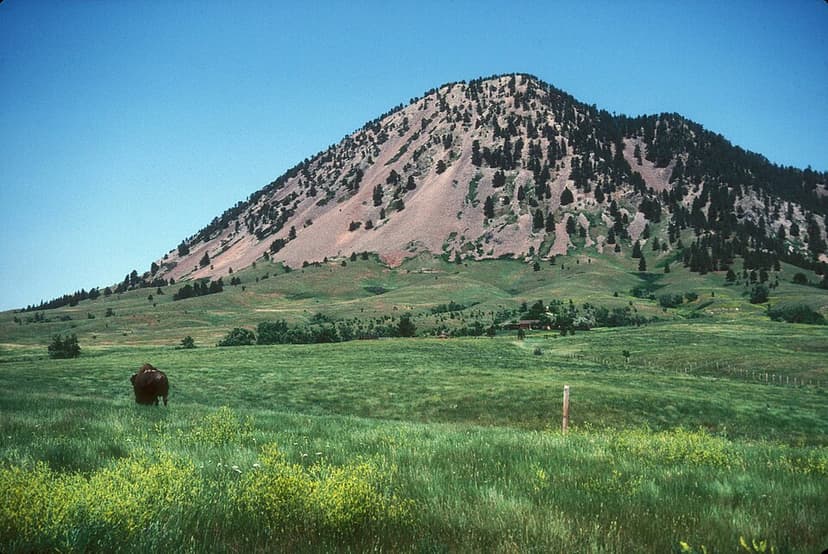
Bear Butte
Bear Butte, known to the Lakota as Matȟó Pahá and to the Cheyenne as Noahȧ-vose, is a significant geological laccolith and sacred site for Plains Indian tribes. It holds profound religious importance, particularly for the Cheyenne, who believe the Great Spirit imparted essential knowledge to the prophet Sweet Medicine here. The mountain is a place of prayer, meditation, and pilgrimage, where visitors leave offerings and participate in ceremonies.

Mount Rainier
Mount Rainier, also known by indigenous names such as Tahoma, is a towering stratovolcano in the Cascade Range of the Pacific Northwest. It is the highest peak in Washington State and the most topographically prominent mountain in the contiguous United States. Revered by numerous Indigenous peoples for millennia, its imposing presence has shaped local cultures and traditions, while its active volcanic nature poses significant risks to surrounding communities.

Mount Shasta
Mount Shasta is a potentially active stratovolcano located in Siskiyou County, California, at the southern end of the Cascade Range. It is the second-highest peak in the Cascades and the most voluminous stratovolcano in the Cascade Volcanic Arc, known for its significant geological history and cultural importance. The mountain is a focal point for various spiritual traditions and legends, attracting both climbers and those seeking spiritual experiences.