
Elijah
Male·9th century BC·Israel·Prophet of Yahweh
Elijah was a prophet and miracle worker in the northern Kingdom of Israel during the 9th century BC, known for defending the worship of Yahweh against the Canaanite deity Baal. He is credited with numerous miracles, including raising the dead and ascending to heaven alive, and is prophesied to return as a harbinger of the Messiah. Elijah's life and teachings significantly influenced Judaism, Christianity, and Islam, and he is venerated in various customs and texts across these traditions.
Key Facts
- ›Lived in the northern Kingdom of Israel during the 9th century BC, under King Ahab.
- ›Defended the worship of Yahweh against the Canaanite deity Baal, notably on Mount Carmel.
- ›Performed miracles attributed to him, such as raising the widow of Zarephath's son and calling fire from the sky.
- ›Was taken up to heaven in a whirlwind, with his disciple Elisha succeeding him.
- ›Prophesied in the Book of Malachi to return before the 'great and terrible day of the LORD'.
- ›Venerated in Judaism during rituals like Havdalah and Passover Seders, and in Christianity as a figure present at the Transfiguration of Jesus.
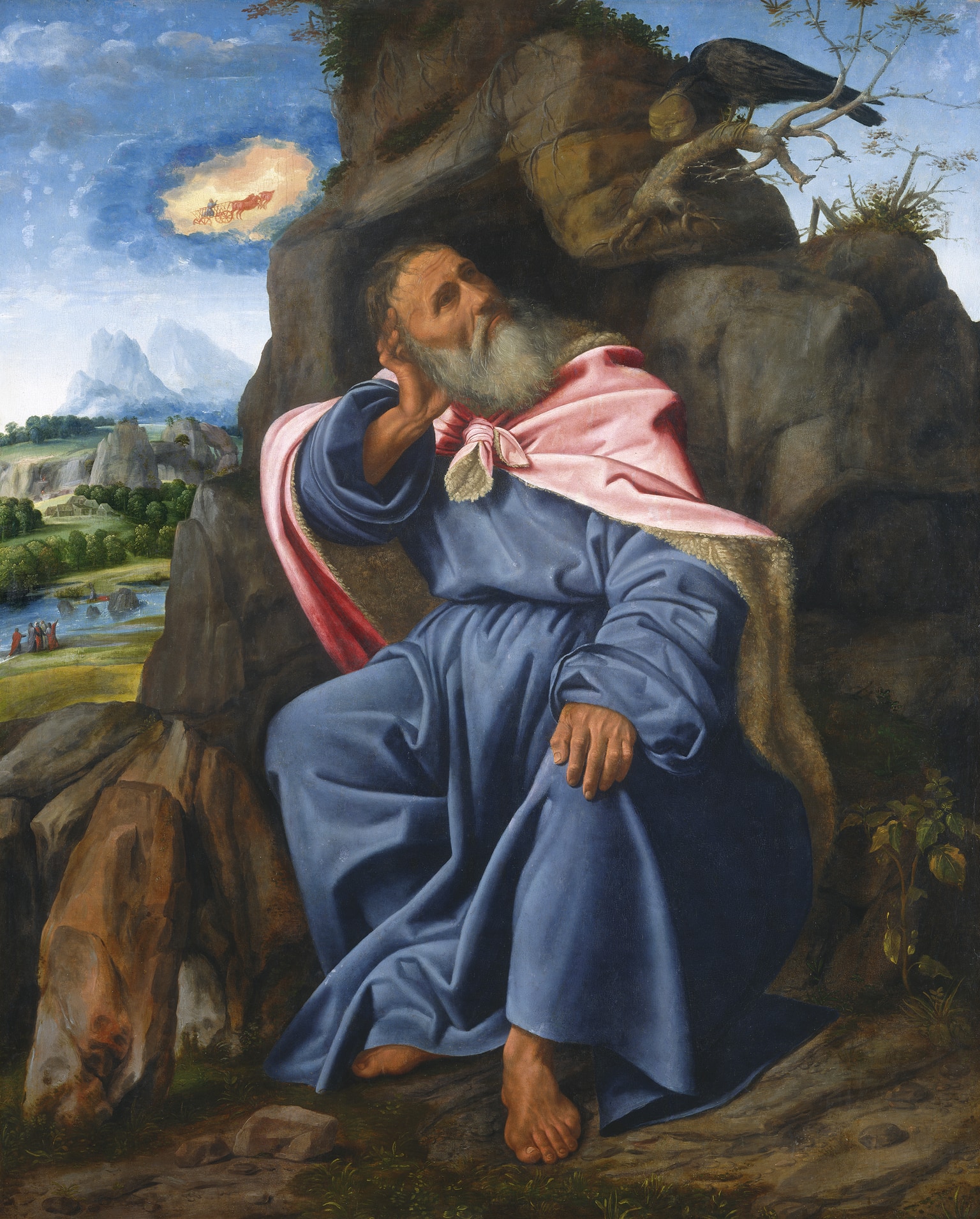
Books of Kings, Book of Malachi
Miracle Working, Prophecy, Resurrection, Calling Fire From the Sky, Ascension To Heaven Alive
The Tishbite, Eliyahu
King Ahab, Jezebel, Elisha, Widow of Zarephath, Moses, John the Baptist, Jesus
Prophet, Patron Saint, Figure of Veneration
Prophet, Biblical Figure, Legendary Figure
About Elijah
Elijah, whose Hebrew name is Eliyahu, meaning 'My God is Yahweh,' was a pivotal prophet and miracle worker active in the northern Kingdom of Israel during the 9th century BC, a period marked by significant religious and political tension.
Life and Historical Context
Elijah emerged during the reign of King Ahab, a time when the worship of the Canaanite deity Baal, promoted by Ahab's Phoenician wife Jezebel, was prevalent and challenged the traditional worship of the Israelite deity Yahweh. According to the Books of Kings in the Hebrew Bible, Elijah was introduced as 'the Tishbite,' with no further background details provided. His ministry was characterized by a fierce defense of Yahweh's supremacy and a strict adherence to religious law.
Key Events and Miracles
Elijah's prophetic career is punctuated by dramatic confrontations and divine interventions. A central event was his challenge to the prophets of Baal on Mount Carmel, where he demonstrated Yahweh's power by calling fire from the sky to consume his sacrifice, leading to the slaughter of the Baal prophets and the end of a severe drought he had prophesied. He also performed miracles outside of Israel, notably reviving the son of the widow of Zarephath, an act considered the first resurrection recorded in Scripture. His encounters with kings Ahab and Ahaziah involved pronouncements of divine judgment, often delivered with stark imagery and prophetic accuracy.
Divine Encounters and Ascension
Elijah experienced profound encounters with God, including a significant revelation at Mount Horeb, where God appeared not in wind, earthquake, or fire, but in a 'still, small voice.' Here, he received instructions to anoint his successor, Elisha, and other figures. The climax of his earthly ministry was his ascension to heaven in a whirlwind, accompanied by a chariot and horses of fire, leaving his mantle behind for Elisha.
Legacy and Veneration
Scholars generally agree on the existence of a historical Elijah, though the biblical accounts are seen as embellished by legend and theological reflection. In Judaism, Elijah remains a revered figure, invoked in customs such as the Havdalah ceremony and the Passover Seder, and is associated with the coming of the Messiah. In Christianity, he appeared with Moses at the Transfiguration of Jesus and is identified with the prophesied forerunner of the Messiah. The Quran also recognizes Elijah as a prophet. His zealous spirit and unwavering devotion to God continue to inspire followers across these traditions, making him one of the most significant prophets in religious history.
Source: Wikipedia ↗
Frequently Asked Questions
Who was Elijah?
Elijah was a prominent prophet and miracle worker in the northern Kingdom of Israel during the 9th century BC. He is best known for his zealous defense of the worship of the Hebrew deity Yahweh against the Canaanite deity Baal.
What are some of Elijah's most famous miracles?
Elijah is credited with several miracles, including raising the son of the widow of Zarephath from the dead, calling fire down from the sky on Mount Carmel, and ascending to heaven alive in a whirlwind. He also brought about a severe drought and its subsequent end.
What is Elijah's significance in Judaism?
In Judaism, Elijah is a revered figure invoked in various customs, such as the weekly Havdalah ceremony and the Passover Seder. He is also associated with the ritual circumcision (brit milah) and is believed by some to return at the End of Times.
How is Elijah viewed in Christianity?
In Christianity, Elijah is recognized as a prophet who appeared with Moses during the Transfiguration of Jesus. The New Testament also identifies John the Baptist as 'the Elijah' prophesied to come before the Messiah.
Is Elijah mentioned in the Quran?
Yes, Elijah appears in the Quran as a prophet and messenger of God, where his biblical narrative of preaching against the worshipers of Baal is recounted.
What is the prophecy about Elijah's return?
The Book of Malachi prophesies that Elijah will return before the 'great and awesome day of the LORD'. This return is seen in various faiths as heralding the coming of the Messiah and the eschaton.
Related Prophets
Jehu
Jehu was the tenth king of the northern Kingdom of Israel, reigning for 28 years. He is primarily known for his violent purge of the house of Ahab, an act of divine judgment that secured his dynasty's rule for four generations. His reign was marked by conflict with the Arameans and a submission to Assyrian tribute.
Moses
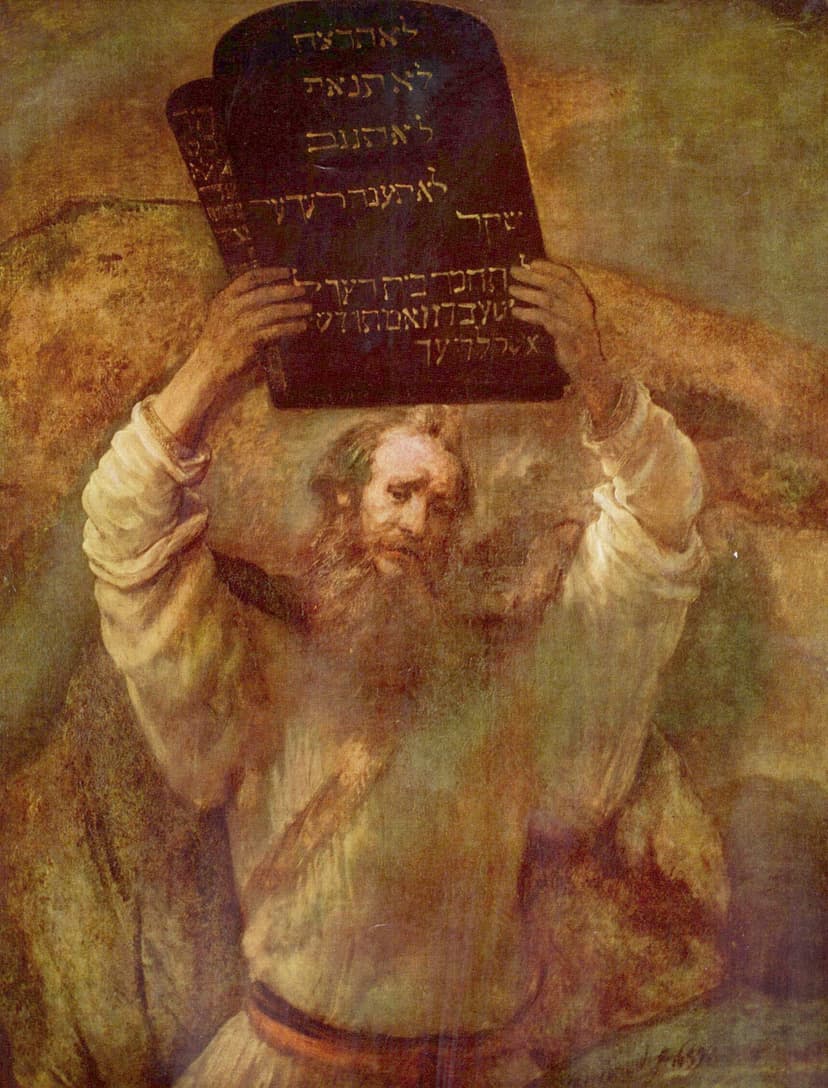
Moses is the central figure of the Exodus narrative in Abrahamic religions, revered as the prophet who led the Israelites out of slavery in Egypt. He is most significantly known for receiving the Ten Commandments and the Mosaic Law from God, which form the foundation of Jewish tradition. While considered legendary by many scholars, Moses remains a pivotal figure in Judaism, Christianity, Islam, and other faiths.
Jonah
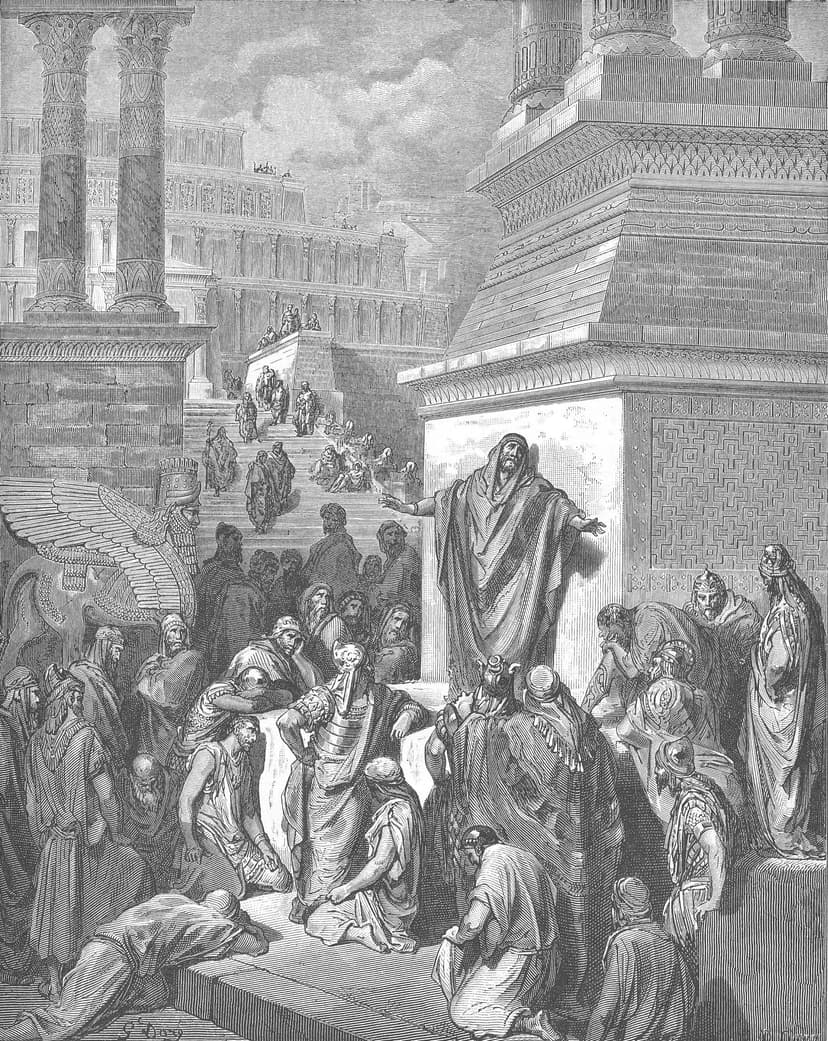
Jonah, a Jewish prophet from the Northern Kingdom of Israel in the 8th century BCE, is primarily known as the central figure of the Book of Jonah. This scripture details his reluctance to deliver God's judgment to the wicked city of Nineveh, his miraculous survival after being swallowed by a large fish, and his eventual obedience. His story is significant in Judaism for its emphasis on repentance and in Christianity and Islam as a prophetic figure.