
Zen Mountain Monastery
Zen Buddhism·Usa·active·20th century
Zen Mountain Monastery, also known as Doshinji, is a Zen Buddhist monastery and training center established in 1980 by John Daido Loori in Mount Tremper, New York. Combining Rinzai and Sōtō Zen traditions, it serves as the main house for the Mountains and Rivers Order, offering comprehensive training in various Zen practices and supporting multiple affiliated organizations focused on environmental studies, prison outreach, and archival work.
Key Facts
- ›Founded in 1980 by John Daido Loori originally as the Zen Arts Center.
- ›Located on a 220-acre forested property in the Catskill Mountains, New York.
- ›Combines Rinzai and Sōtō Zen traditions.
- ›The main building, constructed between 1935 and 1938, is a historic landmark.
- ›Serves as the main house for the Mountains and Rivers Order, an organization inspired by Dogen's teachings.
- ›Offers a wide range of training programs including zazen, liturgy, art, and academic study.

Arts and Crafts Style
220-Acre Forested Property, Main House, Sangha House, Jizo House, Administrative Offices, Tea House, Cemetery, Hermitages, A-Frames and Cabin Circle, Workshop, Gardens, Zen Environmental Studies Institute, Dharma Communications
Doshinji
John Daido Loori, Bonnie Myotai Treace, Geoffrey Shugen Arnold, Konrad Ryushin Marchaj, Ron Hogen Green, Jody Hojin Kimmel, Vanessa Zuisei Goddard, Taizan Maezumi Roshi, Michelle Yoshin Lacaditto
- Established As Camp Wapanachki In the 1930s.
- Site Purchased By John Daido Loori On September 30, 1980.
- Main House Designated A Historic Landmark In 1994.
- Completion of Sangha House In 2012.
- Completion of Jizo House In 2021.
About Zen Mountain Monastery
Zen Mountain Monastery, also known by its Japanese name Doshinji, meaning 'Temple of the Way of Reality,' is a prominent Zen Buddhist monastery and training center. Situated on a 220-acre forested property in the Catskill Mountains near Mount Tremper, New York, it was founded in 1980 by John Daido Loori, initially as the Zen Arts Center.
History and Tradition
The monastery integrates both the Rinzai and Sōtō Zen traditions, lineages in which Loori received Dharma transmission. The site itself has a history dating back to the 1930s, when it was established as Camp Wapanachki. The significant Arts and Crafts style stone and wood frame buildings, including the main house and chapel, were constructed between approximately 1935 and 1938. Loori purchased the property on September 30, 1980, laying the foundation for the monastery's development.
Buildings and Grounds
Zen Mountain Monastery comprises a variety of structures supporting its community and operational needs. The Main House, built in phases between 1929 and 1936, is a historic landmark at both national and state levels, housing the meditation hall, dining area, and living quarters. Completed in 2012, the Sangha House offers a performance hall, store, library, and other facilities. The Jizo House, finished in 2021, enhances accessibility for retreat participants and includes specialized quarters. Other facilities include administrative offices, a traditional Japanese tea house, a cemetery for monastics and lay students, hermitages for dedicated practice, and various housing units for practitioners. The monastery also maintains gardens that supply fresh produce and flowers.
Training and Community
Under the guidance of its teachers, residents and students practice according to Daido Roshi's Eight Gates of Zen training matrix, which encompasses zazen, teaching, liturgy, ethics, work, body, art, and study. The monastery hosts public Sunday programs, weekend retreats, and week-long intensive meditation sessions (sesshin), often focusing on diverse artistic and physical practices. Zen Mountain Monastery is the principal center for the Mountains and Rivers Order, an organization inspired by the teachings of Dogen. This order includes branches such as Dharma Communications, which publishes the journal Mountain Record, the Society of Mountains and Rivers, the National Buddhist Archives, the Zen Environmental Studies Institute, the National Buddhist Prison Sangha, and Fire Lotus Temple in New York City. Monastic practitioners at the monastery take vows of simplicity and service, dedicating themselves entirely to the community's sustenance and future.
Source: Wikipedia ↗
Frequently Asked Questions
When was Zen Mountain Monastery founded?
Zen Mountain Monastery was founded in 1980 by John Daido Loori. It was initially established as the Zen Arts Center before evolving into its current form.
What religious tradition does Zen Mountain Monastery follow?
Zen Mountain Monastery is a Zen Buddhist monastery. It integrates both the Rinzai and Sōtō Zen traditions, in which its founder, John Daido Loori, received Dharma transmission.
Where is Zen Mountain Monastery located?
Zen Mountain Monastery is situated on a 220-acre forested property in the Catskill Mountains, in Mount Tremper, New York.
What is the significance of the Main House at Zen Mountain Monastery?
The Main House, constructed between 1929 and 1936, is the central structure of the monastery and features bluestone and white oak. It was designated a historic landmark at both national and state levels in 1994.
What is the Mountains and Rivers Order?
Zen Mountain Monastery is the main house of the Mountains and Rivers Order, founded by John Daido Loori in 1980. This order is inspired by the teachings of Dogen and encompasses various branches focused on Zen practice and related activities.
Are there facilities for retreat participants at Zen Mountain Monastery?
Yes, Zen Mountain Monastery has various facilities to support residents and the community. The Sangha House, completed in 2012, includes a large performance hall for retreats, and the newer Jizo House, completed in 2021, was built to better accommodate retreat participants, including those with mobility issues.
Related Monasteries
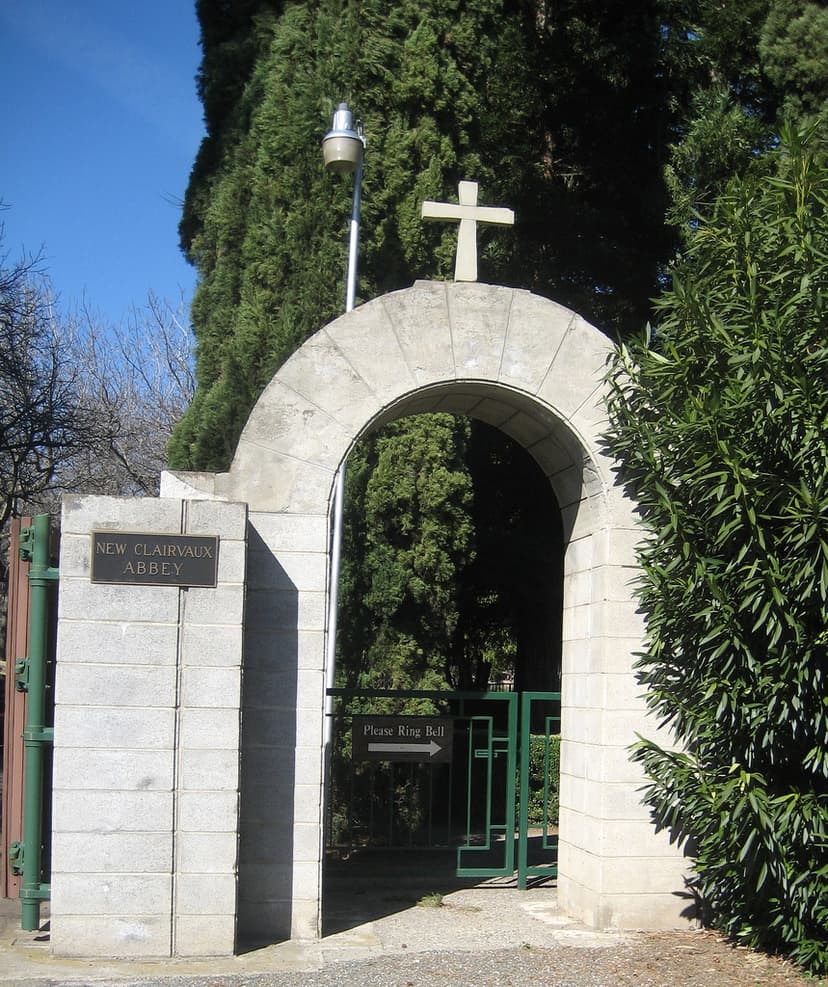
Abbey of New Clairvaux
The Abbey of New Clairvaux is a rural Trappist monastery established in 1955 by monks seeking a California foundation. Known for its austere contemplative life and the reconstruction of an 800-year-old Spanish chapter house, the abbey also cultivates prunes, walnuts, and grapes, and produces wine and Trappist-style beers. The community is part of the Cistercians of the Strict Observance.
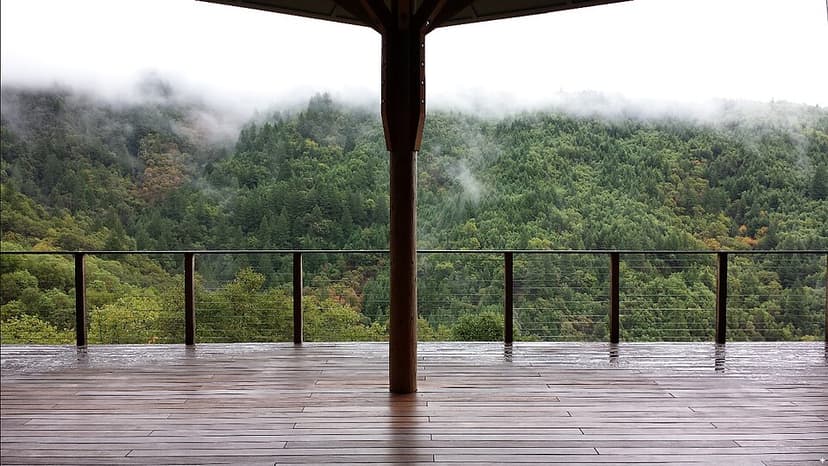
Abhayagiri Buddhist Monastery
Abhayagiri Buddhist Monastery is a Theravada Buddhist monastery located in Redwood Valley, California, belonging to the Thai Forest Tradition. Founded in the 1980s, its primary focus is teaching Buddhist ethics and meditation as a path to ending suffering. The monastery, meaning 'fearless mountain,' has grown to encompass 280 acres of mountainous forest land and has developed significant infrastructure, including monastic huts, a Dhamma Hall, and a reception hall.
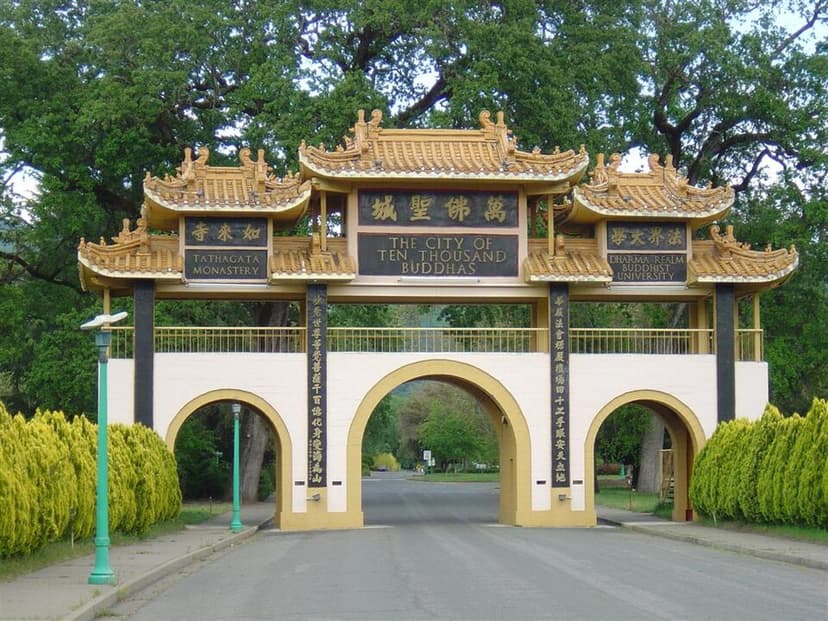
City of Ten Thousand Buddhas
The City of Ten Thousand Buddhas is a significant international Buddhist community and monastery in Talmage, California, founded by the influential figure Hsuan Hua. It was established as one of the first Chan Buddhist temples in the United States and is recognized for its strict adherence to traditional Buddhist monastic codes, including the vinaya. The community encompasses educational institutions, residential facilities, and an organic farm, serving as a major center for propagating Buddhist teachings in the Western Hemisphere.