
City of Ten Thousand Buddhas
The City of Ten Thousand Buddhas is a significant international Buddhist community and monastery in Talmage, California, founded by the influential figure Hsuan Hua. It was established as one of the first Chan Buddhist temples in the United States and is recognized for its strict adherence to traditional Buddhist monastic codes, including the vinaya. The community encompasses educational institutions, residential facilities, and an organic farm, serving as a major center for propagating Buddhist teachings in the Western Hemisphere.
Key Facts
- ›Founded by Hsuan Hua, a key figure in Western Buddhism.
- ›One of the first Chan Buddhist temples established in the United States.
- ›Follows the Guiyang school of Chan Buddhism and adheres strictly to the vinaya.
- ›Purchased and established by the Dharma Realm Buddhist Association in 1974-1976.
- ›Comprises 488 acres, with 80 acres developed for institutional buildings and residences.
- ›Houses both male and female monastic communities on separate campuses.
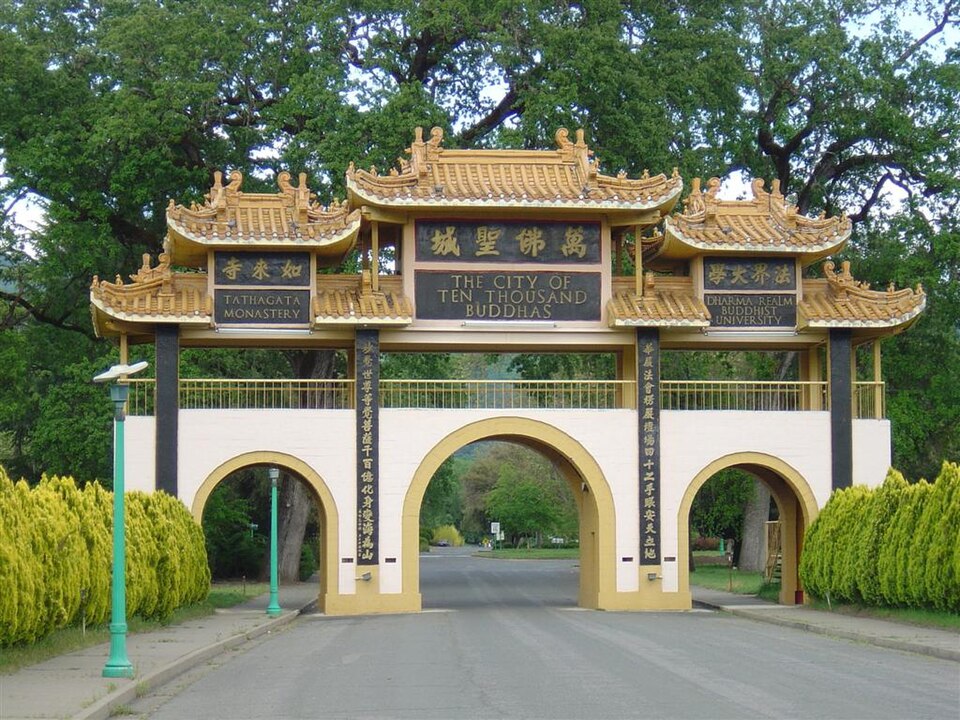
Jeweled Hall of 10,000 Buddhas, Hall of No Words, Dharma Realm Buddhist University, Instilling Goodness Elementary School, Developing Virtue Secondary School, Organic Farm, Five Contemplations Dining Hall
Wanfo Shengcheng, ChùA VạN PhậT TháNh ThàNh
Hsuan Hua
Third Threefold Ordination Ceremony
About City of Ten Thousand Buddhas
The City of Ten Thousand Buddhas (traditional Chinese: 萬佛聖城; pinyin: Wànfó Shèngchéng; Vietnamese: Chùa Vạn Phật Thánh Thành) is an significant international Buddhist community and monastery located in Talmage, California. Founded by Hsuan Hua, a pivotal figure in the spread of Buddhism in the Western world, it stands as one of the first Chan Buddhist temples established in the United States and ranks among the largest Buddhist communities in the Western Hemisphere. The monastery is noted for its rigorous adherence to the vinaya, the traditional Buddhist monastic code, and follows the Guiyang school of Chan Buddhism.
History and Establishment
The Dharma Realm Buddhist Association acquired the property in 1974, formally establishing the international center by 1976. The site itself was formerly the Mendocino State Asylum for the Insane, founded in 1889, which comprised over seventy large buildings and extensive facilities. Hsuan Hua recognized the tranquil surroundings as ideal for spiritual cultivation and envisioned the location as a major hub for propagating Buddhist teachings globally and introducing Eastern Buddhist traditions to the West. His aim was to create an orthodox international monastery dedicated to elevating moral standards and increasing public awareness.
Community and Facilities
The City of Ten Thousand Buddhas encompasses 488 acres, with 80 acres developed to house a comprehensive range of facilities. These include institutional buildings, residential houses, the main Buddha hall, monastic quarters, educational institutes, administrative offices, and dining facilities. Notable structures within the complex are the Jeweled Hall of 10,000 Buddhas, adorned with numerous Buddha images and a large statue of Avalokiteśvara, and the Hall of No Words, which serves as a memorial hall containing relics. The community also hosts Dharma Realm Buddhist University, along with Instilling Goodness Elementary and Developing Virtue Secondary Schools, which offer a curriculum that includes Buddhist studies and meditation. An organic farm contributes to the community's sustenance.
Monastic Traditions and Practices
The community distinguishes itself through specific monastic practices. Monastics consistently wear long sashes over their robes and observe a single meal per day, consumed before noon. Many engage in overnight sitting meditation rather than traditional sleeping. The City of Ten Thousand Buddhas emphasizes a strict separation between male and female monastic campuses and discourages social mingling between genders. Some monastics take vows of silence and adhere to principles of not owning personal wealth or touching money, aiming to enhance purity of mind. The guiding principles for all practitioners, set forth by Hsuan Hua, include "not to fight nor be greedy, not to seek nor be selfish, not to pursue personal advantage, and not to lie."
Source: Wikipedia ↗
Frequently Asked Questions
What is the City of Ten Thousand Buddhas?
The City of Ten Thousand Buddhas is an international Buddhist community and monastery located in Talmage, California. It was founded by Hsuan Hua and is known for its adherence to traditional Chan Buddhist practices and the vinaya.
When was the City of Ten Thousand Buddhas founded?
The Dharma Realm Buddhist Association purchased the site in 1974 and established the international center there by 1976. The Third Threefold Ordination Ceremony, a significant event, was held in 1979.
What are some notable structures at the City of Ten Thousand Buddhas?
Notable structures include the Jeweled Hall of 10,000 Buddhas, the Hall of No Words (a memorial hall), Dharma Realm Buddhist University, and the Five Contemplations Dining Hall, which can seat over 3,000 people.
What makes the monastic practices unique?
Monastics at the City of Ten Thousand Buddhas always wear long sashes outside their robes and eat only one meal a day before noon. Many also practice sitting meditation overnight and some maintain a vow of silence.
Is the City of Ten Thousand Buddhas open to the public?
Yes, the monastery is open to the public. It houses both male and female monastic communities, students from its boarding schools, and visitors.
What educational institutions are part of the City of Ten Thousand Buddhas?
The City of Ten Thousand Buddhas is home to Dharma Realm Buddhist University, Instilling Goodness Elementary School, and Developing Virtue Secondary School, all founded by Hsuan Hua.
Related Monasteries
Shasta Abbey
Shasta Abbey is a training monastery for Buddhist monks and a practice center for lay Buddhists and visitors, located on sixteen forested acres near Mount Shasta in northern California. Established in 1970 by Reverend Master P.T.N.H. Jiyu-Kennett, it is part of the Order of Buddhist Contemplatives (OBC). The monastery emphasizes the practice of Serene Reflection Meditation (Sōtō Zen) and the keeping of Buddhist Precepts, offering a refuge for spiritual practice and publishing Buddhist texts.

Tassajara Zen Mountain Center
Tassajara Zen Mountain Center is the oldest Japanese Sōtō Zen monastery in the United States, established in 1967. Located in the Los Padres National Forest, it is renowned for its intensive meditation practice periods and its unique guest season, during which it opens to the public and is known for its vegetarian cuisine. The center, the first Zen monastery established outside Asia, has faced challenges from wildfires and a recent arson incident.

Tiger Cave Temple
Tiger Cave Temple, also known as Wat Tham Suea, is a significant Buddhist temple located north-northeast of Krabi, Thailand. Founded in 1975 by Vipassana monk Jumnean Seelasettho, the temple is renowned for its sacred tiger paw prints within the cave, impressive Buddha statues, and the challenging ascent via a long flight of stairs to its summit. The site holds archaeological and historical importance, with artifacts and natural features contributing to its unique spiritual and geographical character.