
West Langdon Abbey
West Langdon Abbey was a Premonstratensian monastery founded around 1192 in Kent, England. It holds the distinction of reportedly being the first religious house dissolved by Henry VIII in 1535. Today, its visible remains are primarily the extensive 16th-century cellaring beneath a later house that occupies the original site.
Key Facts
- ›Founded in approximately 1192 by William de Auberville.
- ›A daughter house of Leiston Abbey, dedicated to the Blessed Virgin Mary and St Thomas the Martyr.
- ›Reportedly the first religious house dissolved by Henry VIII in 1535.
- ›Its annual revenue at the time of dissolution was estimated at £56.
- ›Visible remains include extensive cellaring from the 16th century.

Extensive 16th-Century Cellaring, Remains of A 17th-Century Ice House
William De Auberville, Matilda, Ranulf De Glanville, Nicholas De Crioll, Edward Ii, Dr. Leyton, John Master, James Master, Sir Edward Master
- Founded In C. 1192.
- Edward Ii Recuperated At the Abbey In 1325.
- Granted Licence To Crenellate In 1348.
- Dissolved In 1535.
- Manor Fee Simple Acquired By John Master After Dissolution.
About West Langdon Abbey
West Langdon Abbey was a Premonstratensian monastery located near West Langdon in Kent, England. Founded in approximately 1192 by William de Auberville, the abbey was dedicated to the Blessed Virgin Mary and St Thomas the Martyr. It held the notable distinction of reportedly being the first religious house to be dissolved by Henry VIII in 1535.
Historical Context
The founding of West Langdon Abbey was supported by William de Auberville, who was influenced by his father-in-law, Ranulf de Glanville, Chief Justiciar of England. The abbey was established as a daughter house of Leiston Abbey in Suffolk, and Sir William granted the church of St. Mary in Walmer to the abbey in perpetuity. Patronage of the abbey later descended to Nicholas de Crioll. Royal favour was shown when Edward II recuperated at the abbey in 1325, and in 1348, the Abbot and Convent were granted a license to crenellate. By 1491, the abbey possessed 300 acres of grain and a significant number of animals.
Dissolution and Later History
The dissolution of West Langdon Abbey occurred in 1535, with an estimated annual revenue of £56 at the time. Dr. Leyton, the commissioner, reported the arrest of the abbot and his mistress during his visitation. Following the dissolution, the fee simple of the manor was acquired by John Master. His son, James Master, built a mansion on the site, parts of which date back to the 16th century. The monks' cellar, retaining its original arches, remains in place beneath this later house. By 1828 and through the 1881 census, the property was occupied by the Coleman family as substantial farmers.
Source: Wikipedia ↗
Frequently Asked Questions
When was West Langdon Abbey founded?
West Langdon Abbey was founded in about 1192. The founding was facilitated by William de Auberville (the elder) of Westenhanger, Kent.
What religious order was West Langdon Abbey part of?
West Langdon Abbey was a Premonstratensian abbey. It was established as a daughter house of Leiston Abbey.
What is known about the dissolution of West Langdon Abbey?
The abbey was dissolved in 1535 and is reportedly the first religious house to be dissolved by Henry VIII. Dr. Leyton, a commissioner, reported the arrest of the abbot and his mistress during the visitation.
What remains of West Langdon Abbey today?
The most significant visible remains are the extensive 16th-century cellaring located below a house that now occupies the abbey's site. Small remains of a 17th-century ice house are also present.
Who founded West Langdon Abbey?
The abbey was founded by William de Auberville (the elder) of Westenhanger, Kent, with the assent of his wife Matilda. His father-in-law, Ranulf de Glanville, was Chief Justiciar of England.
Related Monasteries
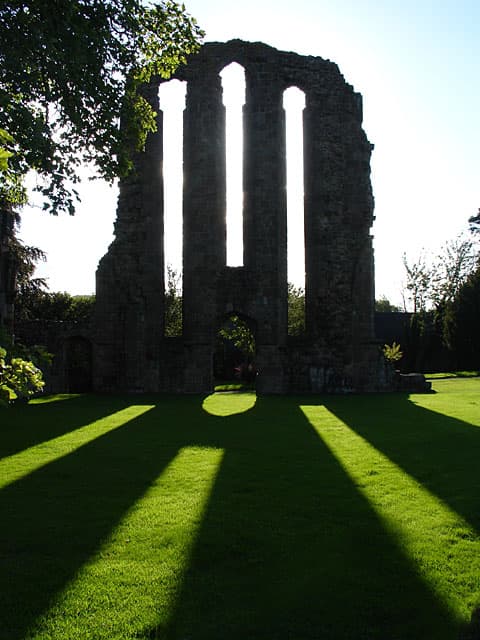
Croxden Abbey
Croxden Abbey was a Cistercian monastery located in Staffordshire, United Kingdom, founded in the 12th century by Bertram III de Verdun. It was a daughter house of the abbey in Aunay-sur-Odon, Normandy, and initially prospered through sheep farming, becoming a significant wool supplier. The abbey faced decline due to financial strains and disputes, eventually being dissolved in 1538 under the Suppression of Religious Houses Act.
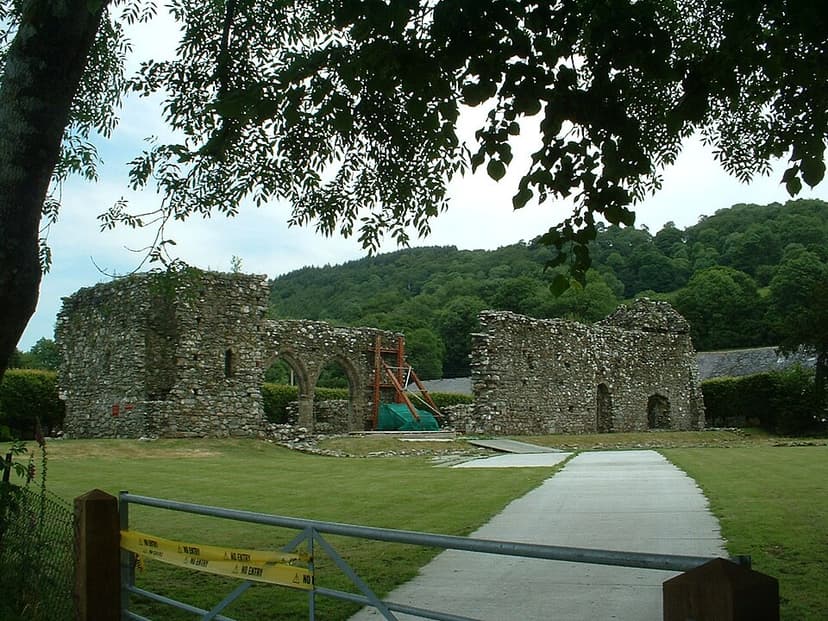
Cymer Abbey
Cymer Abbey was a ruined Cistercian monastery founded in 1189 near Llanelltyd, Gwynedd, Wales, and dedicated to the Virgin Mary. Despite royal patronage and land grants, the abbey struggled financially due to limited arable land and fishing rights, exacerbated by Welsh Wars and climate change. Dissolved in 1536-37, its remains are now managed by Cadw and are open to the public.
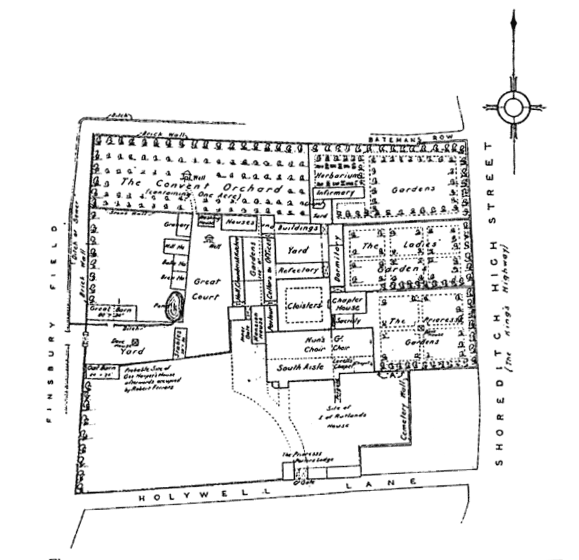
Haliwell Priory
Holywell Priory, formally the Priory of St John the Baptist, was an Augustinian nunnery located in Shoreditch, London. Established in the 12th century, it grew through endowments, including significant contributions from Sir Thomas Lovell in the reign of Henry VII, who virtually refounded the house and was buried there. The priory played a role in local social and economic life until its dissolution in 1539, after which its grounds later became the site of "The Theatre," an early playhouse associated with William Shakespeare.