
Cymer Abbey
Cymer Abbey was a ruined Cistercian monastery founded in 1189 near Llanelltyd, Gwynedd, Wales, and dedicated to the Virgin Mary. Despite royal patronage and land grants, the abbey struggled financially due to limited arable land and fishing rights, exacerbated by Welsh Wars and climate change. Dissolved in 1536-37, its remains are now managed by Cadw and are open to the public.
Key Facts
- ›Founded in 1189 and dedicated to the Virgin Mary.
- ›A daughter house of Abbeycwmhir.
- ›Patronage included Maredudd ap Cynan ab Owain Gwynedd and Gruffudd ap Cynan.
- ›Suffered from poverty due to limited resources and historical conflicts.
- ›Dissolved in 1536-37 as part of the suppression of smaller monasteries.
- ›Notable artifact: a 13th-century silver gilt chalice and paten rediscovered in 1898.
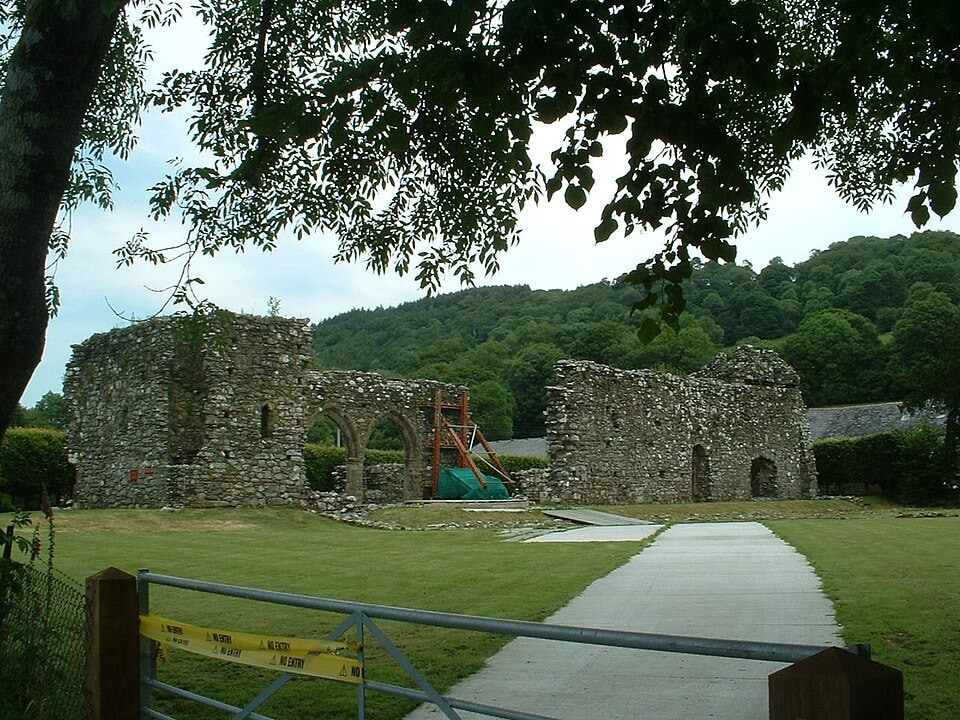
Plain
Remains of the Church and West Tower, Cloister Foundations, Abbot's House, 13th-Century Silver Gilt Chalice and Paten
Abaty Cymer, Kymer Deu Dyfyr
Maredudd Ap Cynan Ab Owain Gwynedd, Gruffudd Ap Cynan, Llywelyn Ap Iorwerth, Llywelyn Ap Gruffudd
- Founded In 1189
- Received Mining Rights In 1209
- Base For Prince Llywelyn Ap Gruffudd's Troops In 1275 and 1279
- Occupied By Edward I In 1283
- Dissolved In 1536-37
About Cymer Abbey
Cymer Abbey, known in Welsh as Abaty Cymer, is a ruined Cistercian monastery situated near the village of Llanelltyd, north of Dolgellau in Gwynedd, north-west Wales. Founded in 1189, the abbey was dedicated to the Virgin Mary and benefited from the patronage of prominent Welsh princes, including Maredudd ap Cynan ab Owain Gwynedd and his brother Gruffudd ap Cynan. It was established as a daughter house of Abbeycwmhir in Powys.
History and Significance
The abbey's architectural remains, while substantial, are described as plain, with the church featuring a simple nave and aisles but lacking transepts. The foundations of the cloister and other monastic buildings are visible, and the abbot's house to the west has been adapted into a farmhouse. Historically, Cymer Abbey was involved in sheep farming and horse breeding, supplying these to Llywelyn the Great. Despite royal patronage and a grant of mining rights in 1209, the abbey faced significant financial challenges due to limited arable land and fishing resources. The Welsh Wars of Edward I and potentially a cooler 14th-century climate further impacted its prosperity, as evidenced by the absence of a typical Cistercian central tower.
The abbey also served as a military base for Prince Llywelyn ap Gruffudd in the mid-1270s. Following Edward I's occupation in 1283, the abbey received compensation for war damages. By the late 14th century, the community had dwindled to no more than five monks, indicating a decline in religious observance. The abbey was dissolved in 1536–37, likely in March 1537, as part of the suppression of smaller monastic houses. Although considered a relatively small and unimportant monastery, a valuable 13th-century silver gilt chalice and paten, hidden at the Dissolution, were rediscovered in 1898 and are now housed in the National Museum of Wales.
Location and Current Status
Cymer Abbey derives its full title, Kymer deu dyfyr, meaning 'the meeting of the waters,' from its location at the confluence of the River Mawddach and the River Wnion. The site is situated on the banks of the River Mawddach, at the lowest ford across the river. Today, the ruins are managed by Cadw and are open to the public, offering a glimpse into the history of Cistercian monasticism in Wales.
Source: Wikipedia ↗
Frequently Asked Questions
When was Cymer Abbey founded?
Cymer Abbey was founded in 1189. It was dedicated to the Virgin Mary and received patronage from Maredudd ap Cynan ab Owain Gwynedd and his brother Gruffudd ap Cynan.
What religious order was Cymer Abbey a part of?
Cymer Abbey was a Cistercian monastery. It was a daughter house of Abbeycwmhir in Powys.
Why was Cymer Abbey not very prosperous?
Despite royal support and land grants, Cymer Abbey lacked significant arable land and fishing rights, contributing to its relative poverty. The Welsh Wars and a cooler 14th-century climate also likely impacted its resources.
What happened to Cymer Abbey?
Cymer Abbey was dissolved in 1536-37, likely in March 1537, as part of the dissolution of smaller monasteries. Much of its fabric was recycled for building materials.
Can I visit Cymer Abbey today?
Yes, the remaining ruins of Cymer Abbey are open to the public on most days of the year. The site is managed by Cadw.
What does the name 'Cymer' mean?
The monastery was given the full title of 'Kymer deu dyfyr', meaning 'the meeting of the waters'. This name reflects its location at the confluence of the River Mawddach and the River Wnion.
Related Monasteries
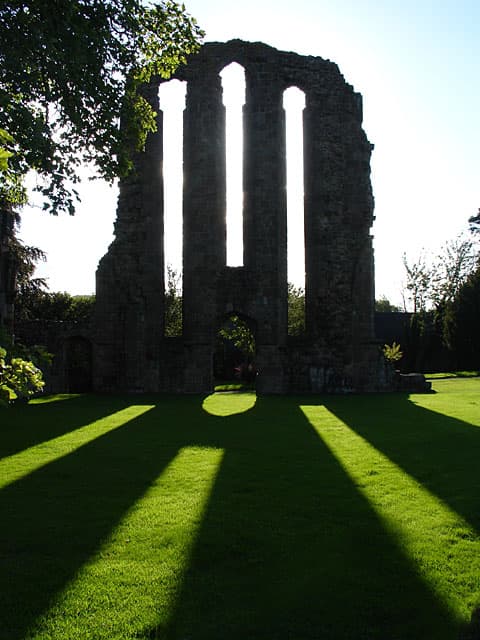
Croxden Abbey
Croxden Abbey was a Cistercian monastery located in Staffordshire, United Kingdom, founded in the 12th century by Bertram III de Verdun. It was a daughter house of the abbey in Aunay-sur-Odon, Normandy, and initially prospered through sheep farming, becoming a significant wool supplier. The abbey faced decline due to financial strains and disputes, eventually being dissolved in 1538 under the Suppression of Religious Houses Act.
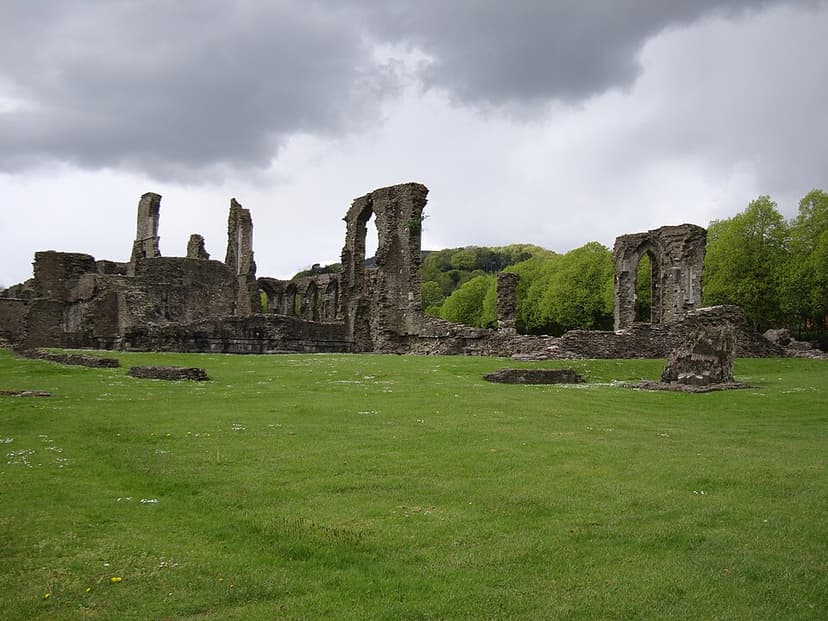
Neath Abbey
Neath Abbey was a Cistercian monastery once considered the largest in Wales, established in 1129 by Savigniac monks. Despite being ravaged by uprisings and dissolved in 1539, its substantial ruins, noted by historian John Leland as "the fairest abbey of all Wales," still stand today near Neath. The site later experienced significant industrial use before archaeological excavations began in the 1920s, leading to its current status as a preserved ruin managed by Cadw and open to the public.
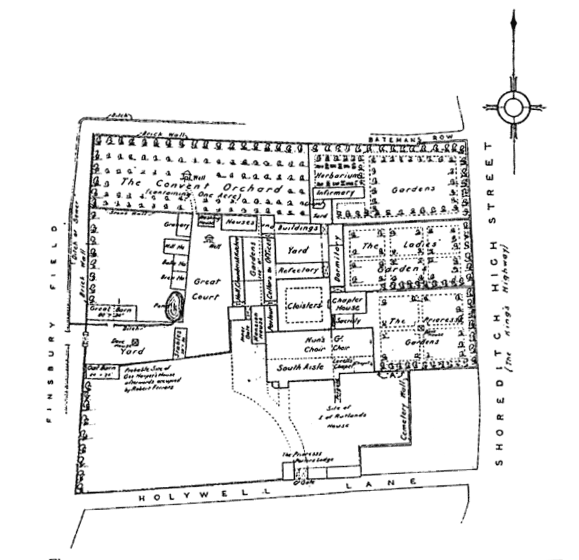
Haliwell Priory
Holywell Priory, formally the Priory of St John the Baptist, was an Augustinian nunnery located in Shoreditch, London. Established in the 12th century, it grew through endowments, including significant contributions from Sir Thomas Lovell in the reign of Henry VII, who virtually refounded the house and was buried there. The priory played a role in local social and economic life until its dissolution in 1539, after which its grounds later became the site of "The Theatre," an early playhouse associated with William Shakespeare.