
Neath Abbey
Neath Abbey was a Cistercian monastery once considered the largest in Wales, established in 1129 by Savigniac monks. Despite being ravaged by uprisings and dissolved in 1539, its substantial ruins, noted by historian John Leland as "the fairest abbey of all Wales," still stand today near Neath. The site later experienced significant industrial use before archaeological excavations began in the 1920s, leading to its current status as a preserved ruin managed by Cadw and open to the public.
Key Facts
- ›Established in 1129 AD by Savigniac monks.
- ›Became a Cistercian house in 1147.
- ›Was once the largest abbey in Wales.
- ›Dissolved in 1539 during the dissolution of the monasteries.
- ›Substantial ruins are preserved and managed by Cadw.
- ›Site has been used for filming Doctor who and Merlin.
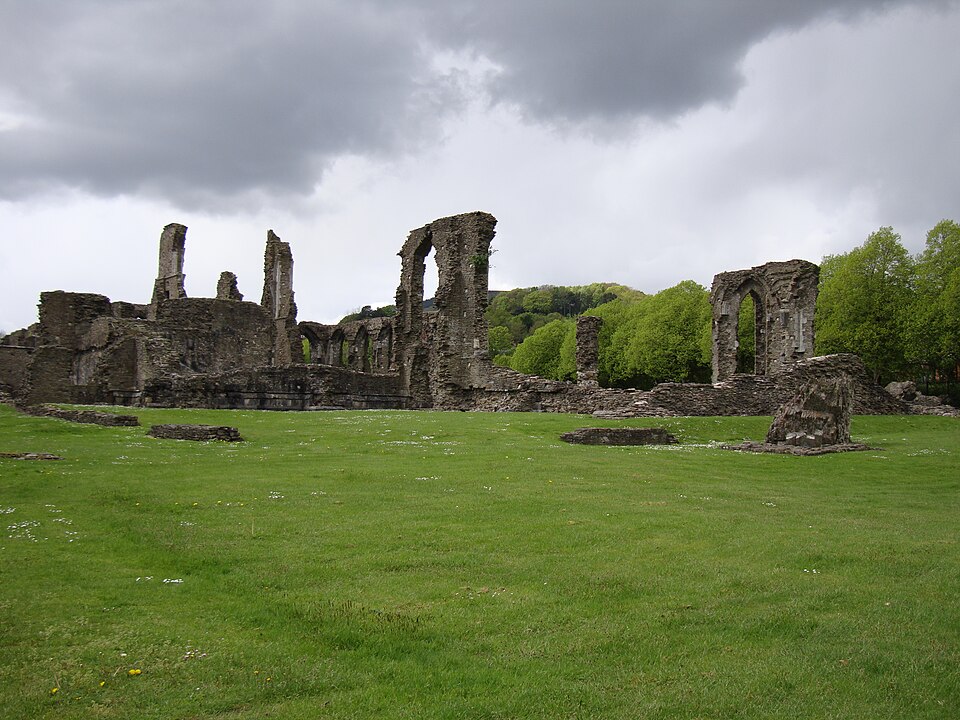
Substantial Ruins, Remains of the Gatehouse, Site Used For Filming Doctor Who and Merlin
Abaty Nedd
Richard I De Grenville, Lleision Ap Thomas, Walter Fitzuryan Rice
- Ravaged By Welsh Uprisings In the 13th Century
- Dissolved In 1539
- Used For Copper Smelting From 1730
- Archaeological Excavations Between 1924 and 1935
About Neath Abbey
Neath Abbey, known in Welsh as Abaty Nedd, stands as a significant historical site in South Wales, UK, representing the substantial ruins of what was once the largest abbey in Wales. Established in 1129 AD, it began as a Savigniac monastery before becoming a Cistercian house in 1147. The abbey faced destruction during the Welsh uprisings of the 13th century and was ultimately dissolved in 1539 under King Henry VIII. Despite its turbulent history, the substantial ruins have been preserved and are currently managed by Cadw, an organization dedicated to the care of historic sites in Wales.
History and Dissolution
The foundation of Neath Abbey traces back to Richard I de Grenville, who granted 8,000 acres in Glamorgan to Savigniac monks. The abbey's existence was marked by periods of conflict, including significant damage during the 13th-century Welsh uprisings. The final chapter of its monastic life came in 1539 with the dissolution of the monasteries, though the last abbot, Lleision ap Thomas, managed to delay the process through a substantial fine. Following its dissolution, the abbey was repurposed as a large estate, with a Tudor mansion eventually built within its cloisters.
Industrial Transformation and Archaeological Rediscovery
By the 18th century, Neath Abbey's structures were adapted for industrial purposes, notably copper smelting, and later an iron foundry was established nearby. The once grand monastic buildings became increasingly engulfed by industrial waste. A turning point arrived in the 1920s when amateur archaeologists, driven by the Neath Antiquarian Society, began the extensive process of excavating and clearing the medieval ruins. Between 1924 and 1935, thousands of tons of slag and industrial debris were removed by hand, revealing the abbey's layout. Subsequent work by the Ministry of Works and Cadw has focused on stabilizing and preserving the remaining structures.
Modern Significance and Accessibility
Today, Neath Abbey is a popular historical attraction, open to the public. Interpretation boards on-site provide context for visitors exploring the ruins. The surrounding area has also seen modern commercial activity, and the atmospheric ruins have served as a filming location for television series such as Doctor Who and Merlin, transforming the ancient site into settings for fantastical narratives. The remains of the abbey's gatehouse, dating from around 1130, also survive north of the main ruins.
Source: Wikipedia ↗
Frequently Asked Questions
When was Neath Abbey founded?
Neath Abbey was established in 1129 AD. The first monks arrived in 1130, and it officially became a Cistercian house in 1147 after the Savigniac order merged with the Cistercian order.
What happened to Neath Abbey after its dissolution?
Following its dissolution in 1539, Neath Abbey was converted into a large estate. Later, parts of its buildings were used for copper smelting and an iron foundry, leading to the ruins becoming engulfed in industrial waste.
Is Neath Abbey still standing?
Substantial ruins of Neath Abbey remain and are preserved. These ruins are cared for by Cadw and are open to the public for visits.
Who was responsible for excavating Neath Abbey?
The Neath Antiquarian Society was the driving force behind the early archaeology and excavation of Neath Abbey, removing thousands of tons of industrial waste by hand. Excavations took place between 1924 and 1935.
What is the significance of Neath Abbey?
Neath Abbey was once the largest abbey in Wales and was described by Tudor historian John Leland as 'the fairest abbey of all Wales.' Its ruins offer a significant glimpse into medieval monastic life and subsequent industrial history.
Related Monasteries
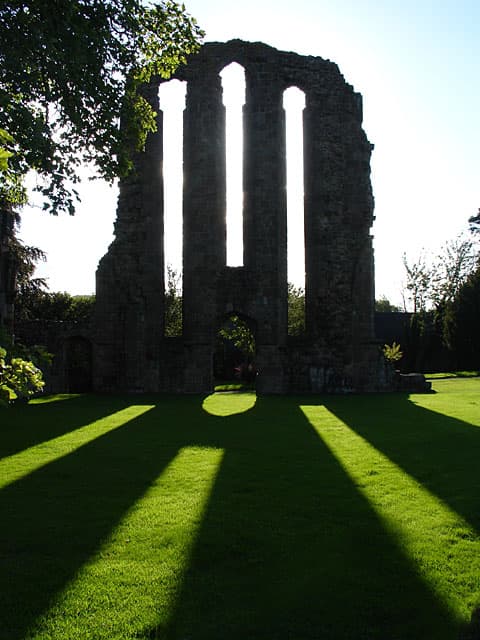
Croxden Abbey
Croxden Abbey was a Cistercian monastery located in Staffordshire, United Kingdom, founded in the 12th century by Bertram III de Verdun. It was a daughter house of the abbey in Aunay-sur-Odon, Normandy, and initially prospered through sheep farming, becoming a significant wool supplier. The abbey faced decline due to financial strains and disputes, eventually being dissolved in 1538 under the Suppression of Religious Houses Act.
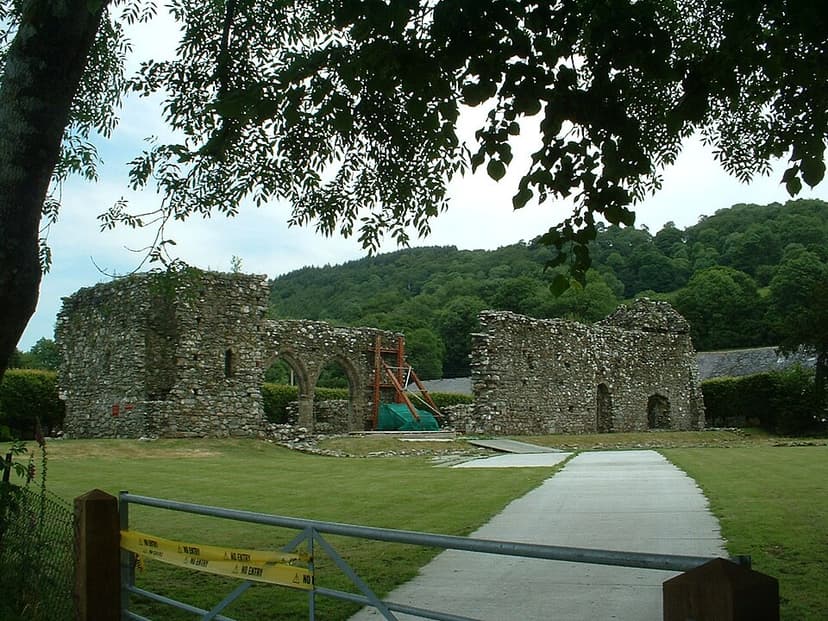
Cymer Abbey
Cymer Abbey was a ruined Cistercian monastery founded in 1189 near Llanelltyd, Gwynedd, Wales, and dedicated to the Virgin Mary. Despite royal patronage and land grants, the abbey struggled financially due to limited arable land and fishing rights, exacerbated by Welsh Wars and climate change. Dissolved in 1536-37, its remains are now managed by Cadw and are open to the public.
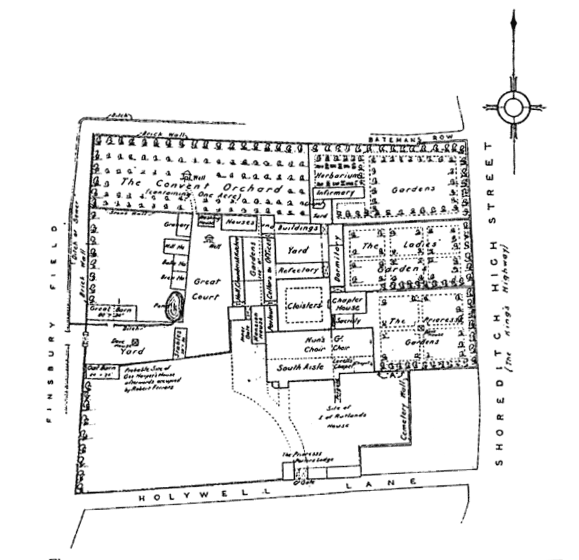
Haliwell Priory
Holywell Priory, formally the Priory of St John the Baptist, was an Augustinian nunnery located in Shoreditch, London. Established in the 12th century, it grew through endowments, including significant contributions from Sir Thomas Lovell in the reign of Henry VII, who virtually refounded the house and was buried there. The priory played a role in local social and economic life until its dissolution in 1539, after which its grounds later became the site of "The Theatre," an early playhouse associated with William Shakespeare.