
Haliwell Priory
Holywell Priory, formally the Priory of St John the Baptist, was an Augustinian nunnery located in Shoreditch, London. Established in the 12th century, it grew through endowments, including significant contributions from Sir Thomas Lovell in the reign of Henry VII, who virtually refounded the house and was buried there. The priory played a role in local social and economic life until its dissolution in 1539, after which its grounds later became the site of "The Theatre," an early playhouse associated with William Shakespeare.
Key Facts
- ›Founded in the 12th century as a house of Augustinian women.
- ›Formally known as the Priory of St John the Baptist.
- ›Sir Thomas Lovell was a significant benefactor and refounder, buried in its chapel.
- ›The community size varied, with records showing 11 professed nuns in 1379 and 13 in 1534.
- ›Dissolved on October 10, 1539, with the prioress and 13 nuns receiving pensions.
- ›The site later became home to 'the Theatre,' an important early playhouse.
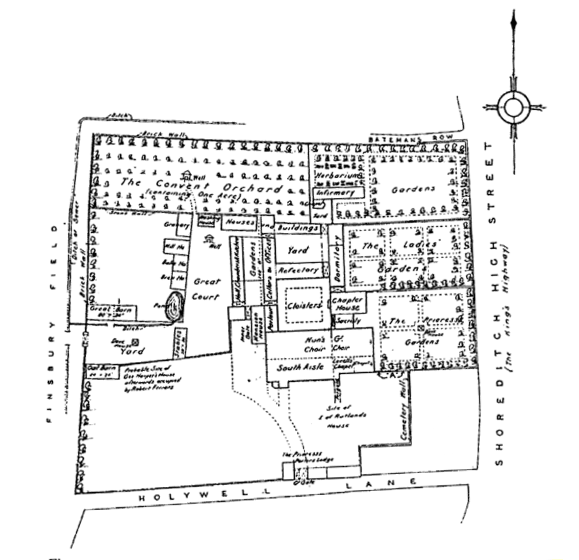
Holywell Spring, Chapel Built By Sir Thomas Lovell, the Theatre
Haliwell, Halliwell, Halywell, Priory of St John the Baptist
Robert Fitzgeneran, Edward Ii, Sir Thomas Lovell, Elizabeth Montacute, Elizabeth Prudde, Sybil Newdigate, James Burbage, Cuthbert Burbage, Sebastian Newdigate
- Foundation In the 12th Century
- Gift of Six Oaks From Edward Ii In 1318
- Refounding and Extensive Building Work By Sir Thomas Lovell
- Dissolution On October 10, 1539
- Lease of Former Priory Land For 'the Theatre' In 1576
- Dismantling of 'the Theatre' For Construction of 'the Globe' In 1598
About Haliwell Priory
Holywell Priory
Holywell Priory, formally recognized as the Priory of St John the Baptist, was a significant religious institution situated in Shoreditch, within the historical county of Middlesex and now part of the London Borough of Hackney.
Foundation and Development
The priory's origins trace back to the twelfth century, established as a house for Augustinian women. Its founder is identified as Robert FitzGeneran, who held the prebend of Holywell or Finsbury in St. Paul's Cathedral. FitzGeneran provided an endowment of three acres for the priory, which also acquired the prebend itself. While King Edward II made a notable gift of six oaks from the forest of Essex in 1318, royal patronage was otherwise limited. A pivotal moment in the priory's history occurred during the reign of Henry VII, when Sir Thomas Lovell, Chancellor of the Exchequer, virtually refounded the house. Lovell initiated extensive building works, including the construction of a chapel that would later serve as his burial place.
Community and Administration
The size of the monastic community at Holywell Priory fluctuated over the centuries. Records from 1379 indicate eleven professed nuns, while the election of Prioress Elizabeth Prudde in 1472 saw seven nuns and ten novices present. By the time of the last prioress, Sybil Newdigate, in 1534, the community comprised 13 professed nuns and 4 novices. The priory also had attached lay brothers, though their numbers appear to have been modest, with one documented case of misappropriation of property in 1314.
Notable Prioresses and Figures
Historical records provide a list of known prioresses, though it is acknowledged as incomplete. Among them, Elizabeth Montacute served as Prioress from at least 1340 to 1357. She hailed from a prominent family, being the daughter of William Montagu, 2nd Baron Montagu, and Elizabeth Montfort. Her distinguished family connections included siblings who became an Earl of Salisbury and a Bishop of Ely, as well as sisters who became Abbesses. Another significant figure was Elizabeth Prudde, with whom an agreement was made in 1492 by Alice Hampton, a wealthy vowess. The last prioress was Sybil Newdigate, daughter of a Sergeant-at-law, whose brother Sebastian Newdigate was later beatified as a Catholic martyr.
Dissolution and Later Use
Holywell Priory was formally dissolved on October 10, 1539, by which time it consisted of 14 nuns. The prioress, subprioress, and nuns received pensions following the dissolution. The priory precinct covered approximately eight acres. After the dissolution, the property was sold and passed through several hands, with the priory chapel being quickly demolished. By the end of the 18th century, little remained of the original structures. Notably, in 1576, James Burbage leased land on the former priory property to build "The Theatre," one of London's pioneering purpose-built playhouses. This venue became closely associated with William Shakespeare and his acting company, The Lord Chamberlain's Men, with some of his early plays premiering there.
Source: Wikipedia ↗
Frequently Asked Questions
When was Holywell Priory founded?
Holywell Priory was established in the twelfth century. Its founding is attributed to Robert FitzGeneran, who held the prebend of Holywell or Finsbury in St. Paul's Cathedral.
What religious order did Holywell Priory belong to?
Holywell Priory was a house of Augustinian women. While sometimes mistakenly referred to as Benedictine in secondary literature, historical evidence confirms its Augustinian affiliation.
Who were notable benefactors of Holywell Priory?
King Edward II gifted six oaks in 1318. Sir Thomas Lovell was a major benefactor, virtually refounding the house and undertaking extensive building work, including a chapel where he was buried.
What happened to the priory buildings after its dissolution?
The priory chapel was quickly demolished after the dissolution in 1539. Parts of the former priory lands were sold and later leased for the construction of 'The Theatre,' one of London's first purpose-built playhouses.
Is there any connection between Holywell Priory and William Shakespeare?
Yes, the land previously occupied by Holywell Priory was leased in 1576 by James Burbage to build 'The Theatre.' This playhouse was a venue for The Lord Chamberlain's Men, the company for which Shakespeare wrote and acted, and some of his early plays premiered there.
How many nuns were part of Holywell Priory at its dissolution?
At the formal dissolution on October 10, 1539, the convent comprised 14 nuns, including the prioress and subprioress. The prioress, Sybil Newdigate, received a pension of £50.
Related Monasteries
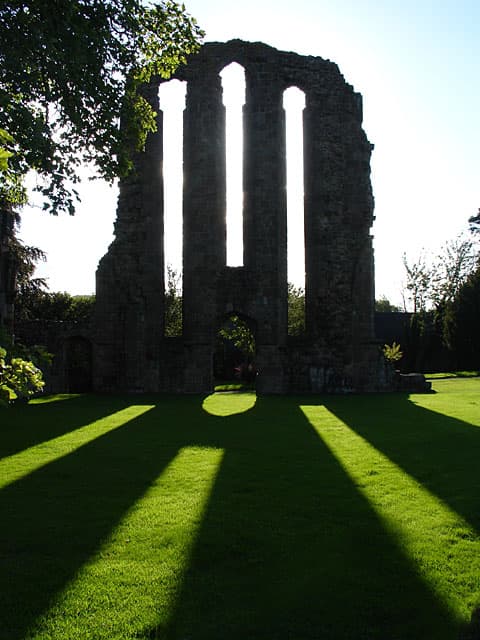
Croxden Abbey
Croxden Abbey was a Cistercian monastery located in Staffordshire, United Kingdom, founded in the 12th century by Bertram III de Verdun. It was a daughter house of the abbey in Aunay-sur-Odon, Normandy, and initially prospered through sheep farming, becoming a significant wool supplier. The abbey faced decline due to financial strains and disputes, eventually being dissolved in 1538 under the Suppression of Religious Houses Act.
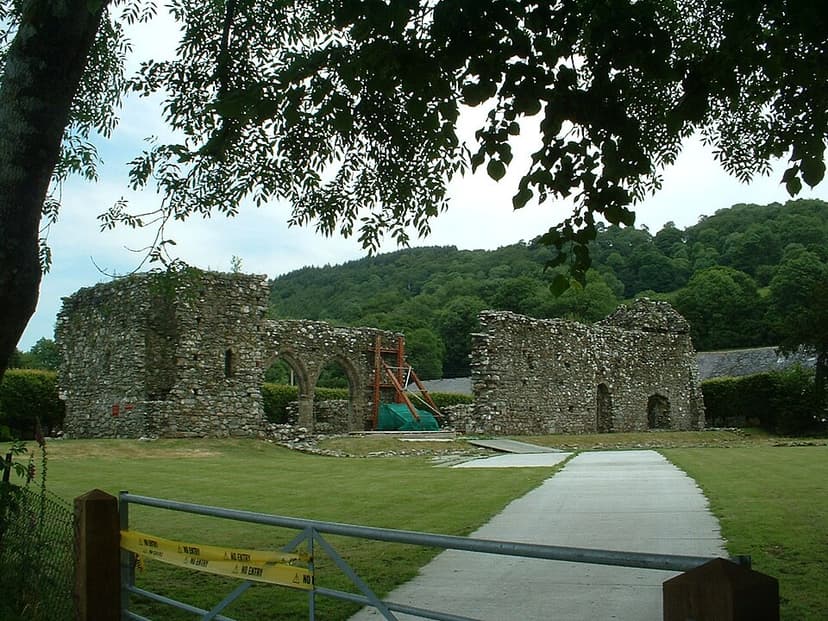
Cymer Abbey
Cymer Abbey was a ruined Cistercian monastery founded in 1189 near Llanelltyd, Gwynedd, Wales, and dedicated to the Virgin Mary. Despite royal patronage and land grants, the abbey struggled financially due to limited arable land and fishing rights, exacerbated by Welsh Wars and climate change. Dissolved in 1536-37, its remains are now managed by Cadw and are open to the public.
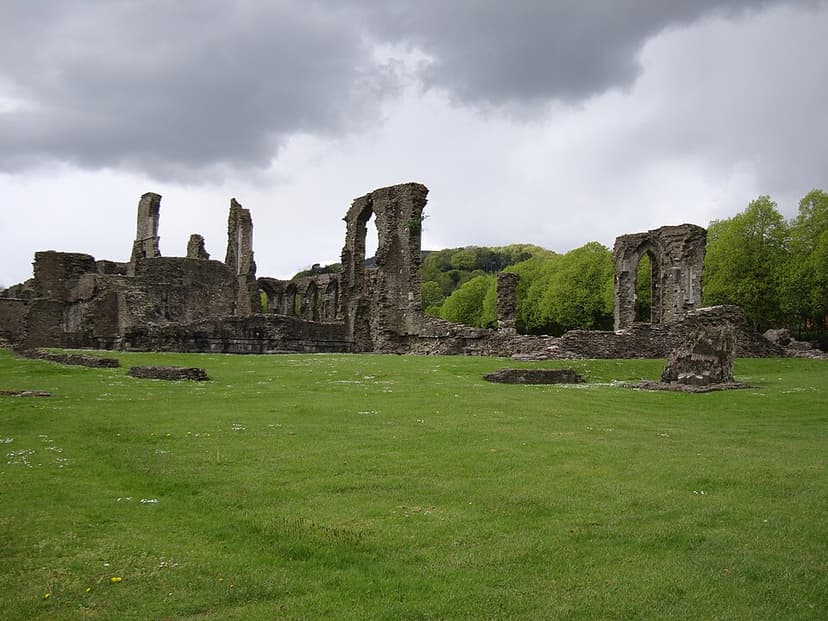
Neath Abbey
Neath Abbey was a Cistercian monastery once considered the largest in Wales, established in 1129 by Savigniac monks. Despite being ravaged by uprisings and dissolved in 1539, its substantial ruins, noted by historian John Leland as "the fairest abbey of all Wales," still stand today near Neath. The site later experienced significant industrial use before archaeological excavations began in the 1920s, leading to its current status as a preserved ruin managed by Cadw and open to the public.