
Croxden Abbey
Croxden Abbey was a Cistercian monastery located in Staffordshire, United Kingdom, founded in the 12th century by Bertram III de Verdun. It was a daughter house of the abbey in Aunay-sur-Odon, Normandy, and initially prospered through sheep farming, becoming a significant wool supplier. The abbey faced decline due to financial strains and disputes, eventually being dissolved in 1538 under the Suppression of Religious Houses Act.
Key Facts
- ›Founded in 1176 by Bertram III de Verdun.
- ›A daughter house of the Cistercian abbey in Aunay-sur-Odon, Normandy.
- ›Drew significant wealth from sheep farming in its early centuries.
- ›Dissolved in 1538 as part of the English Reformation.
- ›Substantial ruins of several buildings remain and are managed by English Heritage.
- ›The Uttoxeter Casket, an Anglo-Saxon reliquary, likely originated from Croxden Abbey.
Cistercian
- Substantial Ruins of Several Buildings
- Foundations of Demolished Buildings Traceable Through Excavations
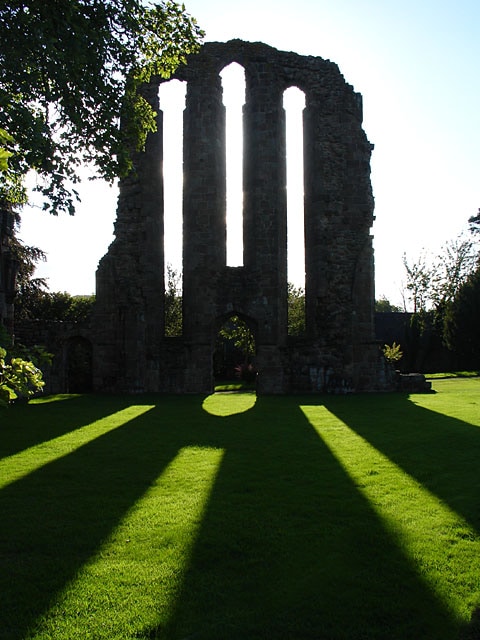
- West Wall of the Church Is Almost Complete, Including Doorways and Lancet Windows
- Uttoxeter Casket
Abbey of the Vale of St. Mary At Croxden
Bertram Iii De Verdun, Norman De Verdun, Lescelina, Richard De Humez, Rohais, Theobald Ii De Verdun, Joan De Verdun, Thomas De Furnivall, 2nd Baron Furnivall
- Founded In 1176.
- Monks Moved To Croxden Site In 1179.
- Received Annuity From King John In 1200.
- Monks Barricaded Themselves Within the Abbey In 1319 Due To Disputes With Thomas De Furnivall.
- Dissolved In 1538.
About Croxden Abbey
Croxden Abbey, also known as the "Abbey of the Vale of St. Mary at Croxden," was a significant Cistercian monastery situated in Croxden, Staffordshire, United Kingdom. Its establishment in 1176 was initiated by Bertram III de Verdun, a Norman nobleman, who endowed a site for a new abbey to a group of twelve Cistercian monks arriving from Aunay-sur-Odon in Normandy. This foundation was a reflection of the common practice among nobility of the era, intended to secure spiritual benefits for the souls of family members and for the founders themselves.
History and Development
The initial years saw the monks relocating from their first site near Alton to land closer to Croxden in 1179. Bertram de Verdun made substantial grants of land and churches to the abbey across several English counties, fostering its growth. The abbey experienced a period of prosperity into the 13th century, largely sustained by sheep farming. By 1315, Croxden Abbey was a leading supplier of wool to the continent, demonstrating its economic importance. However, by the 14th century, the abbey's financial standing began to decline due to a combination of factors including royal taxation, loan repayments, the imposition of a corrodian (an annuity paid in money or kind), poor harvests, and the Black Death.
Decline and Dissolution
The death of Theobald II de Verdun in 1316 led to disputes over patronage and land use, as the abbey's inheritance passed through female heirs. A notable conflict in 1319 saw the monks barricade themselves within the abbey for sixteen weeks to reclaim their property rights from Thomas de Furnivall. Despite these challenges, the abbey survived until the English Reformation. With an annual income below the threshold set by the Suppression of Religious Houses Act of 1535, Croxden Abbey was eventually surrendered in 1537 and dissolved in 1538. The monks were granted pensions, and the abbey's lands and property were sold off.
Legacy and Present Day
Following its dissolution, the mid-13th-century chapel served as the parish church for Croxden until 1886. In 1936, the site was placed under the care of the Ministry of Public Building and Works, and today it is managed by English Heritage. Substantial ruins of the abbey's structures are still visible, with excavations in 1968 helping to trace the foundations of demolished buildings. The church's design, based on its mother church in Normandy, is considered more elaborate than typical Cistercian architecture, with the west wall remaining largely intact. The Uttoxeter Casket, an Anglo-Saxon reliquary likely originating from Croxden Abbey, is now housed in the Cleveland Museum of Art, offering a tangible link to the abbey's past.
Source: Wikipedia ↗
Frequently Asked Questions
When was Croxden Abbey founded?
Croxden Abbey was founded in 1176 by Bertram III de Verdun. He endowed a site for a new abbey near Alton, Staffordshire, for a group of Cistercian monks.
Who founded Croxden Abbey?
The abbey was founded by Bertram III de Verdun, the lord of the manor of Croxden. He established it for the souls of his family and for his own well-being and that of his successors.
What religious order did Croxden Abbey belong to?
Croxden Abbey was a Cistercian monastery. It was a daughter house of the abbey in Aunay-sur-Odon, Normandy, which also belonged to the Cistercian order.
Why was Croxden Abbey dissolved?
Croxden Abbey was dissolved in 1538 as part of the Suppression of Religious Houses Act. Its financial situation had worsened by the 14th century due to taxation, loans, bad harvests, and plague, and its income eventually fell below the threshold for suppression.
What is the current status of Croxden Abbey?
Croxden Abbey is now a site of substantial ruins. It passed into the care of the Ministry of Public Building and Works in 1936 and is currently managed by English Heritage.
What is the Uttoxeter Casket and its connection to Croxden Abbey?
The Uttoxeter Casket is a wooden Anglo-Saxon reliquary that likely came from Croxden Abbey. It is believed to have held a religious relic and been displayed on an altar. It is now housed in the Cleveland Museum of Art.
Related Monasteries
Cymer Abbey
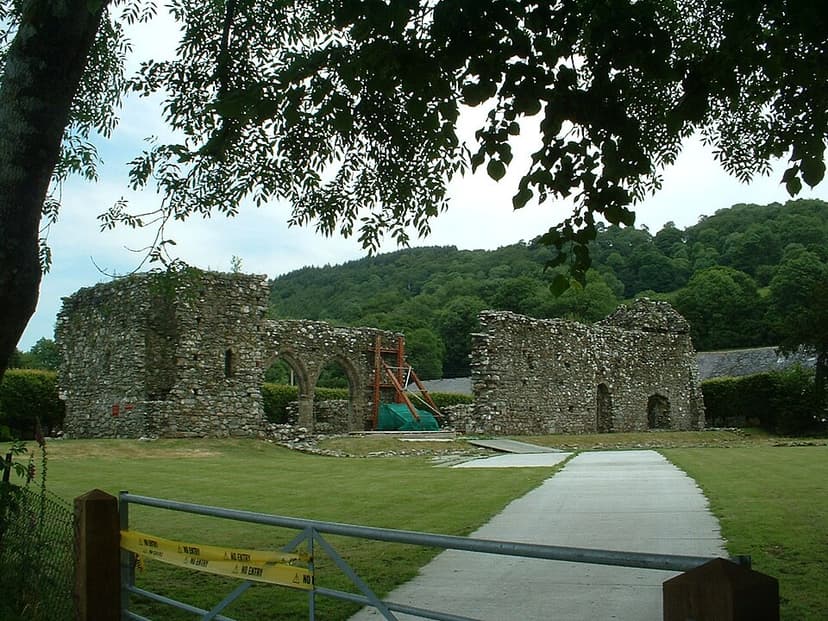
Cymer Abbey was a ruined Cistercian monastery founded in 1189 near Llanelltyd, Gwynedd, Wales, and dedicated to the Virgin Mary. Despite royal patronage and land grants, the abbey struggled financially due to limited arable land and fishing rights, exacerbated by Welsh Wars and climate change. Dissolved in 1536-37, its remains are now managed by Cadw and are open to the public.
Neath Abbey
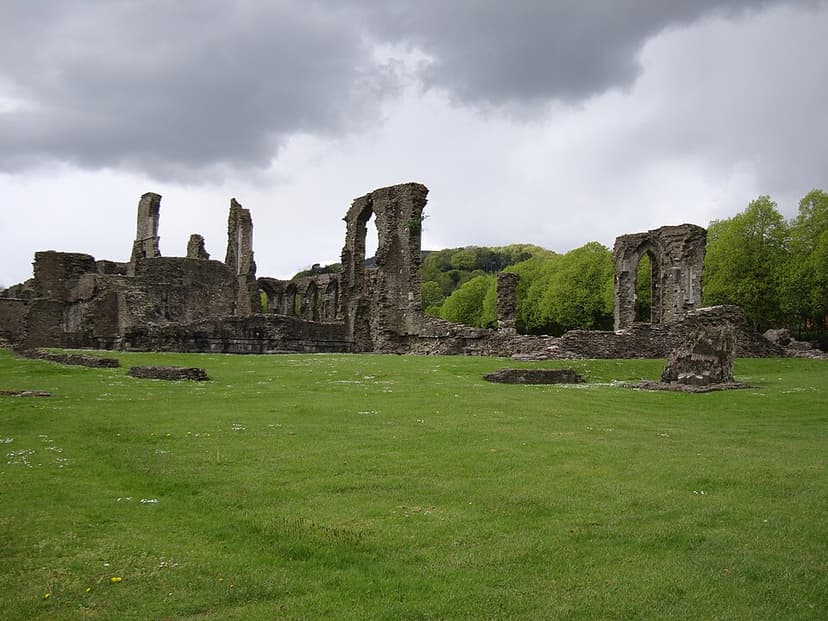
Neath Abbey was a Cistercian monastery once considered the largest in Wales, established in 1129 by Savigniac monks. Despite being ravaged by uprisings and dissolved in 1539, its substantial ruins, noted by historian John Leland as "the fairest abbey of all Wales," still stand today near Neath. The site later experienced significant industrial use before archaeological excavations began in the 1920s, leading to its current status as a preserved ruin managed by Cadw and open to the public.
Haliwell Priory
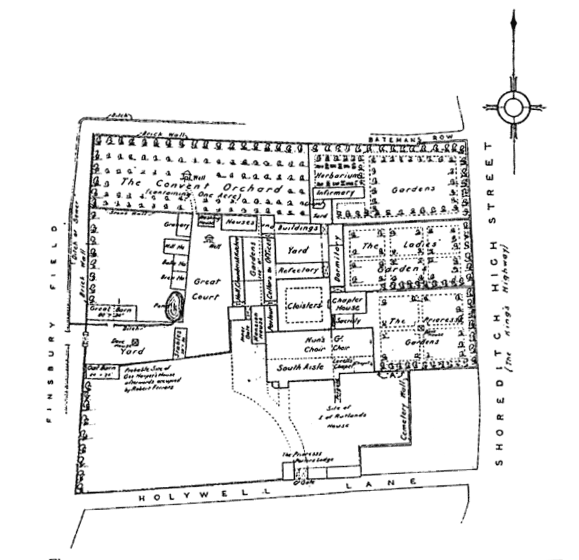
Holywell Priory, formally the Priory of St John the Baptist, was an Augustinian nunnery located in Shoreditch, London. Established in the 12th century, it grew through endowments, including significant contributions from Sir Thomas Lovell in the reign of Henry VII, who virtually refounded the house and was buried there. The priory played a role in local social and economic life until its dissolution in 1539, after which its grounds later became the site of "The Theatre," an early playhouse associated with William Shakespeare.