
Warden Abbey
Christian·England·Ruins and historic house wing·12th century
Warden Abbey was a significant Cistercian monastery in Bedfordshire, England, founded around 1135. It became known for its extensive land cultivation, the famous Warden pear, and lavishly decorated tiling. Dissolved in 1537, most of its structures were demolished, though parts of a later mansion built on the site still exist and are managed by the Landmark Trust.
Key Facts
- ›Founded around 1135 from Rievaulx Abbey.
- ›Became one of the senior Cistercian houses in England.
- ›Developed the renowned Warden pear, an ingredient for "wardon pies".
- ›Rebuilt on a grand scale in the early 14th century with complex mosaic-like tiling.
- ›Dissolved in 1537 under Henry VIII.
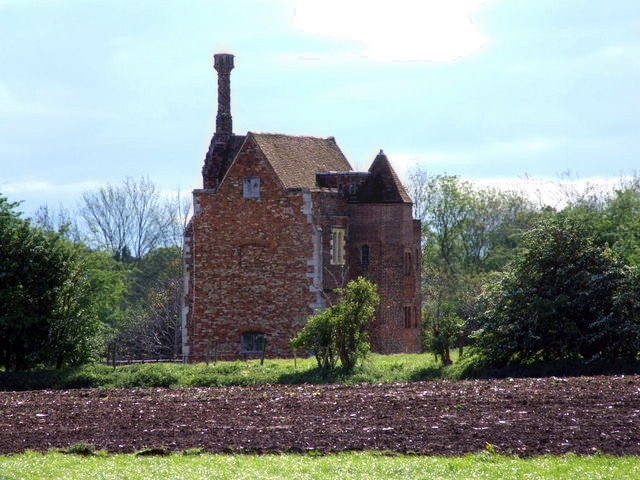
- ›Parts of a later house built on the site, Warden Abbey House, still stand.
Cistercian Gothic
- Complex Mosaic-Like Tiling From the 14th Century
- Warden Pear Orchards
- Warden Abbey House
Wardon Abbey, St Mary De Sartis
Walter Espec, Simon, Aelred
Foundation From Rievaulx Abbey, Foundation of Daughter House Sibton Abbey, Rebuilding On A Grand Scale, Dissolution Under Henry Viii
About Warden Abbey
Warden Abbey, also known as Wardon or St Mary de Sartis, was a prominent Cistercian monastery located in Bedfordshire, England. Founded around 1135 from Rievaulx Abbey, it quickly grew to become one of the senior Cistercian houses in the country. The abbey's success is evidenced by its foundation of a daughter house, Sibton Abbey, as early as 1150. The village of Old Warden developed under its protection.
During the early fourteenth century, Warden Abbey underwent a grand rebuilding, characterized by exceptionally complex tiling that featured carpet-patterned designs and pictorial vignettes, pieced together in a style akin to mosaics. Fragments of this tiling, noted for retaining their brightness even after centuries of burial, attest to the lavishness of its decoration. By 1252, the monastic community had expanded its agricultural efforts significantly, managing nineteen granges. The abbey's orchards were also famed for producing the Warden pear, celebrated as the finest English pear and immortalized in Shakespeare's "The Winter's Tale."
The abbey experienced a period of decline in the later fourteenth century, exacerbated by the Black Death. Warden Abbey was ultimately dissolved in 1537 under the Dissolution of the Monasteries enacted by Henry VIII. Following its dissolution, most of the abbey's structures were demolished in 1552 by the estate's new owner, who then constructed Warden Abbey House on the site. Later, in 1790, much of this Tudor mansion was removed, leaving only a north-east wing that survives today. This remaining section has been restored by the Landmark Trust and is available for holiday rentals, offering a tangible link to the site's long history.
Source: Wikipedia ↗
Frequently Asked Questions
When was Warden Abbey founded?
Warden Abbey was founded around 1135. It was established as a daughter house of Rievaulx Abbey.
What was Warden Abbey known for?
The abbey was noted for its extensive land cultivation and for developing the Warden pear, which was considered the best of English pears. Its early 14th-century rebuilding also featured elaborate tiling.
What happened to Warden Abbey?
Warden Abbey was dissolved in 1537 during the reign of Henry VIII. Most of its buildings were demolished shortly after to sell the materials.
Is anything of Warden Abbey still standing?
While the monastic buildings are largely gone, a mansion called Warden Abbey House was built on the site in the 16th century. A north-east wing of this later house still stands today and is managed by the Landmark Trust.
Who was the patron of Warden Abbey?
The patron of Warden Abbey was Walter Espec, who had also founded its mother house, Rievaulx Abbey. He settled the new community on one of his inherited estates.
Related Monasteries

Anglesey Priory
Anglesey Abbey is a National Trust property in Lode, England, that evolved from an Augustinian priory founded in the early 12th century. After its dissolution in 1536, the site was transformed into a Jacobean-style house, and later extensively developed by Lord Fairhaven into a country house with significant art collections and landscaped gardens. The property now features a house, gardens, and a working mill, preserving the legacy of its monastic past and its later private ownership.

Ankerwycke Priory
Ankerwycke Priory was a small and relatively poor Benedictine nunnery established around 1160 in Buckinghamshire, England. Dedicated to St. Mary Magdalene, it held lands across several counties. Dissolved in 1536, its revenues were transferred to Bisham Abbey, and the priory site later saw the construction of a manor house. Today, only a small section of ruins remains, situated in Berkshire.

Appuldurcombe House
Appuldurcombe House is the shell of a substantial 18th-century English Baroque country house on the Isle of Wight, England. Originally a priory, it evolved into a convent before becoming a Leigh family home. Sir Robert Worsley began constructing the current mansion in 1702, with significant extensions and landscaping undertaken by his great-nephew, Sir Richard Worsley, in the 1770s. Despite periods as a hotel and a school, the house was damaged during World War II and is now managed by English Heritage.