
Sibton Abbey
Sibton Abbey was an early Cistercian monastery founded around 1150 by William de Chesney, serving as the sole Cistercian house in East Anglia. It grew to be quite wealthy, owning extensive lands and operating numerous mills, before its dissolution in 1536. Today, the abbey exists as a picturesque ruin, with the refectory and nave walls still visible, undergoing preservation efforts while remaining private property.
Key Facts
- ›Founded around 1150 by William de Chesney.
- ›Was the only Cistercian abbey in East Anglia.
- ›Dissolved in 1536.
- ›Known for its austere Cistercian architectural style, with notable ruins of the refectory.
- ›Its economic basis included significant income from husbandry and the wool trade, operating at least 15 mills.
- ›The ruins are privately owned and not open to the public.
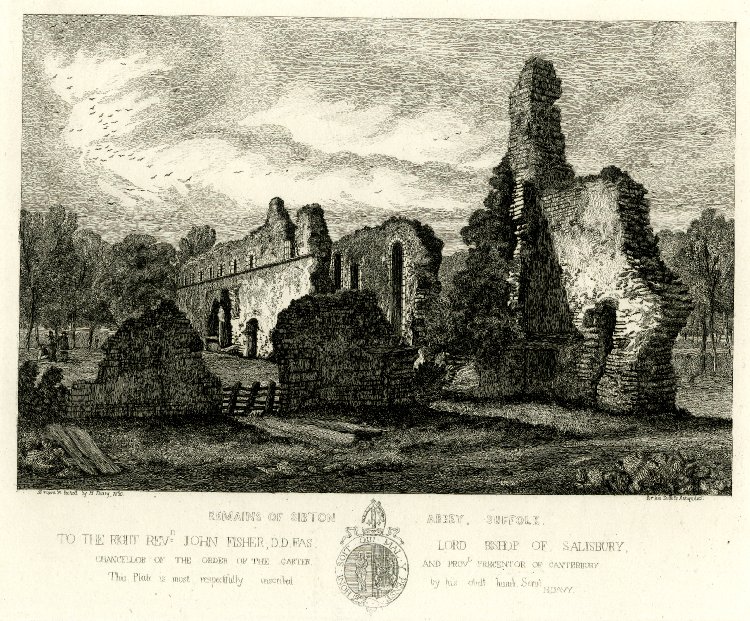
Romanesque, Norman
Refectory Ruins, South Wall of the Nave
William De Chesney, Walter De Cadomo, Robert Fitz Walter, John Vicecomes, William Flatbury, Thomas Cromwell, Thomas Howard, 3rd Duke of Norfolk, Thomas Godsalve, Thomas Howard, 1st Earl of Suffolk, John Scrivener, Matthew Scrivener, Elizabeth Scrivener, Harbottle Wingfield, Edward Maria Wingfield, Thomas Scrivener Esq., Mary Bedingfield, William Bedingfield, Sir Henry Bedingfield, Tim Buxbaum, Egerton Bagot Byrd Levett-Scrivener, J.E. Levett-Scrivener Esq.
Dissolution of the Monasteries
About Sibton Abbey
Sibton Abbey was an early Cistercian monastery located in Sibton, near Yoxford, Suffolk. It was founded around 1150 by William de Chesney, who held the position of High Sheriff of Norfolk and Suffolk. The abbey held a unique place in East Anglia as it was the only Cistercian house in the region. Its history is marked by growth in wealth and influence throughout the medieval period, culminating in its dissolution in 1536.
Foundation and Early History
According to a medieval narrative, the abbey's origins are linked to Walter de Cadomo and his descendants. Walter's son, Robert fitz Walter, founded the church of St. Peter at Sibton during the reign of William Rufus. It was Robert's son, John, who, while gravely ill, vowed to construct a Cistercian abbey as penance for his deeds. He made his brother, William de Chesney, promise to complete this vow. William fulfilled this promise, founding the Abbey of St. Mary of Sibton and granting lands in 1149.
Medieval Prosperity and Architecture
Initially established with thirteen monks, Sibton Abbey's community grew significantly by the thirteenth century, accompanied by an increase in its wealth. The abbey owned lands across southeast England, including numerous granges and properties within ten parishes in Norwich. Architecturally, Sibton followed the austere Cistercian model, though not entirely devoid of ornamentation. The most prominent surviving ruins are from the mid-12th century, exhibiting late Norman or Romanesque style, particularly the Refectory hall. The abbey's layout is noted as somewhat unusual for Cistercian houses, with the Refectory forming a substantial part of the south range.
Economic Basis and Decline
Sibton Abbey's prosperity was largely built on its successful agricultural practices and its involvement in the wool trade. The abbey operated a significant number of mills, with at least fifteen recorded on its Suffolk estates during the 13th century, encompassing both watermills and windmills. Despite its substantial annual income of £250 at the time of the Dissolution, the abbey was among those dissolved in 1536. The process was reportedly accelerated by the intervention of Thomas Cromwell and the Duke of Norfolk, leading to the abbot's agreement to surrender the abbey's assets.
Post-Dissolution and Present Day
Following its dissolution, Sibton Abbey and its manor were sold multiple times, eventually coming into the possession of the Scrivener family, who built an estate nearby. The buildings were adapted for secular use, with evidence of an inserted upper floor in the refectory archway. Today, Sibton Abbey exists as a picturesque ruin, largely overgrown, with the refectory and nave walls still visible. Major conservation efforts were undertaken in 2019. The site remains private property and is not open to the public. Cartularies and early medieval music from the abbey were transferred to the East Suffolk Record Office.
Source: Wikipedia ↗
Frequently Asked Questions
When was Sibton Abbey founded?
Sibton Abbey was founded around 1150. The narrative of its foundation involves William de Chesney, who was fulfilling a vow made by his brother to construct the abbey.
What religious order was Sibton Abbey part of?
Sibton Abbey belonged to the Cistercian order. It was the only Cistercian abbey established in the East Anglia region.
What is the current status of Sibton Abbey?
Sibton Abbey is now a ruin, described as picturesque and largely overgrown. Major repairs were undertaken in 2019. The site is privately owned and not open to the public.
What are the most notable architectural remains of Sibton Abbey?
The principal standing ruins are those of the Frater, or Refectory hall, dating from the mid-12th century in the late Norman or Romanesque style. The south wall of the nave is also still visible.
How did Sibton Abbey generate its wealth?
Sibton Abbey grew rich through various forms of husbandry and the wool trade. It also operated numerous mills, with at least 15 recorded on its estates during the 13th century.
When was Sibton Abbey dissolved?
Sibton Abbey was dissolved in 1536. The dissolution was reportedly hastened by the newly appointed abbot at the insistence of the Duke of Norfolk and Thomas Cromwell.
Related Monasteries
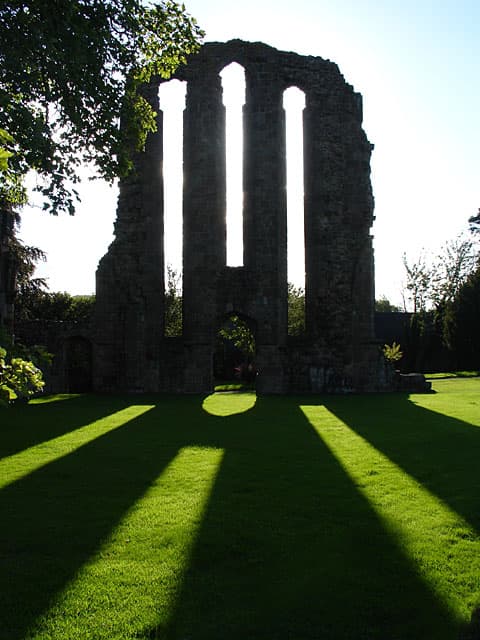
Croxden Abbey
Croxden Abbey was a Cistercian monastery located in Staffordshire, United Kingdom, founded in the 12th century by Bertram III de Verdun. It was a daughter house of the abbey in Aunay-sur-Odon, Normandy, and initially prospered through sheep farming, becoming a significant wool supplier. The abbey faced decline due to financial strains and disputes, eventually being dissolved in 1538 under the Suppression of Religious Houses Act.
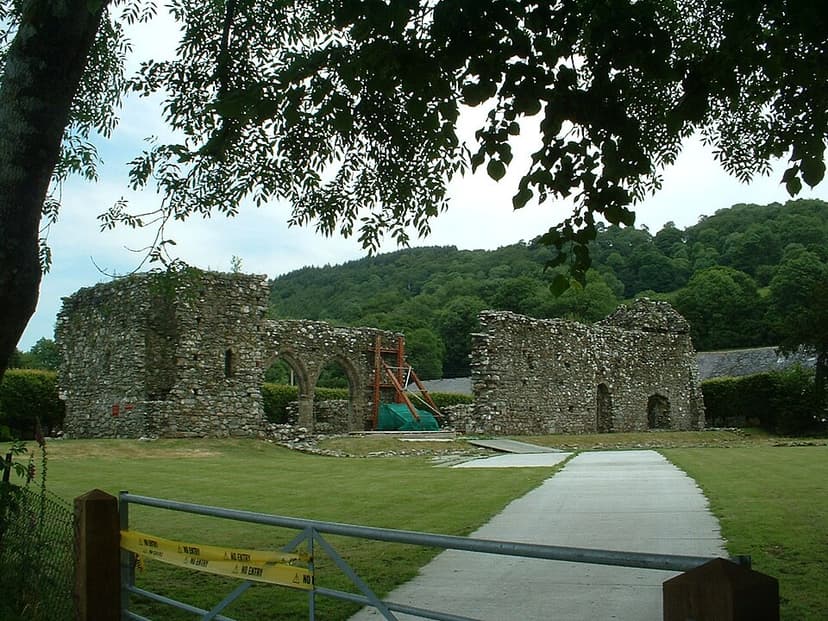
Cymer Abbey
Cymer Abbey was a ruined Cistercian monastery founded in 1189 near Llanelltyd, Gwynedd, Wales, and dedicated to the Virgin Mary. Despite royal patronage and land grants, the abbey struggled financially due to limited arable land and fishing rights, exacerbated by Welsh Wars and climate change. Dissolved in 1536-37, its remains are now managed by Cadw and are open to the public.
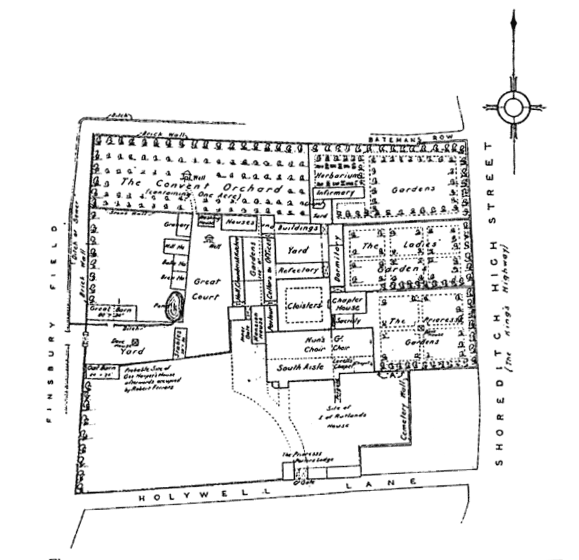
Haliwell Priory
Holywell Priory, formally the Priory of St John the Baptist, was an Augustinian nunnery located in Shoreditch, London. Established in the 12th century, it grew through endowments, including significant contributions from Sir Thomas Lovell in the reign of Henry VII, who virtually refounded the house and was buried there. The priory played a role in local social and economic life until its dissolution in 1539, after which its grounds later became the site of "The Theatre," an early playhouse associated with William Shakespeare.