
Ankerwycke Priory
Ankerwycke Priory was a small and relatively poor Benedictine nunnery established around 1160 in Buckinghamshire, England. Dedicated to St. Mary Magdalene, it held lands across several counties. Dissolved in 1536, its revenues were transferred to Bisham Abbey, and the priory site later saw the construction of a manor house. Today, only a small section of ruins remains, situated in Berkshire.
Key Facts
- ›Founded around 1160 by Gilbert de Muntfichet and his son Richard.
- ›Dedicated to St. Mary Magdalene.
- ›The priory was small and relatively poor, with lands valued at 10s in the 1290s.
- ›An episcopal visitation in 1441 recorded eight nuns.
- ›Dissolved in 1536, with revenues assigned to Bisham Abbey.
- ›The site now contains the ancient Ankerwycke Yew tree, estimated to be 1400-2000 years old.

Ankerwycke Yew
Anckerwycke Priory, Anckerwick Priory
Gilbert De Muntfichet, Richard De Muntfichet, Pope Celestine Iii
Dissolution of the Monasteries
About Ankerwycke Priory
Ankerwycke Priory was a Benedictine nunnery situated in the historic county of Buckinghamshire, England. Established around 1160 by Gilbert de Muntfichet and his son Richard, the priory was dedicated to St. Mary Magdalene. It held an estate at Anckerwycke, near Wraysbury, and possessed additional land in Buckinghamshire, Surrey, and Middlesex.
Historically, Ankerwycke Priory was characterized as a small and relatively modest institution. Records from the Taxatio Ecclesiastica in the 1290s indicate its lands were valued at a mere 10 shillings. An episcopal visitation in 1441 documented the presence of eight nuns, and estimates suggest a similar number, seven or eight, remained at the beginning of the sixteenth century. A notable dispute concerning a nun claiming to have been forced into vows reached Pope Celestine III in 1197.
The priory was dissolved in 1536, with its annual revenues, reported as either £22 or £44, being assigned to the refounded Bisham Abbey. The prioress at the time received a pension of £5 per year. Following its dissolution, the site passed through several ownerships before being acquired by Sir Thomas Smith in 1550, who subsequently constructed a manor house on the priory grounds. Excavations conducted in 2022 confirmed that this Tudor house was developed from the existing priory structures and later demolished in the early 19th century, leaving behind a small section of the original buildings as ruins. The site is also notable for containing the Ankerwycke Yew, an ancient tree estimated to be between 1400 and 2000 years old, which predates the priory itself.
Source: Wikipedia ↗
Frequently Asked Questions
When was Ankerwycke Priory founded?
Ankerwycke Priory was established around the year 1160. It was founded by Gilbert de Muntfichet and his son Richard.
Who was Ankerwycke Priory dedicated to?
The priory was dedicated to St. Mary Magdalene. This dedication was made at the time of its foundation.
What was the size and wealth of Ankerwycke Priory?
Ankerwycke Priory was described as small and relatively poor. In the 1290s, its lands were valued at only 10 shillings.
What happened to Ankerwycke Priory?
The priory was dissolved in 1536 as part of larger reforms. Its revenues were then assigned to the refounded Bisham Abbey.
What remains of Ankerwycke Priory today?
Today, only a small section of the original priory buildings remains as ruins. Excavations in 2022 confirmed that a Tudor manor house built on the site was developed from the priory structures.
Is the Ankerwycke Yew tree associated with the priory?
Yes, the site of Ankerwycke Priory contains the Ankerwycke Yew, an ancient tree estimated to be between 1400 and 2000 years old. This tree would have predated the priory's foundation.
Related Monasteries
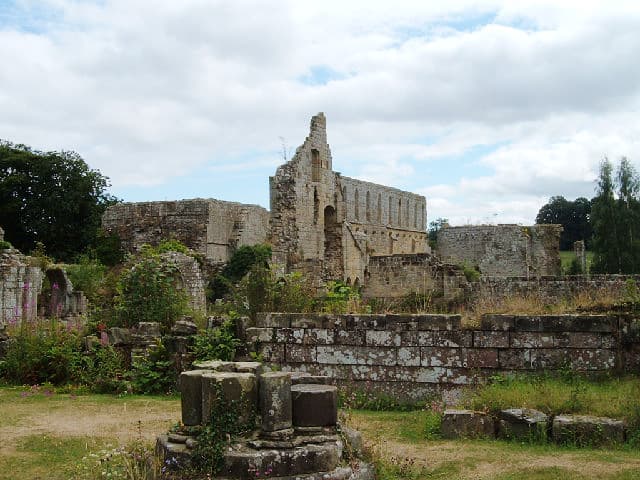
Jervaulx Abbey
Jervaulx Abbey was a significant Cistercian monastery located in North Yorkshire, England, founded in 1145 and dedicated to St Mary in 1156. At its peak, it was a major landowner and renowned for horse breeding and the original production of Wensleydale cheese. The abbey was dissolved in 1537, and its last abbot was executed for his role in the Pilgrimage of Grace. Today, the extensive ruins are a Grade I listed building and are open to the public.

Byland Abbey
Byland Abbey was a Savigniac and later Cistercian monastic institution founded in 1135 in North Yorkshire, England. Despite an unstable early history with multiple relocations, it eventually settled at its final site near Coxwold. Once established, it became a significant religious and economic center, renowned for its sheep rearing and wool exports, and boasting a church described as one of the finest 12th-century structures in Europe. Though dissolved in 1538, extensive ruins remain, including the west front of the church with its notable rose window, and the site is maintained by English Heritage.
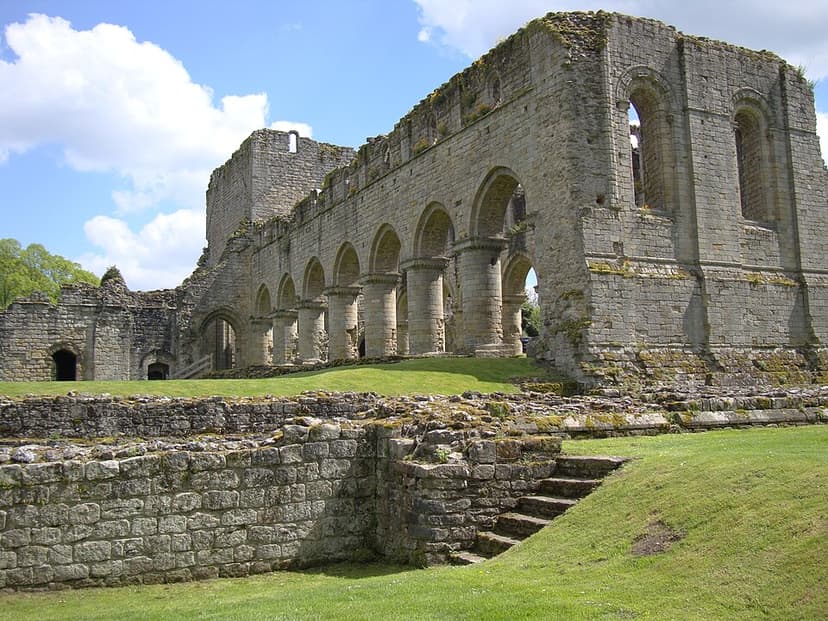
Buildwas Abbey
Buildwas Abbey was a significant Cistercian monastery in Shropshire, England, founded in 1135. It experienced periods of substantial growth and wealth, becoming a center of learning with a notable library. Despite facing challenges from economic crises and conflict, it played a role in royal administration, particularly concerning Ireland and Wales, before its suppression in 1536. Today, substantial remains of the abbey church and monastic buildings are maintained by English Heritage.