
Anglesey Priory
Christian·England·Museum and Gardens·12th century
Anglesey Abbey is a National Trust property in Lode, England, that evolved from an Augustinian priory founded in the early 12th century. After its dissolution in 1536, the site was transformed into a Jacobean-style house, and later extensively developed by Lord Fairhaven into a country house with significant art collections and landscaped gardens. The property now features a house, gardens, and a working mill, preserving the legacy of its monastic past and its later private ownership.
Key Facts
- ›Founded as a hospital of St Mary between 1100 and 1135 during the reign of Henry I.
- ›Endowed as a priory by Richard de Clare in 1212.
- ›Closed in 1536 during the dissolution of the monasteries.
- ›A Jacobean-style house was built on the ruins around 1600.
- ›Owned by Lord Fairhaven from 1926 until his death in 1966, who greatly expanded the house and gardens.
- ›Now managed by the National Trust, encompassing a country house, extensive gardens, and a working MILL.

Jacobean, 18th-Century Park Style
- Country House With Extensive Art and Furniture Collections
- Landscaped Gardens In 18th-Century Park Style
- Working Mill
- Remains of A Priory Chapter House Incorporated Into the House
- Library With Over 6,000 Books
Anglesey Abbey, Gardens and Lode Mill
Henry I, Richard De Clare, John Hynde, Thomas Hobson, Thomas Parker, Samuel Shepheard, Lady Irvine, George Leonard Jenyns, Reverend John Hailstone, Samuel Hailstone, John Hailstone, Reverend James George Clark, Urban Huttleston Broughton, Henry Rogers Broughton, Henry Huttleston Rogers, Sidney Parvin, Sir Albert Richardson, Lanning Roper, Noel Ayres, Richard Ayres, Richard Todd
- Founded As A Hospital of St Mary During the Reign of Henry I
- Endowed As A Priory In 1212
- Dissolution of the Monasteries In 1536
- Grant To John Hynde In 1539
- Acquisition By the Fowkes Family and Conversion Into A House In 1595
- Purchase By Reverend John Hailstone In 1848
- Purchase By Lord Fairhaven and His Brother In 1926
- Lord Fairhaven's Extensive Additions and Landscaping
- Left To the National Trust Upon Lord Fairhaven's Death In 1966
- Restoration of Lode Mill In 1978
- Reopening of Gardens and Park After Covid-19 Closure In June 2020
About Anglesey Priory
Anglesey Abbey
Anglesey Abbey is a significant National Trust property located in Lode, near Cambridge, England. Its history traces back to the early 12th century with the establishment of a hospital of St Mary, which was later endowed as an Augustinian priory in 1212. The priory's monastic life concluded in 1536 with the dissolution of the monasteries. Following this, the site underwent substantial transformation, first becoming a Jacobean-style country house built upon the priory's remains around 1600.
Over the centuries, the property passed through various owners, including notable figures like Thomas Hobson, known for "Hobson's Choice." A pivotal period in its modern history began in 1926 when it was purchased by Urban Huttleston Broughton, later 1st Baron Fairhaven, and his brother. Lord Fairhaven, in particular, dedicated himself to the estate, making extensive additions to the house to house his vast collections of art, furniture, and books, and transforming the grounds into meticulously landscaped gardens in the style of an 18th-century park. Upon his death in 1966, he bequeathed Anglesey Abbey, its contents, and an endowment to the National Trust, ensuring its preservation as a complete and furnished entity.
Today, Anglesey Abbey is a popular visitor attraction, offering insights into both its monastic past and the life of its last private owner. The property encompasses the country house, which is Grade I listed and renowned for its eclectic collection reflecting Lord Fairhaven's tastes, the Grade II* listed landscaped grounds, and a restored working mill. Visitors can explore the various rooms of the house, admire the diverse gardens, and learn about the history of the site, which continues to be managed and maintained for public enjoyment and heritage preservation.
Source: Wikipedia ↗
Frequently Asked Questions
When was Anglesey Abbey founded?
The priory that forms the basis of Anglesey Abbey was founded as a hospital of St Mary between 1100 and 1135 during the reign of Henry I. It was formally endowed as a priory in 1212 by Richard de Clare.
What happened to the priory?
The priory was closed in 1536 during the dissolution of the monasteries. It was largely demolished, with materials used in the construction of Madingley Hall, and the remaining structures were converted into a Jacobean-style house.
Who was Lord Fairhaven and why is he significant to Anglesey Abbey?
Lord Fairhaven was the last private owner of Anglesey Abbey, living there from 1926 until his death in 1966. He made extensive additions to the house to accommodate his vast collections of art, furniture, and books, and significantly landscaped the grounds into an 18th-century style park.
Is Anglesey Abbey open to the public?
Yes, Anglesey Abbey, Gardens and Lode Mill is open to the public. While it was previously open all year, there may be seasonal variations in access, and an admission charge generally applies unless you are a National Trust member.
What can visitors see at Anglesey Abbey today?
Visitors can explore the country house, which showcases Lord Fairhaven's collections of furniture, paintings, sculptures, clocks, and books. The extensive landscaped gardens, designed in an 18th-century park style, and the working Lode Mill are also major attractions.
What is the religious tradition of Anglesey Abbey?
Anglesey Abbey originated as a priory of Augustinian Canons regular, a part of the Augustinian monastic tradition within Christianity.
Related Monasteries

Appuldurcombe House
Appuldurcombe House is the shell of a substantial 18th-century English Baroque country house on the Isle of Wight, England. Originally a priory, it evolved into a convent before becoming a Leigh family home. Sir Robert Worsley began constructing the current mansion in 1702, with significant extensions and landscaping undertaken by his great-nephew, Sir Richard Worsley, in the 1770s. Despite periods as a hotel and a school, the house was damaged during World War II and is now managed by English Heritage.
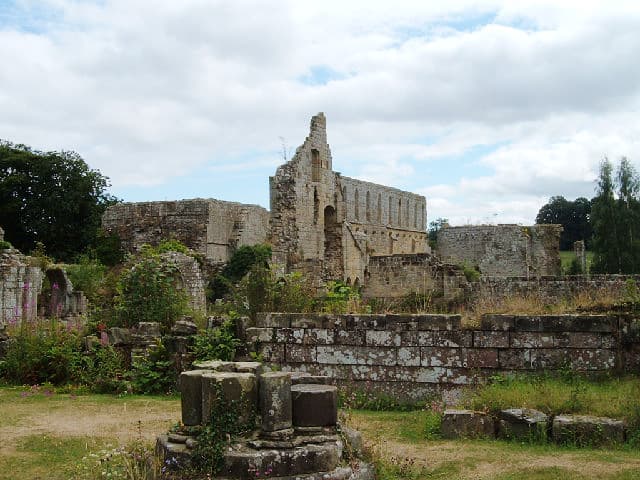
Jervaulx Abbey
Jervaulx Abbey was a significant Cistercian monastery located in North Yorkshire, England, founded in 1145 and dedicated to St Mary in 1156. At its peak, it was a major landowner and renowned for horse breeding and the original production of Wensleydale cheese. The abbey was dissolved in 1537, and its last abbot was executed for his role in the Pilgrimage of Grace. Today, the extensive ruins are a Grade I listed building and are open to the public.
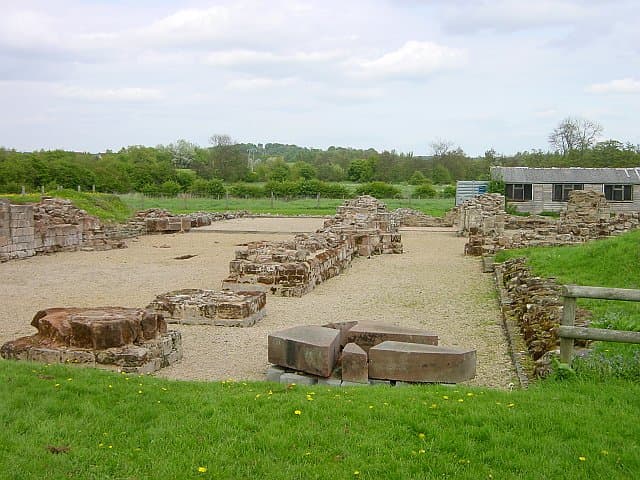
Bordesley Abbey
Bordesley Abbey was a significant 12th-century Cistercian monastery located in Worcestershire, England. Founded around 1138, it became a royal house under Empress Matilda and played a vital role as a local ecclesiastical and political center. The abbey was ultimately demolished in 1538 during the dissolution of the monasteries under Henry VIII, and its ruins are now an important archaeological site.