
Valmont Abbey
Valmont Abbey is a Benedictine monastery located in Valmont, Seine-Maritime, France, with a history spanning from its founding in 1169 to its dissolution and subsequent re-establishment. Once a site of historical significance and architectural interest, it now houses an active community of Benedictine nuns.
Key Facts
- ›Founded in 1169 by Nicolas D'Estouteville with Benedictine monks from Hambye Abbey.
- ›The abbey church was not fully completed until the 16th century, with Countess Marie II of Saint-Pol buried within.
- ›The buildings were significantly rebuilt between 1678 and 1782.
- ›Dissolved during the French Revolution, its buildings were sold in 1791.
- ›Re-established as a monastic site in 1994 by Benedictine nuns.
- ›The axial chapel, dating from the 16th century, is the sole surviving part of the main church and is in Renaissance style.

Renaissance
- Axial Chapel In Renaissance Style
- Chapel of Six O'Clock
- Tombs and Recumbent Tombstones of the Lords of Estouteville
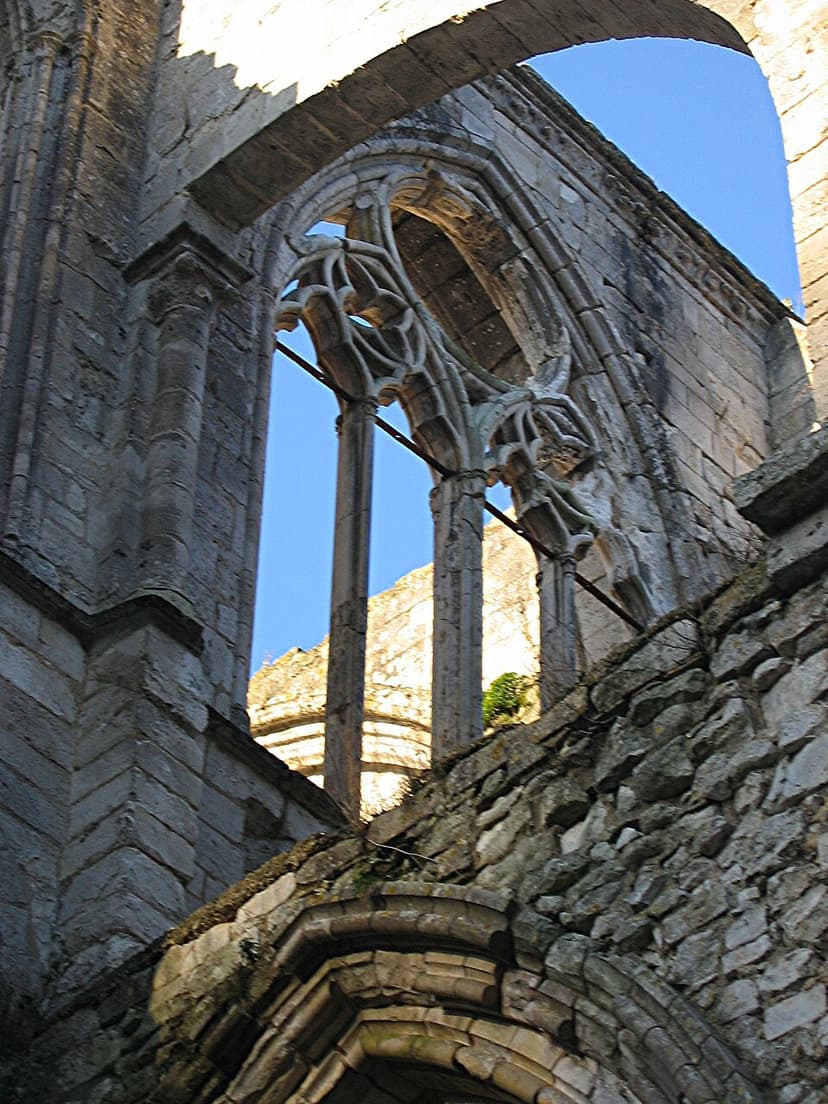
- Ruins of the Choir Built In 1520
- Stained Glass Dating To 1552
Abbaye De Valmont, Sainte-Marie De Valmont, Abbaye Sainte-Marie
Nicolas D'Estouteville, Marie Ii of Saint-Pol, EugèNe Delacroix, Louis De La Fayette, Germain Pilon, Jehan Ribaud
Founded In 1169, Nave Collapsed In 1730, Buildings Rebuilt From 1678 To 1782, Reformed In 1754, Dissolved During French Revolution, Buildings Sold Off, Re-Established As Monastic Site, Re-Dedicated
About Valmont Abbey
Valmont Abbey, also known by its French names Abbaye de Valmont, Sainte-Marie de Valmont, or abbaye Sainte-Marie, is a Benedictine monastery situated in Valmont, within the Seine-Maritime department of France. Its history is marked by periods of construction, destruction, dissolution, and revival, reflecting the broader historical currents of France.
History and Revival
The abbey's origins trace back to 1169, when Nicolas d'Estouteville founded it with Benedictine monks from Hambye Abbey. Throughout its early existence, it maintained a small community, never exceeding 25 monks, and underwent several cycles of destruction and rebuilding. The abbey church, in particular, was only truly completed in the 16th century, and it serves as the burial place for Countess Marie II of Saint-Pol. The abbey buildings saw significant construction between 1678 and 1782, during which attempts were made to introduce the Saint Maur reforms, eventually being reformed by the Maurists in 1754 and rebuilt in the latter half of the 18th century. The French Revolution brought an end to its monastic life; the monks were dispersed in 1789, and the property was sold to private owners in 1791. In the 19th century, the abbey ruins served as an inspiration for painter Eugène Delacroix. Valmont Abbey was re-established as a monastic site in 1994 by Benedictine nuns from Notre-Dame-du-Pré at Lisieux, and it was re-dedicated in 2004, once again housing an active monastic community.
Architecture and Art
The most significant surviving structure is the axial chapel, dedicated to the Virgin Mary, which dates from the 16th century and is the sole remaining part of the main church after the nave collapsed in 1730. This chapel is celebrated for its Renaissance style. Within it are tombs and recumbent tombstones from the 15th and 16th centuries belonging to the Lords of Estouteville and their wives. The chapel features a well-designed vault with prominent ribs converging on a circular keystone. The stained glass, dating to 1552, depicts scenes from the life of the Virgin, and an Annunciation attributed to Germain Pilon adorns the area above the altar. The ruins of the abbey church's choir, built in 1520, also remain. This section, designed by Jehan Ribaud, features large semicircular arches supported by cylindrical columns and a triforium with ionic columns, all executed in a pure Renaissance style. Some of the 16th-century stained glass from the abbey is now preserved at the Departmental Museum of Antiquities in Rouen.
Source: Wikipedia ↗
Frequently Asked Questions
When was Valmont Abbey founded?
Valmont Abbey was founded in the year 1169. The founding was initiated by Nicolas d'Estouteville, who brought Benedictine monks from Hambye Abbey to establish the new monastery.
What is the architectural style of Valmont Abbey?
The surviving axial chapel of Valmont Abbey is primarily in the Renaissance style. The choir, built in 1520, also showcases a very pure Renaissance style, with elegant architectural layouts attributed to Jehan Ribaud.
Is Valmont Abbey still an active monastery?
Yes, Valmont Abbey became a monastic site again in 1994. It was re-founded by Benedictine nuns from Notre-Dame-du-Pré at Lisieux and was re-dedicated in 2004, indicating an active community.
What historical events have impacted Valmont Abbey?
The abbey was destroyed and rebuilt several times throughout its history. It was dissolved during the French Revolution in 1789, and its buildings were sold off in 1791. The nave of the abbey church collapsed in 1730, leaving only the axial chapel.
Are there any notable figures associated with Valmont Abbey?
Nicolas d'Estouteville founded the abbey in 1169. Countess Marie II of Saint-Pol is buried within the abbey church. The painter Eugène Delacroix was inspired by the abbey ruins in the 19th century, and Jehan Ribaud, former abbot of Bec Abbey, designed the elegant architectural layout of the choir.
Related Monasteries

Gaussan Abbey
Gaussan Abbey, originally established as a Cistercian grange in the 12th century, was later re-established as a Benedictine monastery in 1994. Situated in Bizanet, Aude, France, it became an abbey in 2004 and is part of the Solesmes Congregation, known for its focus on Gregorian chant and the Tridentine Mass. The monks also engage in wine production.
Abbey of St Wandrille
Fontenelle Abbey, also known as the Abbey of St. Wandrille, is a historic Benedictine monastery located in Normandy, France. Founded in 649 by Saint Wandregisel, it was one of the earliest Benedictine foundations in the region and played a significant role in Carolingian monastic networks. The abbey has a rich history marked by periods of great prosperity and learning, as well as challenges including Viking raids and suppression during the French Revolution, before its restoration and continued operation to the present day.

Belloc Abbey
Belloc Abbey, officially known as the Abbey of Notre-Dame de Belloc, is a Benedictine monastery established in 1875 in Urt, within the Pyrénées-Atlantiques region of France. The community adheres to the Rule of Saint Benedict and is part of the Subiaco Cassinese Congregation. The monastery is known for its production of ewes' milk cheese, named Abbaye de Belloc, and offers hospitality and spiritual guidance to visitors.