
Gaussan Abbey
Gaussan Abbey, originally established as a Cistercian grange in the 12th century, was later re-established as a Benedictine monastery in 1994. Situated in Bizanet, Aude, France, it became an abbey in 2004 and is part of the Solesmes Congregation, known for its focus on Gregorian chant and the Tridentine Mass. The monks also engage in wine production.
Key Facts
- ›Founded in the 12th century as a Cistercian grange of Fontfroide Abbey.
- ›Re-established as a Benedictine priory in 1994, becoming an abbey in 2004.
- ›Belongs to the Solesmes Congregation of the Benedictine Confederation.
- ›Focuses on Gregorian chant and the Tridentine Mass.
- ›The monks are involved in wine production.
- ›Located in Bizanet, Aude, France.

Gregorian Chant, Tridentine Mass, Wine Production
Abbaye Notre-Dame De Gaussan
- Dissolution of Fontfroide Abbey and Sale of Assets During the French Revolution
About Gaussan Abbey
Gaussan Abbey, officially known as Abbaye Notre-Dame de Gaussan, is a Benedictine monastery located in Bizanet, within the Aude department of France. Its history traces back to the 12th century when it was initially established as a grange by the Cistercians, affiliated with the nearby Fontfroide Abbey.
Historical Context
The original Cistercian establishment at Gaussan faced dissolution during the French Revolution. In 1791, Fontfroide Abbey was dissolved, leading to the sale of its properties, including the Gaussan grange. For a period, the buildings underwent refurbishment in the late 19th and 20th centuries by Charles Lambert de Sainte-Croix, who also developed the surrounding land for viticulture.
Benedictine Revival
The property was later acquired by Benedictine monks, who founded a monastery there in 1994, initially as a priory of Fontgombault Abbey. Gaussan Abbey officially achieved abbey status in 2004. It is an integral part of the Solesmes Congregation, within the broader Benedictine Confederation, and is noted for its dedication to Gregorian chant and the Tridentine Mass. The monastic community also continues the tradition of wine production on the estate.
Source: Wikipedia ↗
Frequently Asked Questions
When was Gaussan Abbey founded?
The site was originally established in the 12th century by the Cistercians. A Benedictine monastery was later founded here in 1994.
What religious tradition does Gaussan Abbey belong to?
Gaussan Abbey is a Benedictine monastery. It is part of the Solesmes Congregation of the Benedictine Confederation.
What is Gaussan Abbey known for?
The monastery is known for its focus on Gregorian chant and the Tridentine Mass. The monks also produce wine.
What happened to Gaussan Abbey during the French Revolution?
During the French Revolution, Fontfroide Abbey was dissolved, and its assets, including the grange at Gaussan, were sold off in 1791.
Is Gaussan Abbey currently active?
Yes, Gaussan Abbey houses an active Benedictine community and became an abbey in 2004.
Related Monasteries

Valmont Abbey
Valmont Abbey is a Benedictine monastery located in Valmont, Seine-Maritime, France, with a history spanning from its founding in 1169 to its dissolution and subsequent re-establishment. Once a site of historical significance and architectural interest, it now houses an active community of Benedictine nuns.
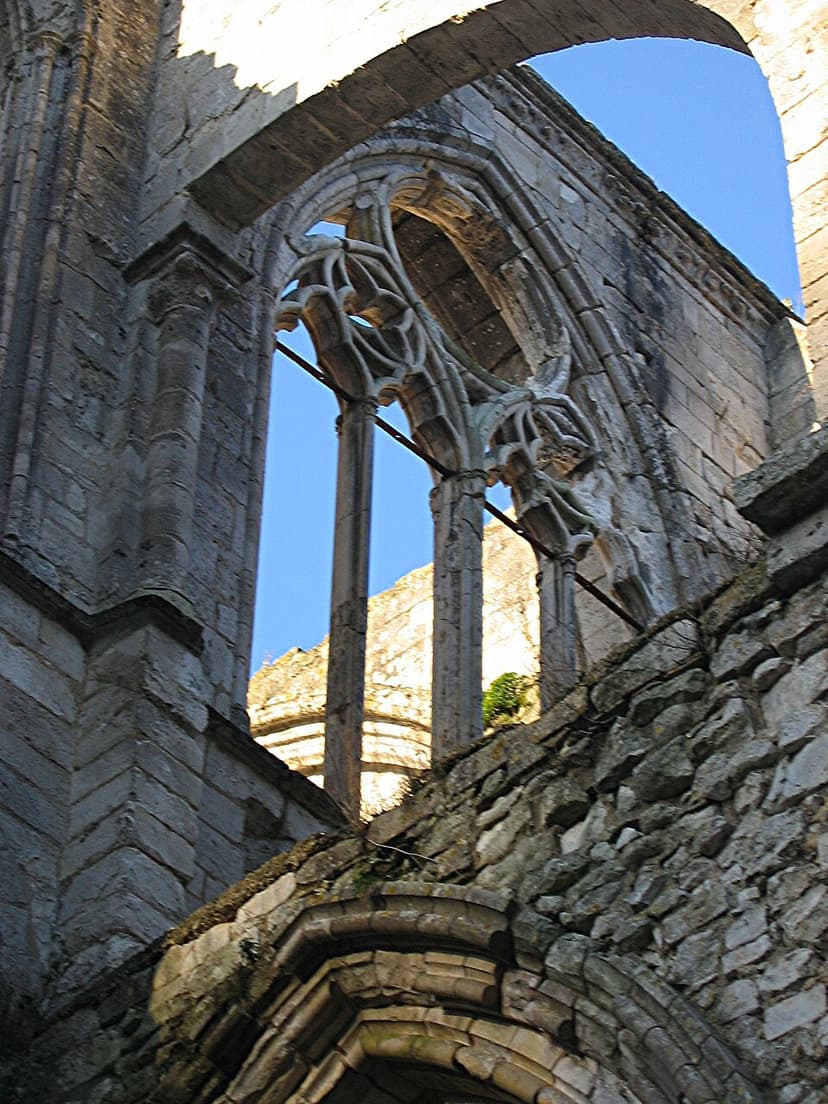
Abbey of St Wandrille
Fontenelle Abbey, also known as the Abbey of St. Wandrille, is a historic Benedictine monastery located in Normandy, France. Founded in 649 by Saint Wandregisel, it was one of the earliest Benedictine foundations in the region and played a significant role in Carolingian monastic networks. The abbey has a rich history marked by periods of great prosperity and learning, as well as challenges including Viking raids and suppression during the French Revolution, before its restoration and continued operation to the present day.

Belloc Abbey
Belloc Abbey, officially known as the Abbey of Notre-Dame de Belloc, is a Benedictine monastery established in 1875 in Urt, within the Pyrénées-Atlantiques region of France. The community adheres to the Rule of Saint Benedict and is part of the Subiaco Cassinese Congregation. The monastery is known for its production of ewes' milk cheese, named Abbaye de Belloc, and offers hospitality and spiritual guidance to visitors.