
Torre Abbey
Christianity·England·Active museum and art gallery·12th century
Torre Abbey, located in Torquay, Devon, was founded in 1196 as a monastery for Premonstratensian canons. It is now the best-preserved medieval monastery in Devon and Cornwall, featuring medieval and Georgian rooms, formal gardens, and the third-largest art collection in Devon. The site transitioned from a monastic institution to a private residence and is now a municipal art gallery and museum.
Key Facts
- ›Founded in 1196 by six Premonstratensian canons from Welbeck Abbey.
- ›Became the wealthiest Premonstratensian house in England by 1536.
- ›Surrendered to King Henry VIII in 1539 during the Dissolution of the Monasteries.
- ›The Spanish Barn on site was used to hold prisoners of war from the Spanish Armada in 1588.
- ›Underwent Georgian remodelling around 1740 and further reconstructions in the 19th century.
- ›Currently houses the third largest art collection in Devon and hosts contemporary art exhibitions.

Gothic, Georgian, Medieval
Formal Gardens On Abbey Park and Meadows, Third Largest Art Collection In Devon, Spanish Barn, Medieval and Georgian Rooms, Gatehouse, Barrel Vault Above Former Guest Hall, Tithe Barn
William Brewer, Sir Hugh I Pollard, Thomas Ridgeway, Cary Family, Admiral John Jervis, 1st Earl of St Vincent, Edward Burne-Jones, William Holman Hunt, Frederick Thrupp, Antony Gormley, Damien Hirst
- Founding of the Monastery
- Became Wealthiest Premonstratensian House In England
- Dissolution of the Monasteries
- Spanish Armada Prisoners Held In the Spanish Barn
- Conversion Into A House
- Georgian Remodelling
- Acquisition By Torquay Borough Council
- Refurbishment and Reopening
About Torre Abbey
Torre Abbey is a significant historical site in Torquay, Devon, recognized as the best-preserved medieval monastery in the counties of Devon and Cornwall. Founded in 1196 by Premonstratensian canons, the abbey flourished, becoming the wealthiest of its order in England by 1536.
History and Transition
The monastery's monastic life concluded in 1539 with its surrender to King Henry VIII's commissioners during the Dissolution of the Monasteries. Following this, the site underwent a transformation, with parts of the abbey being converted into a private residence, notably by Thomas Ridgeway in 1598. The Cary family acquired the property in 1662 and retained possession until 1930, when it was sold to Torquay Borough Council. The building has since served as a municipal art gallery and museum, undergoing a substantial refurbishment that concluded in 2008.
Architecture and Features
The main abbey complex comprises two Grade I listed buildings. While the original church is largely in ruins, the west and south sides of the cloisters remain intact. Notable architectural elements include a gatehouse dating to around 1380 and a 15th-century barrel vault that once formed part of the guest hall. The early thirteenth-century tithe barn, known as The Spanish Barn, is historically significant for its use in housing prisoners from the Spanish Armada in 1588. Extensive Georgian remodelling occurred around 1740, with further alterations and reconstructions by the Cary family throughout the 19th century.
Art and Exhibitions
Torre Abbey is renowned for its art collection, the third largest in Devon. Its permanent exhibitions feature 19th-century paintings, including works by William Blake and Pre-Raphaelite artists like Edward Burne-Jones and William Holman Hunt. The abbey also houses the studio contents of Victorian sculptor Frederick Thrupp. Beyond its historical collections, Torre Abbey actively promotes contemporary art through regular exhibitions and an annual open event, showcasing artists from the South West region.
Source: Wikipedia ↗
Frequently Asked Questions
When was Torre Abbey founded?
Torre Abbey was founded in 1196. It was established by six Premonstratensian canons who came from Welbeck Abbey in Nottinghamshire.
What was the historical significance of Torre Abbey?
Historically, Torre Abbey was significant as the wealthiest Premonstratensian house in England by 1536. It played a role in the Dissolution of the Monasteries and its buildings were later converted into a private residence and subsequently a public art gallery.
What is the current use of Torre Abbey?
Today, Torre Abbey functions as a municipal art gallery and museum. It features medieval and Georgian rooms, formal gardens, and art exhibitions, including a significant collection of 19th-century paintings and contemporary works.
What is the Spanish Barn?
The Spanish Barn is a tithe barn built in the early thirteenth century. It gained its name after being used in 1588 to hold 397 prisoners of war captured from the Spanish Armada.
Who owned Torre Abbey after the Dissolution?
After the Dissolution of the Monasteries, Torre Abbey was leased to Sir Hugh I Pollard in 1539 and later acquired by him. It eventually passed through various owners before becoming the possession of the Cary family in 1662, who owned it until 1930.
What are the notable architectural features of Torre Abbey?
The main abbey includes Grade I listed buildings with standing west and south cloister sides. Notable features include a gatehouse dating from around 1380, a 15th-century barrel vault, and the Spanish Barn. The buildings also display extensive Georgian remodelling from around 1740.
Related Monasteries

Cressing Preceptory
Cressing Temple was one of the earliest and largest estates of the Knights Templar in England, established in 1136. Following the suppression of the Templars, it was transferred to the Knights Hospitaller and later confiscated by the Crown. Today, the site is a visitor attraction, renowned for its remarkably preserved medieval barns, including what is claimed to be the oldest standing timber-framed barn in the world.

Dover Priory
Dover Priory, originally known as the Priory of St. Mary the Virgin and St. Martin of the New Work or Newark, was a significant monastic institution in Dover, England. Its history spans multiple traditions, beginning with secular canons, transitioning to canons regular of the Augustinian rule, and finally becoming a Benedictine monastery. The priory played a role in local governance and religious life before its dissolution in 1538, with parts of its medieval structures surviving today, integrated into Dover College.
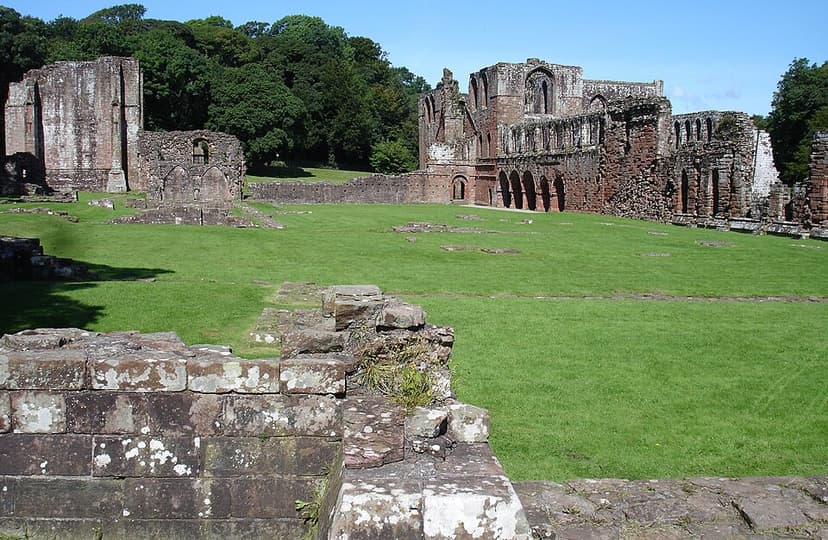
Furness Abbey
Furness Abbey, originally founded in 1123 as part of the Order of Savigny, became a prominent Cistercian monastery by the 15th century, renowned as the second wealthiest and most powerful in England. Situated in Cumbria, England, its extensive ruins, constructed from local sandstone, showcase significant examples of early Gothic and Perpendicular Gothic architecture. The abbey played a crucial role in regional governance and trade before its dissolution during the English Reformation in 1537. Today, it stands as a substantial historical site, attracting visitors and undergoing conservation efforts.