
Dover Priory
Christianity·England·Partially extant, integrated into Dover College·12th century
Dover Priory, originally known as the Priory of St. Mary the Virgin and St. Martin of the New Work or Newark, was a significant monastic institution in Dover, England. Its history spans multiple traditions, beginning with secular canons, transitioning to canons regular of the Augustinian rule, and finally becoming a Benedictine monastery. The priory played a role in local governance and religious life before its dissolution in 1538, with parts of its medieval structures surviving today, integrated into Dover College.
Key Facts
- ›Founded in 1130 by Archbishop William de Corbeil.
- ›Initially occupied by Augustinian canons, later became a Benedictine cell of Canterbury.
- ›Suffered damage from fire in 1201 and was pillaged by the French in 1295.
- ›Suppressed in 1538 during the Dissolution of the Monasteries.
- ›Parts of the medieval buildings, including the Strangers' Refectory and gateway, are still extant and in use.

Norman, Medieval
Strangers' Refectory, Priory Gateway, Priory Guesthouse, Dover Bible
- Priory of St. Mary the Virgin and St. Martin of the New Work
- Newark
King Eadbald of Kent, King Wihtred, Odo, Bishop of Bayeux, William De Corbeil, Henry I, Theobald, King Stephen, Thomas Cromwell, Richard Thornden Or Thornton, Thomas Cranmer, Henry Bingham
Foundation In 1130, Fire Damage In 1201, Pillage By the French In 1295, Dissolution In 1538
About Dover Priory
Dover Priory, officially the Priory of St. Mary the Virgin and St. Martin of the New Work, commonly known as Newark, was a prominent monastic institution situated in Dover, southeast England. Its history is marked by evolving religious affiliations, initially established for secular canons, then Augustinian canons regular, and finally becoming a Benedictine monastery as a dependent cell of Christchurch Monastery, Canterbury. The priory's existence spanned several centuries, contributing to the religious and social fabric of Dover before its cessation during the Dissolution of the Monasteries.
History and Significance
The origins of a monastic community in Dover can be traced back to the early 7th century with secular canons instituted by King Eadbald of Kent. By the end of the 7th century, these canons were transferred to a new church dedicated to St. Martin. Following the Norman Conquest, this church was granted to Odo, Bishop of Bayeux, who rebuilt it on a larger scale.
A significant transformation occurred in 1130 when Archbishop William de Corbeil, with King Henry I's charter, established a new priory to extend his influence. This new foundation, dedicated to the Blessed Virgin Mary and St. Martin, began construction in 1131 and was partially occupied by canons regular within five years. Archbishop Theobald later confirmed its Benedictine Rule and its status as a cell of Canterbury Cathedral. This led to considerable disputes over the following centuries between the monks of the cathedral and the canons of Dover Priory.
The priory was repaired and extended after a fire in 1201 and suffered from a French raid in 1295, during which a monk was murdered. The priory church was described as exceptionally large and impressive. A notable feature was its scriptorium and library, from which parts of its collection, including the significant Dover Bible, later reappeared in Cambridge colleges.
Dissolution and Later Use
Dover Priory was suppressed in 1538 during the Dissolution of the Monasteries. Following its dissolution, many of its buildings were plundered for materials, leaving only a few structures standing, including barns, a gatehouse, the refectory, and a large hall. These remaining buildings were adapted for agricultural use, with the 'Priory Barn' sometimes serving as a refuge for vagrants, reflecting a folk memory of the priory's past role as a place of hospitality.
The lands were eventually granted to Archbishop Thomas Cranmer and subsequently leased out. In the 18th and 19th centuries, illustrations depict the priory farm as a picturesque ruin. Much of the remaining structures were demolished in the mid-19th century. However, the site found new purpose when Dover College was established in 1871, leasing and eventually acquiring parts of the priory buildings. The Strangers' Refectory continues to be used for concerts, and the priory guesthouse has been consecrated as the school chapel, preserving some of the priory's medieval architecture within an educational setting.
Source: Wikipedia ↗
Frequently Asked Questions
What was Dover Priory originally dedicated to?
Dover Priory was originally dedicated to the Blessed Virgin Mary and St. Martin. It was known as St. Martin's of the New Work to distinguish it from the parish church dedicated to St. Martin.
What religious orders occupied Dover Priory?
The priory's occupants changed over time. It was first established for canons regular of the Augustinian rule and later became a Benedictine monastery, serving as a cell of Christchurch Monastery, Canterbury.
When was Dover Priory founded and dissolved?
The new priory began construction in 1131 and was partially occupied within five years. It was suppressed in 1538 during the Dissolution of the Monasteries.
What remains of Dover Priory today?
Today, parts of Dover Priory's medieval buildings survive. These include the 12th-century Strangers' Refectory, the gateway, and the priory guesthouse, which are now incorporated into Dover College.
What was the significance of the Strangers' Refectory?
The Strangers' Refectory, built in the 12th century, still retains its function and is used for concerts. It is one of the surviving medieval structures from the priory.
Related Monasteries

Cressing Preceptory
Cressing Temple was one of the earliest and largest estates of the Knights Templar in England, established in 1136. Following the suppression of the Templars, it was transferred to the Knights Hospitaller and later confiscated by the Crown. Today, the site is a visitor attraction, renowned for its remarkably preserved medieval barns, including what is claimed to be the oldest standing timber-framed barn in the world.
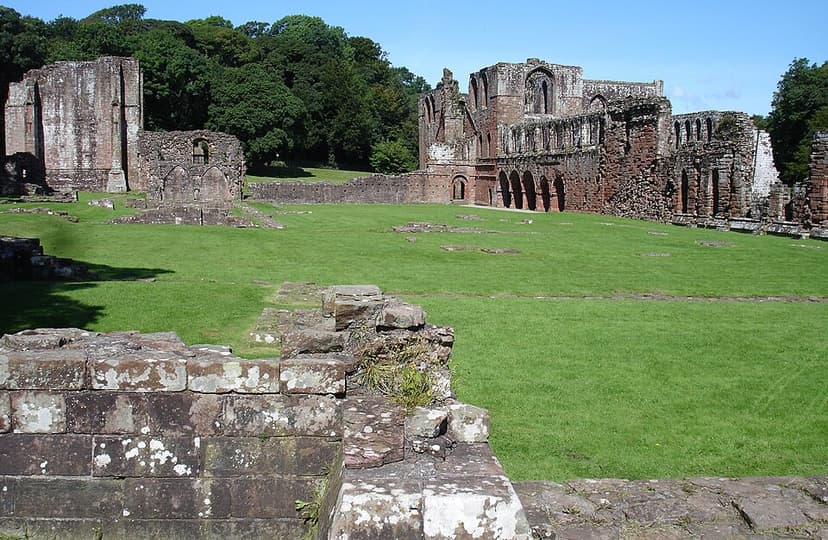
Furness Abbey
Furness Abbey, originally founded in 1123 as part of the Order of Savigny, became a prominent Cistercian monastery by the 15th century, renowned as the second wealthiest and most powerful in England. Situated in Cumbria, England, its extensive ruins, constructed from local sandstone, showcase significant examples of early Gothic and Perpendicular Gothic architecture. The abbey played a crucial role in regional governance and trade before its dissolution during the English Reformation in 1537. Today, it stands as a substantial historical site, attracting visitors and undergoing conservation efforts.

Torre Abbey
Torre Abbey, located in Torquay, Devon, was founded in 1196 as a monastery for Premonstratensian canons. It is now the best-preserved medieval monastery in Devon and Cornwall, featuring medieval and Georgian rooms, formal gardens, and the third-largest art collection in Devon. The site transitioned from a monastic institution to a private residence and is now a municipal art gallery and museum.