
Furness Abbey
Furness Abbey, originally founded in 1123 as part of the Order of Savigny, became a prominent Cistercian monastery by the 15th century, renowned as the second wealthiest and most powerful in England. Situated in Cumbria, England, its extensive ruins, constructed from local sandstone, showcase significant examples of early Gothic and Perpendicular Gothic architecture. The abbey played a crucial role in regional governance and trade before its dissolution during the English Reformation in 1537. Today, it stands as a substantial historical site, attracting visitors and undergoing conservation efforts.
Key Facts
- ›Founded in 1123 by Stephen, Count of Boulogne, initially for the Order of Savigny.
- ›Transferred to the Cistercian order in 1147.
- ›By the 15th century, it was the second wealthiest and most powerful Cistercian abbey in England.
- ›The majority of the current ruins date from the 12th and 13th centuries.
- ›Sacked by Robert the Bruce in 1316 and abandoned for two years.
- ›Dissolved during the English Reformation in 1537 and surrendered by Abbot Alexander Pyle.
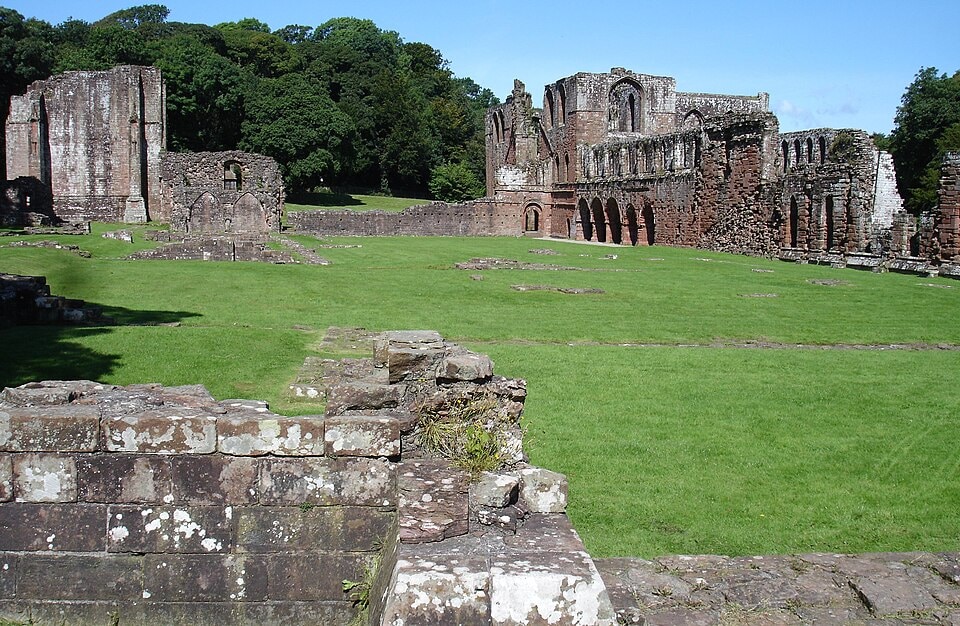
Early Gothic, Perpendicular Gothic
Cruciform Church Ruins, 15th-Century Perpendicular Gothic Presbytery, 12th-Century Transepts, Well-Preserved East Range of the Cloister, 13th-Century Chapter House, Grand Infirmary Ruins, Remains of Precinct Wall and Gatehouses
St. Mary of Furness
Stephen, Count of Boulogne, Robert the Bruce, Alexander Banke, Alexander Pyle, William Wordsworth, J. M. W. Turner, Queen Victoria, Augusta Stanley, Theodore Roosevelt, Li Hongzhang
- Founded In 1123.
- Transferred To Cistercians In 1147.
- Sacked By Robert the Bruce In 1316.
- Abandoned For Two Years After Robert the Bruce's Attack.
- Fortified Piel Castle In 1327.
- Affected By the Black Death In 1349.
- Raided By the Earl of Derby In 1514.
- Surrendered In Spring 1537, Marking the Dissolution of the Monastery.
- Became A Site of Interest For Romantic Tourists In the 18th and 19th Centuries.
- Handed Over To State Care In 1923.
- Restoration Work Between 2008 and 2017.
About Furness Abbey
Furness Abbey, also known as St. Mary of Furness, stands as a significant testament to medieval monastic life in Cumbria, England. Established in 1123 by Stephen, Count of Boulogne, it was initially part of the Order of Savigny. The monks relocated to its permanent Furness site within three years, finding the original location unsuitable. By 1147, the abbey had joined the Cistercian order, and over the subsequent centuries, it grew to become the second wealthiest and most powerful Cistercian monastery in England, surpassed only by Fountains Abbey.
History and Influence
The abbey's prosperity was built upon extensive landholdings and its role as a dominant regional power. The monks held considerable influence on the Isle of Man, owning land and mines, and even constructing Piel Castle to control trade. This power, however, also brought conflict. Furness Abbey was sacked by Robert the Bruce in 1316, forcing its abandonment for two years. Later, to avoid further destruction during a subsequent invasion, the abbot paid to support Robert the Bruce's forces. The abbey also suffered greatly from the Black Death in 1349, which likely decimated its monastic community.
Dissolution and Legacy
By the 15th century, Furness Abbey had been extensively remodeled and stood as one of England's grandest Cistercian abbeys, largely constructed from local sandstone. Despite its wealth, mismanagement in the 16th century led to its downfall. Abbot Alexander Banke's tenure saw the abbey raided, and several monks were executed for their support of the Pilgrimage of Grace, an attempt to halt Henry VIII's Dissolution of the Monasteries. Abbot Alexander Pyle surrendered the abbey in the spring of 1537, making it one of the first wealthy monastic houses to fall. Following its dissolution, the buildings were rapidly demolished, though some outbuildings were converted into a manor house. The magnificent ruins, however, soon became a celebrated attraction for Romantic tourists, including William Wordsworth and J. M. W. Turner, who were captivated by their atmospheric beauty. Today, Furness Abbey is a Scheduled Monument and Conservation Area, with ongoing efforts to preserve its impressive remains for future generations. It is primarily recognized for its early Gothic and Perpendicular Gothic architectural elements, and its historical importance as a center of monastic power and influence.
Source: Wikipedia ↗
Frequently Asked Questions
When was Furness Abbey founded?
Furness Abbey was founded in 1123. It was originally established for the Order of Savigny before passing to the Cistercians in 1147.
What religious order was Furness Abbey part of?
Furness Abbey was initially founded for the Order of Savigny. It later became a prominent monastery of the Cistercian order.
What is the historical significance of Furness Abbey?
Furness Abbey was once the second wealthiest and most powerful Cistercian monastery in England. It held significant influence as a large landowner and was a major economic and political force in the region.
What happened to Furness Abbey?
Furness Abbey was dissolved during the English Reformation in 1537. The buildings were subsequently demolished, leaving behind extensive ruins.
Can visitors access Furness Abbey today?
Yes, Furness Abbey is open to the public during the summer season, operated by English Heritage. Visitors can explore the substantial ruins and a small visitor centre.
What architectural styles are present in the ruins of Furness Abbey?
The ruins of Furness Abbey showcase early Gothic architecture, particularly in the transepts, and Perpendicular Gothic style in the presbytery.
Related Monasteries

Canterbury Cathedral Priory
Canterbury Cathedral Priory, formally known as the Priory of Christ Church, Canterbury, was a Benedictine monastic community intrinsically linked to the seat of the Archbishop of Canterbury. Founded in 597 AD, it underwent significant rebuilding and expansion throughout its history, notably after fires in 1174 and a major reconstruction in the Gothic style. Its importance was amplified by its role as a major pilgrimage site, particularly for the shrine of Thomas Becket, which significantly funded its later architectural developments.

Cressing Preceptory
Cressing Temple was one of the earliest and largest estates of the Knights Templar in England, established in 1136. Following the suppression of the Templars, it was transferred to the Knights Hospitaller and later confiscated by the Crown. Today, the site is a visitor attraction, renowned for its remarkably preserved medieval barns, including what is claimed to be the oldest standing timber-framed barn in the world.

Dover Priory
Dover Priory, originally known as the Priory of St. Mary the Virgin and St. Martin of the New Work or Newark, was a significant monastic institution in Dover, England. Its history spans multiple traditions, beginning with secular canons, transitioning to canons regular of the Augustinian rule, and finally becoming a Benedictine monastery. The priory played a role in local governance and religious life before its dissolution in 1538, with parts of its medieval structures surviving today, integrated into Dover College.