
Canterbury Cathedral Priory
Canterbury Cathedral Priory, formally known as the Priory of Christ Church, Canterbury, was a Benedictine monastic community intrinsically linked to the seat of the Archbishop of Canterbury. Founded in 597 AD, it underwent significant rebuilding and expansion throughout its history, notably after fires in 1174 and a major reconstruction in the Gothic style. Its importance was amplified by its role as a major pilgrimage site, particularly for the shrine of Thomas Becket, which significantly funded its later architectural developments.
Key Facts
- ›Founded in 597 AD by Augustine of Canterbury, initially as a Benedictine monastery.
- ›Became a major pilgrimage destination following the martyrdom of Archbishop Thomas Becket in 1170.
- ›Underwent substantial rebuilding in the Gothic style after a fire in 1174, with eastward extensions to accommodate pilgrims.
- ›The monastic buildings were arranged to the north of the church, an unusual layout for Benedictine monasteries.
- ›The shrine of Thomas Becket was a significant source of revenue, funding much of the cathedral's later construction.
- ›Surrendered to the Crown in 1539 during the Dissolution of the Monasteries.

Norman, Gothic, Perpendicular Gothic
Shrine of Thomas Becket, Trinity Chapel, Corona, Chapter-House, Crypt, the Chair of St Augustine
Priory of Christ Church, Canterbury, Christ Church Priory
Augustine of Canterbury, Thomas Becket, Dunstan, Lanfranc, Anselm, Gervase of Canterbury, William of Sens, William the Englishman, Edward Plantagenet, Henry Iv, Desiderius Erasmus
- Founding of the Cathedral and Monastery
- Murder of Thomas Becket
- Fire and Rebuilding of the Quire
- Construction of Trinity Chapel and Corona
- Rebuilding of Nave and Transepts In Perpendicular Style
- Dissolution of the Monasteries
- Puritan Iconoclasm
About Canterbury Cathedral Priory
Canterbury Cathedral Priory, formally known as the Priory of Christ Church, Canterbury, was a significant Benedictine monastic institution intrinsically linked to the seat of the Archbishop of Canterbury. Its origins trace back to the founding of Canterbury Cathedral in 597 AD by Augustine of Canterbury, who led the Gregorian Mission to convert Anglo-Saxons to Christianity. For centuries, it served not only as the spiritual heart of England but also as a thriving monastic community.
History and Development
The priory's history is marked by periods of destruction and remarkable reconstruction. After initial rebuilding in the Norman style between 1070 and 1077, the east end was substantially enlarged and then, following a devastating fire in 1174, largely rebuilt in the Gothic style. This Gothic reconstruction, particularly the eastward extensions, was heavily influenced by the need to accommodate the growing flow of pilgrims visiting the shrine of Thomas Becket, the archbishop murdered within the cathedral in 1170.
The martyrdom of Thomas Becket was a pivotal event that transformed the priory into a major pilgrimage destination. The veneration of Becket led to significant expansion and a considerable increase in wealth from pilgrims' revenues, which funded further architectural endeavors. The Trinity Chapel, built to house Becket's shrine above his original tomb, and the circular chapel known as the Corona or 'Becket's Crown', were key additions of this era.
Later centuries saw further significant architectural changes. The nave and transepts were rebuilt in the Perpendicular Gothic style from the late 14th century, under master masons like Henry Yevele. The monastic buildings themselves, unusually located to the north of the church, were also subject to repairs and remodelling, including the addition of lierne vaulting to the cloisters.
Dissolution and Legacy
The priory's monastic life came to an end with the Dissolution of the Monasteries. The Priory of Christ Church was surrendered to the Crown on March 30, 1539. The monastic community was ejected, and the cathedral reverted to its status as a college of secular canons. The shrine of St Thomas Becket was destroyed on the orders of King Henry VIII, and its vast treasures confiscated. Despite the end of its monastic function, Canterbury Cathedral remains a UNESCO World Heritage Site, a testament to its profound historical, religious, and architectural significance.
Source: Wikipedia ↗
Frequently Asked Questions
When was Canterbury Cathedral Priory founded?
The cathedral and its associated monastic community were founded in 597 AD by Augustine of Canterbury. This marked the beginning of Christianity in England and the establishment of Canterbury as a spiritual center.
What was the significance of Thomas Becket to the priory?
Archbishop Thomas Becket was murdered in the cathedral in 1170. His subsequent veneration as a saint transformed the priory into a major pilgrimage site, with his shrine drawing vast numbers of visitors and providing substantial income for the monastery's upkeep and expansion.
How did the Dissolution of the Monasteries affect the priory?
The priory was surrendered to the Crown on March 30, 1539, during the Dissolution of the Monasteries. The monks were ejected, and the monastery ceased to exist in its monastic form, reverting to a college of secular canons.
What architectural styles are present at Canterbury Cathedral Priory?
The priory showcases a range of architectural styles due to its long history of rebuilding. Key styles include Norman, Gothic (particularly following the 1174 fire), and Perpendicular Gothic in the later medieval period.
What is notable about the arrangement of the monastic buildings?
Unusually for Benedictine monasteries, the cloister and monastic buildings at Canterbury were situated to the north of the church, rather than the more common southern position. This arrangement included a separate chapter-house and various buildings for hospitality and the monks' daily life.
Related Monasteries

Canterbury — St Augustine's Abbey
St Augustine's Abbey was a Benedictine monastery in Canterbury, England, founded in 598 and functioning until its dissolution in 1538. Established by St Augustine of Canterbury, it served as a royal burial place, a center of learning, and a missionary school. After centuries of decline and dismantling, parts of the site were repurposed for education, and the ruins are now preserved and managed by English Heritage.

Llandeilo
Llandeilo is a historic town in Carmarthenshire, Wales, named after the 6th-century Celtic saint, Saint Teilo. Founded as an early Christian settlement and later a significant ecclesiastical center, it evolved into an important medieval market town. Today, Llandeilo is recognized for its sophisticated shopping, local arts and crafts, and its adjacency to the Brecon Beacons National Park.
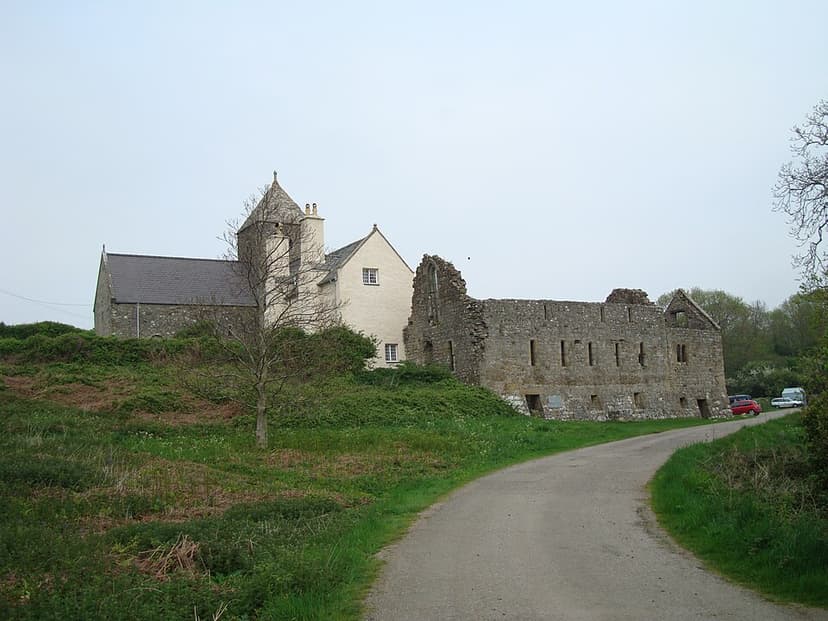
Penmon Priory
Penmon Priory is a historic monastic site located on the eastern tip of the Isle of Anglesey in Wales. Traditionally founded in the early 6th century by Saint Seiriol, it evolved from a clas into an Augustinian priory before its dissolution in 1538. The site is notable for its surviving medieval buildings, including the Priory Church of St Seiriol, two ancient crosses, and a well, with parts of the complex potentially dating back to the earliest Christian structures in Wales.