
Ten Duinen Abbey
Christian·Belgium·Ruins (museum site) and former monastic buildings (seminary)·12th century
Ten Duinen Abbey, also known as the Abbey of the Dunes, was a historically rich and influential Cistercian monastery located in Koksijde, Belgium. Founded in the 12th century, it grew to become one of the wealthiest religious institutions in medieval Flanders through donations and extensive land reclamation. The abbey faced significant destruction during religious conflicts but was re-established in Bruges, where it continued its monastic life until its suppression in the late 18th century. Today, its medieval ruins in Koksijde are preserved as a museum site.
Key Facts
- ›Founded in 1107 by hermit Ligerius near Koksijde.
- ›Affiliated with the Cistercian Order in 1139.
- ›Became one of the richest and most influential religious institutions in medieval Flanders.
- ›Suffered vandalism and sacking by Protestant and Calvinist forces in the late 16th century.
- ›Relocated to Bruges in 1627 and rebuilt.
- ›Suppressed in 1796 during the French occupation; ruins in Koksijde are now a museum.

- Extensive Landholdings Through Donations and Land Reclamation
- Medieval Ruins Preserved As A Museum Site
- Dependent House Established At Eastchurch, Kent
- Daughter House Ter Doest Abbey Founded
Abbey of the Dunes, Abdij Ten Duinen
Ligerius
Founded By Ligerius, Adopted Rule of St. Benedict, Affiliated With Cistercian Order, Vandalized By Protestant Iconoclasts, Sacked By Calvinist Rebel Forces, Relocated To Bruges, Suppressed and Goods Confiscated
About Ten Duinen Abbey
Ten Duinen Abbey, known in Dutch as Abdij Ten Duinen and sometimes referred to as the Abbey of the Dunes, was a significant Cistercian monastery in what is now Belgium. Its origins trace back to 1107 when a religious community was established in the dunes near Koksijde by the hermit Ligerius. This community adopted the Rule of St. Benedict in 1120 and formally joined the Cistercian Order in 1139. Over the centuries, Ten Duinen Abbey grew to become one of the wealthiest and most influential religious institutions within the medieval County of Flanders.
History and Development
The abbey's prosperity was largely built upon extensive landholdings, which were expanded through both donations and ambitious land reclamation projects in the dune and polder areas. Lay brothers played a crucial role in managing these lands, particularly in sheep rearing for the burgeoning cloth trade. The abbey also established a dependent house in Eastchurch, Kent, to facilitate the export of English wool. A significant daughter house, Ter Doest Abbey, was founded in 1175 and also achieved considerable wealth and influence.
Construction of new monastic buildings began in 1214 and was completed in 1237, designed to accommodate a community of approximately 400 monks and lay brothers. The new church was consecrated in 1262. However, the abbey faced considerable turmoil during periods of religious conflict. In 1566, its church was vandalized by Protestant iconoclasts, and in 1578, Calvinist rebel forces sacked the monastery, scattering the community.
Despite these setbacks, the community regrouped and, after decades in temporary accommodations, was re-established in Bruges in 1627. New monastery buildings were erected in Bruges between 1628 and 1642, and a new church was completed there in 1788. The abbey's independent existence came to an end on April 9, 1796, during the French occupation of Belgium, when it was suppressed and its assets confiscated. The former monastic buildings in Bruges later housed the diocesan seminary of Bruges, established in 1833.
Legacy
Excavations of the medieval ruins of Ten Duinen Abbey in the dunes near Koksijde commenced in 1897 and have continued through several campaigns, most notably in 1955 and 1987–88. These ruins are now maintained as a museum site, offering a tangible connection to the abbey's rich medieval past. The historical records also note notable figures associated with the abbey, including diplomats and scholars such as Aegidius de Roya and Jan Sindewint.
Source: Wikipedia ↗
Frequently Asked Questions
When was Ten Duinen Abbey founded?
A religious community was first founded in the dunes near Koksijde by the hermit Ligerius in 1107. The community adopted the Rule of St. Benedict in 1120 and became affiliated with the Cistercian Order in 1139.
What was the significance of Ten Duinen Abbey in medieval Flanders?
Ten Duinen Abbey was one of the richest and most influential religious institutions in the medieval County of Flanders. Its wealth was partly derived from donations and extensive land reclamation, allowing lay brothers to raise sheep and produce wool for the cloth trade.
What happened to Ten Duinen Abbey during religious conflicts?
The abbey's church was vandalized by Protestant iconoclasts in 1566. In 1578, it was sacked by Calvinist rebel forces, which led to the scattering of the community. They regrouped and eventually re-established themselves elsewhere.
Where is Ten Duinen Abbey located today?
The original monastery was located in the dunes near Koksijde, Belgium, and its ruins are now a museum site. The community later relocated to Bruges, where new monastery buildings were erected in the 17th century.
When was Ten Duinen Abbey suppressed?
Ten Duinen Abbey was suppressed on April 9, 1796, during the French occupation of Belgium, and its goods were confiscated.
Related Monasteries

Ninove Abbey
Ninove Abbey was a Premonstratensian monastery established in 1137 in Ninove, Belgium. Initially founded by Gerard I, Lord of Ninove, it grew significantly, with its monks cultivating uncultivated lands near the town. Although damaged during the Eighty Years' War and suppressed during the French period, the abbey church was preserved and repurposed as a parish church.
Ten Putte Abbey
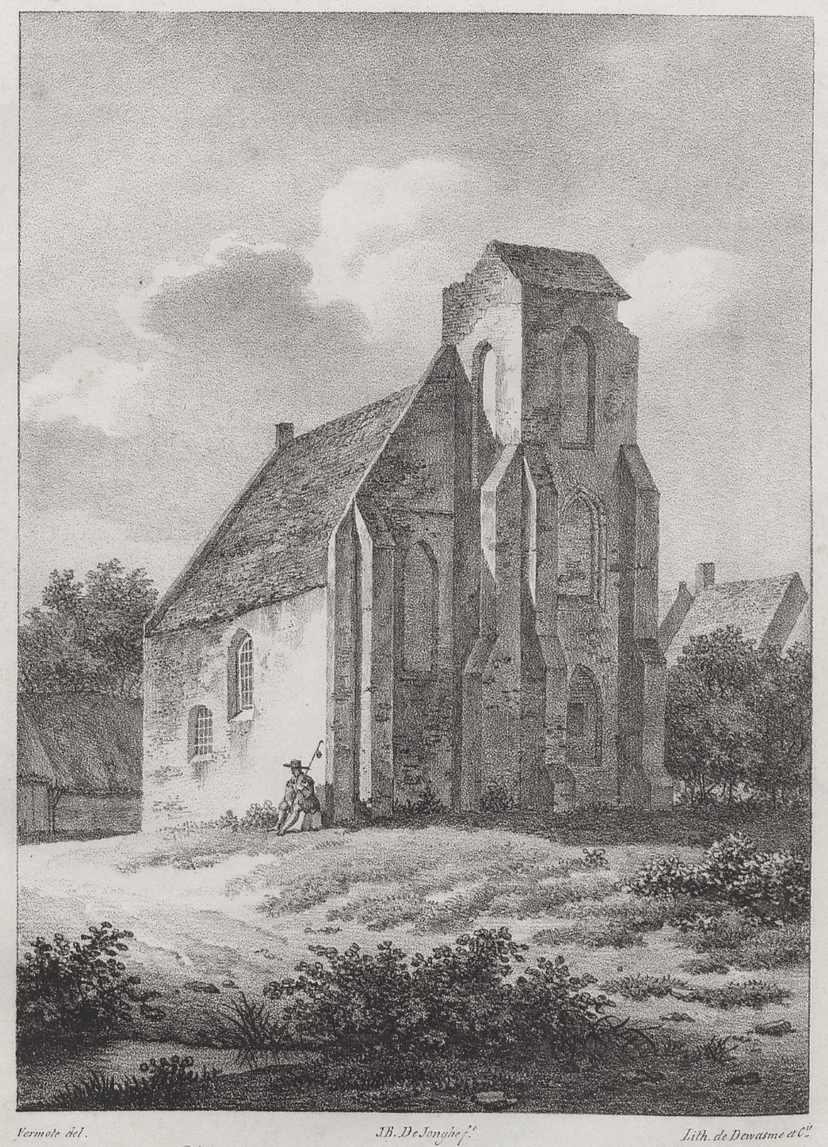
Ten Putte Abbey, also known as Saint Godelina Abbey, is a monastery located in Gistel, Belgium. Founded between 1137 and 1171, it has a complex history marked by destruction during religious wars and subsequent reconstructions. The abbey is significant as the site where Saint Godelina was murdered in 1070, and it has been associated with Benedictine nuns for much of its existence, currently housing the "Mother of Peace" community.

Villers Abbey
Villers Abbey, a former Cistercian monastery located in Belgium, was founded in 1146 and abandoned in 1796. Once a significant religious and economic center, the abbey's extensive ruins are now classified as part of Wallonia's Major Heritage. The site has undergone considerable restoration and is a popular tourist destination, hosting cultural events.