
Bruges
Roman Catholic·Belgium·Active city and tourist destination·9th-10th century
Bruges, the capital of West Flanders, is a historic Belgian city renowned for its well-preserved medieval architecture and extensive canal system, earning it the nickname "Venice of the North." Originally a Roman settlement, it rose to prominence in the Middle Ages as a major commercial hub and the capital of the County of Flanders, fostering advanced merchant capitalism and banking. Despite a decline after 1500 due to silting of its sea access, Bruges experienced a significant revival in the late 19th century, becoming a popular tourist destination and a UNESCO World Heritage Site, celebrated today for its cultural heritage, arts, and vibrant atmosphere.
Key Facts
- ›The historic city center of Bruges is a UNESCO World Heritage Site, recognized for its intact medieval architecture.
- ›Bruges was the capital of the County of Flanders from 1089 and received its city charter in 1128.
- ›The city developed into a major commercial center by the 12th century, facilitated by the tidal inlet of Het Zwin and its strategic location at trade crossroads.
- ›It is home to the Belfry of Bruges, a 13th-century belfry that is part of the UNESCO World Heritage site 'Belfries of Belgium and France'.
- ›Bruges was designated a European Capital of Culture in 2002 and attracts approximately eight million tourists annually.
- ›The port of Zeebrugge, built in 1907, has become one of Europe's most important modern ports.

Medieval
Canal System, Well-Preserved Medieval Architecture, Historic City Center, Belfry of Bruges, Church of Our Lady, Basilica of the Holy Blood, Ten Wijngaerde Beguinage, Het Zwin
Brugge, Venice of the North
Julius Caesar, Baldwin I of Flanders, Thierry of Alsace, Jan Breydel, Pieter De Coninck, Philip the Good, William Caxton, Edward Iv of England, Richard Iii of England, Charles Ii of England, George Rodenbach, Jan Van Eyck, Hans Memling
- Julius Caesar's Conquest of the Menapii
- Franks Take Over the Region
- Viking Incursions Prompt Reinforcement of Fortifications
- Relics of Saint Donatian Brought To the Town
- Became Capital of the County of Flanders
- Received City Charter
- Storm Re-Establishes Access To the Sea Via Het Zwin
- First Merchant Fleet From Genoa Appears In Port
- Bruges Matins and Battle of the Golden Spurs
- Bourse Opened
- Venetian Galleys First Appeared
- Flemish Revolts
- Philip the Good, Duke of Burgundy, Sets Up Court
- First Book In English Printed By William Caxton
- Zwin Channel Begins Silting Up
- City Briefly Under Protestant Rule
- Secession of the Spanish Netherlands Leads To Final Decline
- Charles Ii of England and His Court In Exile Based In Bruges
- Bruges Becomes A Major Tourist Destination
- German Occupation In World War I and Ii
- Liberation By Canadian Troops
- Designated European Capital of Culture
About Bruges
Bruges, the capital of West Flanders in Belgium, is a city celebrated for its exceptionally well-preserved medieval architecture and extensive network of canals, earning it the evocative nickname "Venice of the North." Its historic city center is recognized as a UNESCO World Heritage Site, a testament to its enduring historical significance and architectural integrity.
Origins and Rise to Prominence
The area that is now Bruges has a history of settlement dating back to prehistoric times. However, its more structured development began in the early medieval period, with fortifications erected after Julius Caesar's conquest and later reinforced during Viking incursions. The Franks administered the region, and by the ninth and tenth centuries, early habitation centered on the Burgh terrain, likely featuring a fortified settlement and church. A significant early event was the arrival of the relics of Saint Donatian of Reims, making Bruges a pilgrimage destination and establishing Saint Donatian as its patron saint.
In 1089, Bruges ascended to become the capital of the County of Flanders, a pivotal moment that set the stage for its golden age. The city received its official charter in 1128, accompanied by the construction of new walls and canals. By the 12th century, Bruges had attained autonomous administration, and its prosperity was significantly boosted by Het Zwin, a crucial tidal inlet providing access to the sea. Though silting threatened direct access around 1050, a storm in 1134 re-established this vital link through the creation of a natural channel at the Zwin, extending its commercial reach to Damme.
A Medieval Commercial Powerhouse
Bruges' strategic location at the crossroads of northern Hanseatic League trade routes and southern trade routes propelled it to become one of the world's chief commercial cities. By the early 13th century, it was integral to Flemish and French cloth fairs. Entrepreneurs in Bruges adopted and innovated new forms of merchant capitalism, utilizing instruments like bills of exchange and letters of credit. The city actively welcomed foreign traders, notably Portuguese merchants dealing in spices. The development of a wool market, weaving industry, and cloth trade flourished under the protection of city walls, with entrepreneurs extending their economic reach to England and Scotland.
The arrival of the first merchant fleet from the Republic of Genoa in 1277 marked a significant expansion, establishing Bruges as a primary link to Mediterranean trade and introducing advanced commercial and financial techniques. The Bourse, established in 1309, is believed to be one of the world's first stock exchanges, evolving into the most sophisticated money market in the Low Countries. Numerous foreign merchants, including Castilian wool merchants and Basques, established communities and consulates, expanding the city's trading zones.
This era of wealth was not without social upheaval. The Bruges Matins in 1302, a night-time massacre of the French garrison by the Flemish militia, preceded the population's alliance with the Count of Flanders, culminating in the victory at the Battle of the Golden Spurs. The city maintained a prestigious militia, comprising professionals and specialized units.
Decline and Revival
Starting around 1500, the silting of the Zwin channel began to erode Bruges' prosperity, marking the end of its Golden Era. The city also became a center of humanism and Protestantism, experiencing brief Protestant rule in 1578. The secession of the Spanish Netherlands in 1584 led to a final decline, with Bruges falling behind Antwerp as an economic power. Despite efforts to modernize maritime infrastructure and a lace industry boom in the 17th century, Bruges gradually faded in importance, even serving as a base for Charles II of England and his court in exile during the 1650s.
The late 19th century witnessed a significant revival as Bruges emerged as one of the world's first tourist destinations, attracting wealthy visitors. George Rodenbach's novel "Bruges-la-Morte" captured the city's melancholic atmosphere, later inspiring an opera. Despite occupations during both World Wars, Bruges was largely spared from destruction. Post-1965, the city underwent a renaissance, with extensive restorations of its historic structures leading to a surge in tourism and economic activity. In 2002, Bruges was recognized as a European Capital of Culture, and it now attracts millions of tourists annually, celebrated for its medieval charm and vibrant cultural life.
Source: Wikipedia ↗
Frequently Asked Questions
What is Bruges famous for?
Bruges is most famous for its exceptionally well-preserved medieval architecture and extensive network of canals, which have earned it the moniker 'Venice of the North.' It is also recognized as a significant historical trading city and a UNESCO World Heritage Site.
When was Bruges founded?
While coastal settlements existed in the area during prehistoric times, early medieval habitation in Bruges began in the ninth and tenth centuries. The city received its city charter on July 27, 1128, marking a significant point in its urban development.
What is the historical significance of Bruges?
Bruges was the capital of the County of Flanders and became a global commercial center by the 12th century, pioneering new forms of merchant capitalism and banking. Its strategic location at trade crossroads, coupled with innovations in trade and finance, led to a golden age of prosperity.
Is Bruges a UNESCO World Heritage Site?
Yes, the historic city center of Bruges has been a UNESCO World Heritage Site since 2000. Additionally, the Belfry of Bruges is part of the 'Belfries of Belgium and France' UNESCO site, and the Ten Wijngaerde Beguinage is part of the 'Flemish Beguinages' UNESCO site.
Why did Bruges decline after its golden age?
The decline of Bruges began around 1500 as the Zwin channel, its vital sea access, started to silt up. This, combined with the secession of the Spanish Netherlands in 1584, led to its economic downfall, with Antwerp eventually surpassing it as the region's economic center.
What are some notable landmarks in Bruges?
Key landmarks include the Belfry of Bruges, the Church of Our Lady (housing Michelangelo's Madonna and Child), the Basilica of the Holy Blood, and the Ten Wijngaerde Beguinage. The city also features numerous well-preserved medieval buildings and old city gateways.
Related Monasteries

Ypres
Ypres, also known as Ieper in Dutch, is an ancient Belgian city with a rich history dating back to Roman times. It rose to prominence in the Middle Ages as a major center for the textile trade and played a significant role in Flemish history. During World War I, Ypres became the focal point of numerous brutal battles, earning it the nickname "Wipers" among British troops and becoming a symbol of immense sacrifice and loss. Today, it is a significant site for war remembrance and tourism, with many historical buildings, including the Cloth Hall, reconstructed to their former glory.

Westvleteren Abbey
St. Sixtus' Abbey, known as Sint-Sixtusabdij Westvleteren, is a Roman Catholic Trappist abbey in Westvleteren, Belgium. Renowned for its devout spiritual life, which emphasizes prayer, reading, and manual labor, the abbey also holds a significant reputation for its brewery, producing acclaimed Trappist beer. Its history traces back to the 13th century, evolving into a Trappist foundation in the 19th century.
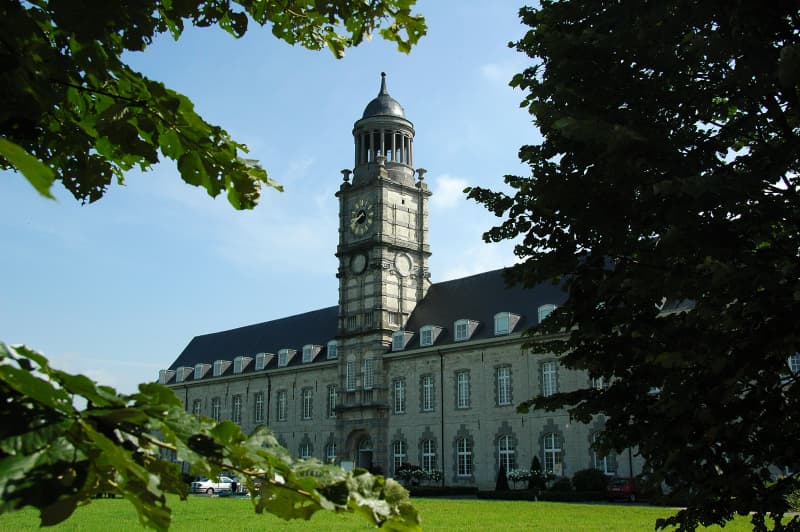
Hemiksem Abbey
St. Bernard's Abbey, Hemiksem, also known as St. Bernard's Abbey on the Scheldt, was a Cistercian monastery founded in 1243 in Hemiksem, within the province of Antwerp, Belgium. It played a role in the region's religious history until its dissolution during the French Revolution. The surviving buildings have since been repurposed for municipal and cultural use, becoming a symbol of the town's identity.