
Hemiksem Abbey
Roman Catholic·Belgium·municipally owned, repurposed·13th century
St. Bernard's Abbey, Hemiksem, also known as St. Bernard's Abbey on the Scheldt, was a Cistercian monastery founded in 1243 in Hemiksem, within the province of Antwerp, Belgium. It played a role in the region's religious history until its dissolution during the French Revolution. The surviving buildings have since been repurposed for municipal and cultural use, becoming a symbol of the town's identity.
Key Facts
- ›Founded in 1243 by Duke Henry I of Brabant and confirmed by Pope Urban IV.
- ›Suffered desertion in 1578 due to the iconoclastic movement.
- ›Most of the original buildings were destroyed by fire in 1672.
- ›Dissolved during the French Revolution in 1797, with monks relocating to Bornem Abbey.
- ›Buildings later served as a naval hospital, house of correction, military depot, and internment facility.
- ›Current buildings house municipal offices, a local history museum, and service flats.
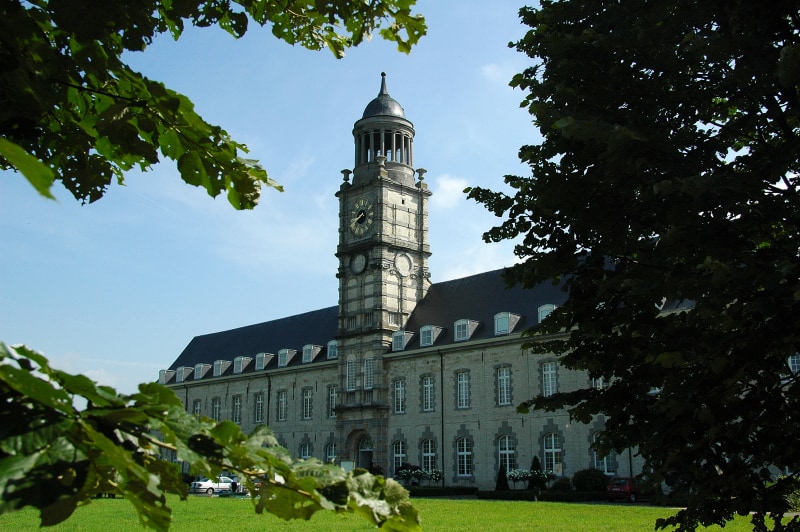
Baroque
- Impressive Western Facade With A 42m High Tower
- Distinctive Silhouette of the Principal Range, A Symbol of the Town
- Roelants Museum
St. Bernard's Abbey On the Scheldt, St. Bernard's Abbey, Hemiksem, Abbatiae S. Bernardi Ad Scaldim, Sint-Bernardusabdij Van Hemiksem, Abdij Sint-Bernaerdts Aan De Schelde
Duke Henry I of Brabant, Duke Henry Ii of Brabant, Pope Urban Iv, Joannes Van Heymissem, Gerardus Rubens, Benedict Neefs, Pierre Bruno Bourla
- Founded In 1243.
- Deserted In 1578 During the Iconoclastic Movement.
- Most Buildings Destroyed By Fire In 1672.
- Dissolved During the French Revolution In 1797.
- Repurposed As A Naval Hospital .
- Converted To A House of Correction .
- Used As A Military Depot .
- Used As An Internment Facility After World War Ii.
- Used By the Military From 1948 To 1977.
- Legally Protected From 1973.
- Purchased By the Municipality In 1988.
About Hemiksem Abbey
St. Bernard's Abbey, Hemiksem, also known as St. Bernard's Abbey on the Scheldt, was a significant Cistercian monastery located in Hemiksem, in the province of Antwerp, Belgium. Its establishment in 1243 was a concerted effort by the Dukes of Brabant, Henry I and his son Henry II, and was formally confirmed by Pope Urban IV. The abbey was named in honor of Saint Bernard of Clairvaux, a pivotal figure in the Cistercian order.
History and Development
The abbey's history was marked by periods of both prosperity and turmoil. In the late 16th century, the monastic community faced pressure, leading to a temporary desertion in 1578 during the iconoclastic movement. A devastating fire in 1672 destroyed much of the complex, necessitating rebuilding efforts that resulted in the structures largely dating from the late 17th and 18th centuries. Notably, the impressive western facade and its 42-meter tower were completed during the abbacy of Joannes van Heymissem.
The monastery met its end during the French Revolution when the community was suppressed in 1797. The monks were expelled, and their extensive grounds and properties were abolished. The surviving members of the community later re-established themselves at Bornem Abbey in 1836.
Post-Revolutionary Use and Legacy
Following its dissolution, the abbey buildings underwent numerous transformations. They served successively as a naval hospital, a house of correction designed by architect Pierre Bruno Bourla to accommodate over 1500 individuals, a military depot, and an internment facility for collaborators after World War II. From 1948 to 1977, the military again occupied the premises before it stood empty.
Legal protection was granted to the building in 1973, and it was acquired by the municipality of Hemiksem in 1988. After restoration of the west and east wings, these areas now house the municipal administrative center and local police headquarters. The north wing is home to a local history museum and the Roelants Museum. The distinctive silhouette of the principal range of Hemiksem Abbey has become an enduring symbol of the town.
Source: Wikipedia ↗
Frequently Asked Questions
When was Hemiksem Abbey founded?
Hemiksem Abbey was founded in 1243. The establishment was initiated by Duke Henry I of Brabant and finalized by his son, Duke Henry II, with confirmation from Pope Urban IV.
What happened to the monastic community during the French Revolution?
The Cistercian community at Hemiksem was suppressed in 1797 during the French Revolution. The approximately 30 monks were expelled, and their estates and rights were abolished.
What is the current use of the former abbey buildings?
After extensive repurposing, the buildings now accommodate the administrative center of the municipality of Hemiksem, local police headquarters, service flats, and the Roelants Museum.
What significant events impacted the abbey's structures?
A major fire in 1672 destroyed most of the original buildings. The present structures largely date from renovations in the late 17th and 18th centuries and subsequent adaptations for various post-revolutionary uses.
Where is Hemiksem Abbey located?
The abbey is situated in Hemiksem, a municipality in the province of Antwerp, Belgium, historically on the banks of the Scheldt river.
Related Monasteries

Bruges
Bruges, the capital of West Flanders, is a historic Belgian city renowned for its well-preserved medieval architecture and extensive canal system, earning it the nickname "Venice of the North." Originally a Roman settlement, it rose to prominence in the Middle Ages as a major commercial hub and the capital of the County of Flanders, fostering advanced merchant capitalism and banking. Despite a decline after 1500 due to silting of its sea access, Bruges experienced a significant revival in the late 19th century, becoming a popular tourist destination and a UNESCO World Heritage Site, celebrated today for its cultural heritage, arts, and vibrant atmosphere.

Westvleteren Abbey
St. Sixtus' Abbey, known as Sint-Sixtusabdij Westvleteren, is a Roman Catholic Trappist abbey in Westvleteren, Belgium. Renowned for its devout spiritual life, which emphasizes prayer, reading, and manual labor, the abbey also holds a significant reputation for its brewery, producing acclaimed Trappist beer. Its history traces back to the 13th century, evolving into a Trappist foundation in the 19th century.

Celestines
The Celestines were a Roman Catholic monastic order, a branch of the Benedictines, founded in 1244 by Peter of Morone, who later became Pope Celestine V. Initially known as the Hermits of St Damiano, they adopted the name Celestines after their founder's papal election. The order was characterized by its rigorous ascetic practices and rules, which were more severe than the traditional Benedictine rule. The last Celestine house closed in 1785.