
Teignmouth Abbey
Teignmouth Abbey, also known as St. Scholastica's Abbey, is a former Benedictine abbey in Devon, England. Its origins trace back to a convent founded in Brussels in 1598, which later established daughter houses in Ghent and Dunkirk. Following persecution during the French Revolution, the community relocated to England, eventually settling at Teignmouth in 1863.
Key Facts
- ›The Benedictine community traces its lineage to a convent established in Brussels in 1598.
- ›The present building was constructed in 1863 by architect George Goldie.
- ›Nuns transferred to Teignmouth from Hammersmith, London, after fleeing the French Revolution.
- ›Some nuns from the dispersed Haslemere community joined Teignmouth Abbey in 1975.
- ›The building is a Grade II listed structure.
- ›The abbey has been converted into private apartments and the Abbey Lodge is now a private house.

Grade Ii Listed Building
St. Scholastica's Abbey
Lady Mary Percy, Dame Lucy Knatchbull, Magdalene Digby, Lady Abbess Messenger, George Goldie
- Founding of Convent In Brussels
- Establishment of Daughter House In Ghent
- Establishment of Daughter House In Dunkirk
- Dissolution of Sister Community At Pontoise and Nuns Joining Dunkirk
- Sacking of Convent At Dunkirk By Revolutionaries
- Imprisonment of Nuns At Gravelines
- Removal of Community To England and Residence In Hammersmith
- Construction of the Building In Teignmouth
- Dispersal of Benedictine Community At Haslemere and Some Nuns Joining Teignmouth
About Teignmouth Abbey
Teignmouth Abbey, also identified as St. Scholastica's Abbey, is a former Benedictine monastery located in Devon, England. Its historical lineage is complex, tracing back to a Benedictine convent established in Brussels in 1598 by Lady Mary Percy. This initial convent spawned daughter houses, including one in Ghent in 1624, which in turn founded a community in Dunkirk in 1662. The Dunkirk house later absorbed nuns from the dissolved community at Pontoise in 1784.
History and Relocation
The Dunkirk convent faced severe disruption in 1793 when it was sacked by revolutionaries, leading to the imprisonment of the religious at Gravelines. Following the deaths of eleven nuns, the remaining community was permitted to relocate to England, arriving in London in May 1795. They initially took up residence in an old convent in Hammersmith. The present building at Teignmouth was constructed in 1863 by architect George Goldie specifically for this community of Benedictine nuns, who transferred from their Hammersmith location. Further integration occurred in 1975 when some nuns from the dispersed Benedictine community at Haslemere, which had roots in the former East Bergholt Abbey, joined the Teignmouth community.
Current Status
The former abbey building is a Grade II listed structure. It has since been converted into private apartments, and the associated Abbey Lodge is now a private house, indicating that Teignmouth Abbey is no longer an active monastic site.
Source: Wikipedia ↗
Frequently Asked Questions
When was Teignmouth Abbey founded?
The Benedictine community that eventually formed Teignmouth Abbey has a history dating back to 1598 with the establishment of a convent in Brussels. The specific building in Teignmouth was constructed in 1863.
What is the history of the nuns at Teignmouth Abbey?
The community originated in Brussels, then moved to Ghent, and later Dunkirk. Fleeing the French Revolution, they resided in London before moving to Teignmouth in 1863. In 1975, some nuns from the Haslemere community joined them.
What happened to the building after the nuns left?
The former abbey building has been converted into private apartments. The adjacent Abbey Lodge is now a private residence.
Is Teignmouth Abbey still an active monastery?
No, Teignmouth Abbey is no longer an active monastery. The building has been converted for private residential use.
Related Monasteries
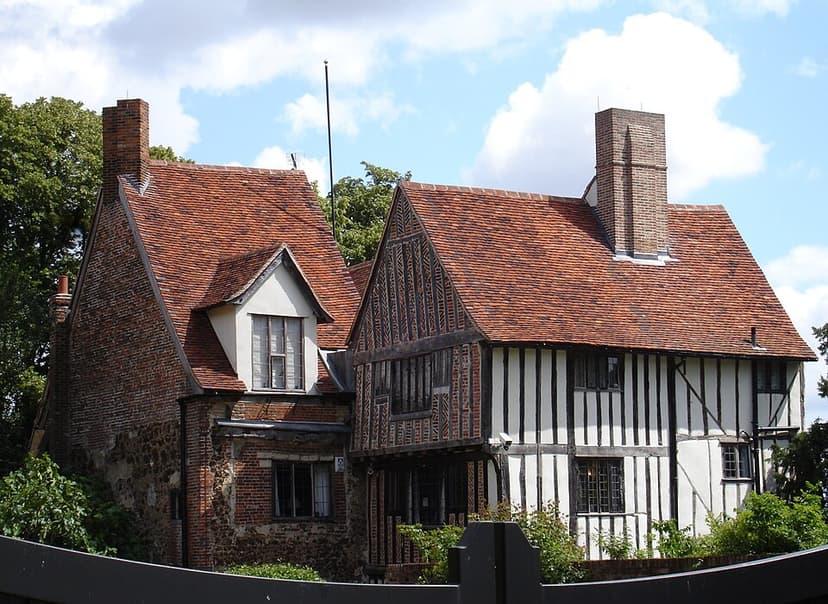
Beeleigh Abbey
Beeleigh Abbey, established in 1180 near Maldon, Essex, was a Premonstratensian (White Canons) monastery. It gained significance as a pilgrimage site due to the burial of the heart of Roger Niger, Bishop of London, and was later granted to Sir John Gate after the Dissolution of the Monasteries. Following periods as a public house and falling into ruin, it underwent significant restoration in the 20th century and is now a private residence with accessible gardens.
Carrow Priory
Carrow Abbey was a Benedictine priory in Norwich, England, founded around 1146 by King Stephen. It housed a prioress and nuns, playing a significant role in local ecclesiastical and legal matters. After the dissolution of the monasteries, the priory's structures were integrated into a private estate, undergoing significant renovations and additions, notably by the Martineau and Colman families. Today, it is known as a Grade I listed building, with parts reflecting its 16th-century origins and later 19th-century modifications.

Flaxley Abbey
Flaxley Abbey, a former Cistercian monastery founded in 1151, is now a Grade I listed English country house and private residence located in the Forest of Dean, Gloucestershire. Originally established by Roger Fitzmiles, 2nd Earl of Hereford, it served as a royal hunting lodge and received notable grants from several monarchs before its dissolution in 1536. The site was later acquired by the Boevey family and substantially rebuilt, remaining their family home until 1960.