
Carrow Priory
Carrow Abbey was a Benedictine priory in Norwich, England, founded around 1146 by King Stephen. It housed a prioress and nuns, playing a significant role in local ecclesiastical and legal matters. After the dissolution of the monasteries, the priory's structures were integrated into a private estate, undergoing significant renovations and additions, notably by the Martineau and Colman families. Today, it is known as a Grade I listed building, with parts reflecting its 16th-century origins and later 19th-century modifications.
Key Facts
- ›Founded circa 1146 by King Stephen of England.
- ›Originally a Benedictine priory for a prioress and twelve nuns.
- ›The priory was involved in legal disputes, particularly regarding jurisdiction.
- ›The anchoress Julian of Norwich is believed to have received training there.
- ›Became a Grade I listed building in 1954.
- ›The site was later incorporated into the Bracondale Estate and underwent significant renovations.
Tudor, Gothic Revival
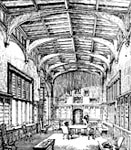
Prioress's Parlour, Former Hall, 16th-Century Brick Details, 19th-Century Wing With Diaper Pattern, Great Hooded Stone Fireplace Dated 1900, Moulded Plaster Ceilings, Gothic-Style Staircase
Carrow Abbey, Carrow Priory, St. Mary of Carhowe
King Stephen, Seyna, Lescelina, Julian of Norwich, Edith Wilton, Margaret Pygot, Cecily Stafford, Nathaniel Axtell, Philip Meadows Martineau, Jeremiah James Colman, Caroline Colman
- Foundation of the Priory
- Obtaining Amended Charters From King John and King Henry Iii
- Julian of Norwich's Training
- Dispute Over Ownership Between Carrow Priory and Holy Trinity Priory
- Dissolution of the Monasteries
- Renovations and Additions By the Colman Family
About Carrow Priory
Carrow Priory, often referred to as Carrow Abbey, is a former Benedictine priory located in Bracondale, southeast Norwich, England. Its establishment is attributed to King Stephen, who by charter granted lands for the foundation around 1146. Two nuns, sisters Seyna and Lescelina, are recorded as having begun the priory's construction, dedicating it to "St. Mary of Carhowe." Initially founded for a prioress and nine 'black nuns', its community later expanded to twelve.
History and Significance
The priory's history is marked by periods of legal and administrative development. Nuns sought and received enlarged grounds and amended charters from successive monarchs, including King John and King Henry III. During the 14th century, the anchoress Julian of Norwich is believed to have received her spiritual training at Carrow, with her writings showing Benedictine influences. The priory was also involved in significant legal disputes, notably a protracted disagreement in the 15th century over jurisdiction with the Prior of Holy Trinity, which was eventually resolved in favor of Carrow's prioress, Edith Wilton.
After the dissolution of the monasteries in 1538, Carrow was granted to Sir John Shelton. Subsequently, the estate passed through various hands, including the Martineau family, who constructed a Gothic-style priory from its ruins on their Bracondale Estate. By the late 19th century, the property was owned by the J & J Colman firm, who undertook considerable renovation and added a new wing. Carrow Abbey was designated a Grade I listed building in 1954. Today, the surviving structures, largely dating from the early 16th century and late 19th century, are part of a private residence, retaining elements of their historical architectural styles.
Source: Wikipedia ↗
Frequently Asked Questions
When was Carrow Abbey founded?
Carrow Abbey was founded around 1146. King Stephen granted lands for the establishment of the priory, and two nuns, Seyna and Lescelina, are said to have begun its construction at that time.
What religious order was Carrow Abbey part of?
Carrow Abbey was a Benedictine priory. It was established for a prioress and a community of Benedictine nuns, often referred to as 'black nuns'.
Who were some notable figures associated with Carrow Abbey?
The anchoress Julian of Norwich is said to have received training at the priory in the 1350s/60s. Later significant figures associated with the estate include members of the Martineau and Colman families, who owned and renovated the property.
What happened to Carrow Abbey after the dissolution of the monasteries?
Following the dissolution in 1538, Carrow Abbey was granted to Sir John Shelton. The property later became part of the Bracondale Estate and was owned by families like the Martineau and Colman families, who incorporated and renovated the existing structures.
What is the current status of Carrow Abbey?
Carrow Abbey is now a Grade I listed building and is part of a private estate. While parts of the structure date back to the 16th century, it has undergone considerable renovation and additions, particularly in the late 19th century.
Related Monasteries

Flaxley Abbey
Flaxley Abbey, a former Cistercian monastery founded in 1151, is now a Grade I listed English country house and private residence located in the Forest of Dean, Gloucestershire. Originally established by Roger Fitzmiles, 2nd Earl of Hereford, it served as a royal hunting lodge and received notable grants from several monarchs before its dissolution in 1536. The site was later acquired by the Boevey family and substantially rebuilt, remaining their family home until 1960.

Medmenham Abbey
Medmenham Abbey was a Cistercian monastery founded in the 12th century, originally dedicated to St. Mary. Although it was closed in 1536 during the Dissolution of the Monasteries, its ruins later became infamous in the mid-18th century as the meeting place for the Hellfire Club, led by Sir Francis Dashwood, who used the site for "obscene parodies of religious rites." The abbey has since undergone significant renovations and modifications, no longer resembling its original monastic form, and is now a private residence.
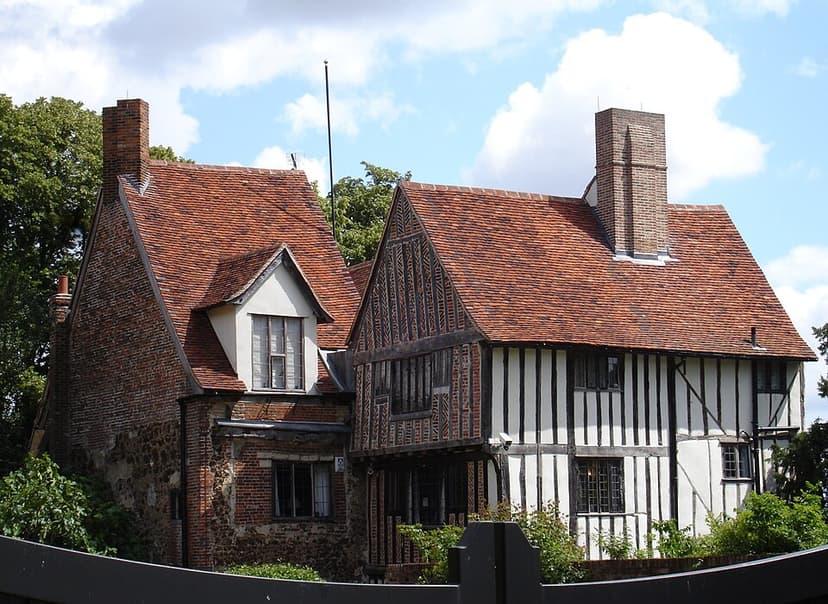
Beeleigh Abbey
Beeleigh Abbey, established in 1180 near Maldon, Essex, was a Premonstratensian (White Canons) monastery. It gained significance as a pilgrimage site due to the burial of the heart of Roger Niger, Bishop of London, and was later granted to Sir John Gate after the Dissolution of the Monasteries. Following periods as a public house and falling into ruin, it underwent significant restoration in the 20th century and is now a private residence with accessible gardens.