
Flaxley Abbey
Flaxley Abbey, a former Cistercian monastery founded in 1151, is now a Grade I listed English country house and private residence located in the Forest of Dean, Gloucestershire. Originally established by Roger Fitzmiles, 2nd Earl of Hereford, it served as a royal hunting lodge and received notable grants from several monarchs before its dissolution in 1536. The site was later acquired by the Boevey family and substantially rebuilt, remaining their family home until 1960.
Key Facts
- ›Founded in 1151 by Roger Fitzmiles, 2nd Earl of Hereford.
- ›Originally a Cistercian monastery, it was dissolved in 1536.
- ›Served as a royal hunting quarters for Kings Henry II and Edward III.
- ›Converted into a manor house after its dissolution.
- ›Purchased by James Boevey in 1648 and became the seat of the Crawley-Boevey Baronets.
- ›Substantially rebuilt by architect Anthony Keck for the Crawley-Boevey family.

Gothic
Dutch-Style Gardens, Modern-Style Garden
Roger Fitzmiles, 2nd Earl of Hereford, Miles of Gloucester, 1st Earl of Hereford, Pope Celestine Iii, Pope Alexander Iii, King Henry Ii, King Henry Iii, King Edward Iii, Sir William Kingston, James Boevey, Catherina Boevey, Thomas Crawley, Sir Charles Barrow, Anthony Keck, Maynard I Colchester, Oliver Messel, King John of England, Queen Mary, Matilda Blanche Crawley-Boevey, William Gibbs, Arthur William Crawley-Boevey, Sir Martin Hyde Crawley-Boevey, Sybella Mary Crawley-Boevey
Dissolution of the Monasteries
About Flaxley Abbey
Flaxley Abbey is a former Cistercian monastery located near the village of Flaxley in the Forest of Dean, Gloucestershire, England. Today, it stands as a Grade I listed English country house and remains a private residence. The site holds significant historical importance dating back to its foundation as a monastery in the 12th century.
History and Foundation
The monastery was founded in 1151 by Roger Fitzmiles, the 2nd Earl of Hereford. Tradition states it was established on the spot where his father, Miles of Gloucester, the 1st Earl of Hereford, was killed while hunting in 1143. The monks who established Flaxley Abbey were sent from Bordesley Abbey, which had been founded in Worcestershire in 1138. During the late 12th century, the monks received special immunities from tithes, granted by Pope Celestine III and Pope Alexander III. Under King Henry II, the monastery came under royal protection and was utilized as a royal hunting lodge. Further grants from the crown, including woods from King Henry III in 1227 and income from the Forest of Dean lands from King Edward III in 1353, highlight its royal connections.
Dissolution and Transformation
Flaxley Abbey was dissolved on 4 September 1536 as part of the Dissolution of the Monasteries. On 21 March 1537, the abbey and its surrounding lands were granted to Sir William Kingston, who served as Constable of the Tower of London. During this period, the west and south wings of the abbey were converted into a manor house. The property was later purchased in 1648 by James Boevey, a London merchant, lawyer, and philosopher. The estate subsequently passed through his family, eventually being bequeathed to Thomas Crawley, who later adopted the surname Crawley-Boevey. The house was substantially rebuilt under the direction of architect Anthony Keck, and it served as the family home for the Crawley-Boevey Baronets until 1960.
Gardens and Landscape
Following the death of William Boevey, his wife Catherina Boevey was instrumental in completing Dutch-style gardens on the abbey grounds. These gardens were later removed due to modifications of the land. Between 1962 and 1963, the manor's interior and grounds underwent further redesign, with a new modern-style garden created by Oliver Messel.
Source: Wikipedia ↗
Frequently Asked Questions
When was Flaxley Abbey founded?
Flaxley Abbey was founded in 1151 by Roger Fitzmiles, the 2nd Earl of Hereford. The monks who established the abbey came from Bordesley Abbey in Worcestershire.
What was the religious order of Flaxley Abbey?
Flaxley Abbey was originally founded as a Cistercian monastery. The Cistercian monks who built it were brought from Bordesley Abbey.
What happened to Flaxley Abbey after its dissolution?
Following its dissolution in 1536, the abbey and its lands were granted to Sir William Kingston. The west and south wings were converted into a manor house, and it was later purchased by James Boevey in 1648.
Who were the notable families associated with Flaxley Abbey?
After its monastic life, Flaxley Abbey became the seat of the Boevey family and subsequently the Crawley-Boevey Baronets. It remained their family home until 1960.
Was Flaxley Abbey ever a royal property?
Yes, Flaxley Abbey came under royal protection during the reign of King Henry II and was used as a royal hunting quarters. King Edward III also paid frequent visits and granted income from the Forest of Dean lands to the abbey.
Are there any notable gardens at Flaxley Abbey?
After William Boevey's death, his wife Catherina Boevey completed Dutch-style gardens on the grounds. While these gardens were eventually removed due to land modifications, a new modern-style garden was redesigned in the early 1960s.
Related Monasteries
Carrow Priory
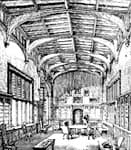
Carrow Abbey was a Benedictine priory in Norwich, England, founded around 1146 by King Stephen. It housed a prioress and nuns, playing a significant role in local ecclesiastical and legal matters. After the dissolution of the monasteries, the priory's structures were integrated into a private estate, undergoing significant renovations and additions, notably by the Martineau and Colman families. Today, it is known as a Grade I listed building, with parts reflecting its 16th-century origins and later 19th-century modifications.

Medmenham Abbey
Medmenham Abbey was a Cistercian monastery founded in the 12th century, originally dedicated to St. Mary. Although it was closed in 1536 during the Dissolution of the Monasteries, its ruins later became infamous in the mid-18th century as the meeting place for the Hellfire Club, led by Sir Francis Dashwood, who used the site for "obscene parodies of religious rites." The abbey has since undergone significant renovations and modifications, no longer resembling its original monastic form, and is now a private residence.
Beeleigh Abbey
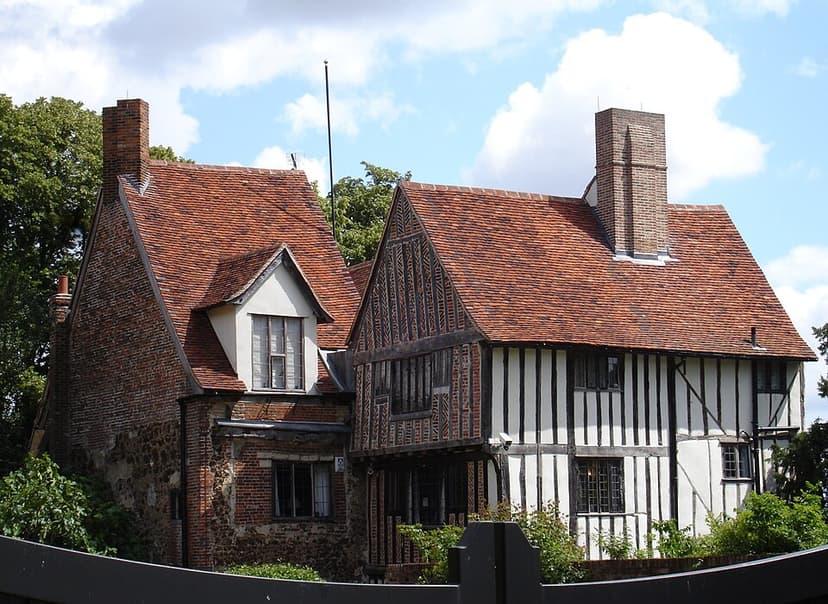
Beeleigh Abbey, established in 1180 near Maldon, Essex, was a Premonstratensian (White Canons) monastery. It gained significance as a pilgrimage site due to the burial of the heart of Roger Niger, Bishop of London, and was later granted to Sir John Gate after the Dissolution of the Monasteries. Following periods as a public house and falling into ruin, it underwent significant restoration in the 20th century and is now a private residence with accessible gardens.