
Medmenham Abbey
Medmenham Abbey was a Cistercian monastery founded in the 12th century, originally dedicated to St. Mary. Although it was closed in 1536 during the Dissolution of the Monasteries, its ruins later became infamous in the mid-18th century as the meeting place for the Hellfire Club, led by Sir Francis Dashwood, who used the site for "obscene parodies of religious rites." The abbey has since undergone significant renovations and modifications, no longer resembling its original monastic form, and is now a private residence.
Key Facts
- ›Founded in the 12th century as a Cistercian abbey.
- ›Officially recognized by royal charter in 1200.
- ›Closed in 1536 during the Dissolution of the Monasteries.
- ›Became infamous as the site of the Hellfire Club in the MID-18th century.
- ›The building is now a private residence and not open to the public.
- ›The property has been Grade II listed since 1955.

Gothic, Mansion Conversion
Ruins Used By the Hellfire Club, Grade Ii Listed Building
Monks of Medmenham, the Hellfire Club Meeting Place
Sir Francis Dashwood
Founding of the Abbey, Dissolution of the Monasteries, Hellfire Club Meetings
About Medmenham Abbey
Medmenham Abbey was a Cistercian monastery established in the 12th century in the village of Medmenham, Buckinghamshire, England. Originally dedicated to St. Mary, the abbey was under the ownership of Woburn Abbey and received official recognition by royal charter in 1200. Its monastic life concluded in 1536 with the Dissolution of the Monasteries, after which its properties were seized and transferred to private ownership.
Later History and Infamy
Following its dissolution, the abbey's ruins gained notoriety in the mid-18th century. It became the infamous meeting place for the Hellfire Club, also known as the Monks of Medmenham, led by Sir Francis Dashwood. The club reportedly used the site for "obscene parodies of religious rites." During this period, the building was renovated to resemble a Gothic structure, though the club's activities eventually moved to tunnels and caves nearby.
Modern Status
After the Hellfire Club ceased its activities by 1763, the property changed hands multiple times. Significant modifications occurred in 1898, and further renovations in the 20th century transformed the structure, so it no longer resembles its original abbey form. Today, Medmenham Abbey functions as a private residence and is not accessible to the public. The building has been Grade II listed since 1955, acknowledging its historical significance despite its modern use and altered appearance.
Source: Wikipedia ↗
Frequently Asked Questions
When was Medmenham Abbey founded?
Medmenham Abbey was founded in the 12th century. It received official recognition by royal charter in the year 1200.
What religious order was Medmenham Abbey part of?
Medmenham Abbey was a Cistercian abbey. The Cistercian order is known for its emphasis on manual labor and austere living.
When did Medmenham Abbey cease to function as a monastery?
The abbey was closed in 1536 as part of the Dissolution of the Monasteries. The monastic community was disbanded at this time.
Why is Medmenham Abbey historically infamous?
In the mid-18th century, the ruins of Medmenham Abbey became notorious as the meeting place for the Hellfire Club, led by Sir Francis Dashwood. This club was known for its "obscene parodies of religious rites."
What is the current status of Medmenham Abbey?
Today, Medmenham Abbey is a private residence. It is not open to the public for visits. The building has undergone significant renovations and no longer resembles its original monastic structure.
Has Medmenham Abbey been recognized for its historical significance?
Yes, the property has been Grade II listed since 1955, acknowledging its historical and architectural importance. This listing occurred after its conversion into a mansion and later into two houses.
Related Monasteries
Carrow Priory
Carrow Abbey was a Benedictine priory in Norwich, England, founded around 1146 by King Stephen. It housed a prioress and nuns, playing a significant role in local ecclesiastical and legal matters. After the dissolution of the monasteries, the priory's structures were integrated into a private estate, undergoing significant renovations and additions, notably by the Martineau and Colman families. Today, it is known as a Grade I listed building, with parts reflecting its 16th-century origins and later 19th-century modifications.

Flaxley Abbey
Flaxley Abbey, a former Cistercian monastery founded in 1151, is now a Grade I listed English country house and private residence located in the Forest of Dean, Gloucestershire. Originally established by Roger Fitzmiles, 2nd Earl of Hereford, it served as a royal hunting lodge and received notable grants from several monarchs before its dissolution in 1536. The site was later acquired by the Boevey family and substantially rebuilt, remaining their family home until 1960.
Beeleigh Abbey
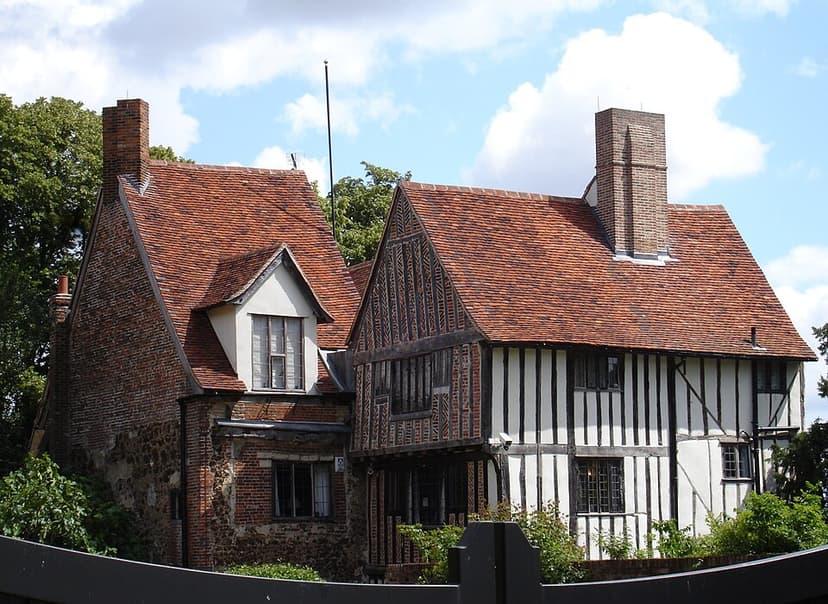
Beeleigh Abbey, established in 1180 near Maldon, Essex, was a Premonstratensian (White Canons) monastery. It gained significance as a pilgrimage site due to the burial of the heart of Roger Niger, Bishop of London, and was later granted to Sir John Gate after the Dissolution of the Monasteries. Following periods as a public house and falling into ruin, it underwent significant restoration in the 20th century and is now a private residence with accessible gardens.