
Taklung Monastery
Kagyu Buddhism·China·Partially restored·12th century
Taklung Monastery is a significant Kagyu Buddhist monastery located north of Lhasa, Tibet. Founded in 1180 CE by Taklung Thangpa Tashi Pal, it became the primary seat of the Taklung Kagyu school. Though heavily damaged during the Cultural Revolution, parts of the monastery have been reconstructed, preserving its historical and religious importance.
Key Facts
- ›Founded in 1180 CE (or 1178) by Taklung Thangpa Tashi Pal.
- ›Main seat of the Taklung Kagyu, a major Kagyu sect school.
- ›Once housed up to 7,000 monks.
- ›The main temple, Tsuklakhang, was completed in 1228.
- ›Divided into 'upper' and 'lower' branches after the founding of Riwoche Monastery in 1276.
- ›Partially restored after significant damage during the Cultural Revolution.

Jampa Lhakhang, Reliquary Lhakhang, Dargyeling Temple, Assembly Hall
Taklung Stag-Lung, Taklung Yarthang Monastery, Pel Taklug Tang, Taklung, Taglung Gompa
Taklung Thangpa Tashi Pal, Potowa Rinchen Sel, Dromton, Sangye On
Cultural Revolution Damage, Division Into 'Upper' and 'Lower' Branches
About Taklung Monastery
Taklung Monastery, also known by its Tibetan names Taklung stag-lung, Taklung Yarthang Monastery, and Pel Taklug Tang, is a significant Kagyu Buddhist monastery situated approximately 120 kilometers north of Lhasa.
History and Founding
The monastery's establishment dates to 1180 CE (or 1178 CE) through the vision and efforts of Taklung Thangpa Tashi Pal (1142–1210 CE). The site itself had prior spiritual significance, having been inhabited by the Kadampa lama Potowa Rinchen Sel, a disciple of Dromton, who was himself a chief disciple of Atisha.
Taklung Monastery became the primary seat of the Taklung Kagyu school, a vital component of the Kagyu sect of Tibetan Buddhism. Under Taklung Thangpa Tashi Pal and his immediate successors, the monastic community flourished, eventually growing to house an impressive 7,000 monks. The main temple, known as the Tsuklakhang (or the Jokhang of Taklung), was completed in 1228 CE.
The founder, Taklung Thangpa Tashi Pal, is described in historical accounts such as "The Blue Annals" as embodying a disciplined and pious existence. His life was dedicated to silent meditation, preaching, ceremonies, and rites, with strict rules in place, including the prohibition of wine and meat within the monastery and the exclusion of women from his personal dwelling. His wisdom was sought after, and he often mediated disputes among his contemporaries.
Development and Division
An eastern branch of the monastery, Riwoche Monastery in Kham, was founded by the fourth preceptor, Sangye On. This branch gradually increased in importance, particularly as the Gelugpa monasteries of Sera and Drepung extended their influence over Taklung. This shift in power dynamics eventually led to the division of the Taklung lineage into "upper" and "lower" branches, with Taklung Monastery representing the "upper" branch from the time Riwoche Monastery was established in 1276 CE.
Reconstruction and Current State
Taklung Monastery suffered extensive damage during the Cultural Revolution. However, since that period, significant efforts have been made towards its partial restoration. While the massive 13th-century Tsuklakang and the Markang (Red Temple) now exist primarily as ruins, several key structures have been reconstructed. These include the Jampa Lhakhang, dedicated to Maitreya; the Reliquary Lhakhang, which houses the remains of stupas that once contained the relics of the monastery's founders (though these stupas were looted); the Dargyeling Temple, featuring a statue of Aksobhya Buddha; and the Assembly Hall, or Zhelrekhang, along with some smaller buildings.
Source: Wikipedia ↗
Frequently Asked Questions
When was Taklung Monastery founded?
Taklung Monastery was founded in 1180 CE, although some sources indicate 1178 CE. Its establishment is attributed to Taklung Thangpa Tashi Pal.
Who founded Taklung Monastery?
The monastery was founded by Taklung Thangpa Tashi Pal (1142–1210 CE). He was a prominent figure in the Kagyu tradition.
What is the significance of Taklung Monastery?
Taklung Monastery is the main seat of the Taklung Kagyu school, one of the four principal schools of the Kagyu sect. It played a crucial role in the development and dissemination of this Buddhist tradition.
What is the current state of Taklung Monastery?
While the massive 13th-century Tsuklakang and Markang temples are now extensive ruins, several other important structures like the Jampa Lhakhang and the Assembly Hall have been reconstructed. The monastery suffered significant damage during the Cultural Revolution but has undergone partial restoration.
What was the monastic community like at Taklung Monastery?
Under its founder and immediate successors, the number of monks at Taklung Monastery grew to an impressive 7,000. The founder's life was characterized by strict discipline, meditation, preaching, and austerity, with rules prohibiting wine, meat, and women within his immediate quarters.
Related Monasteries

Reting
Reting Monastery is a historically significant Buddhist monastery located north of Lhasa, Tibet, founded in 1057 by Dromtön as the initial seat of the Kadam lineage. It later became a prominent Gelug monastery and the seat of the Reting Rinpoche, who played crucial roles in Tibetan political and religious history, including locating the Dalai Lamas and serving as Regent. The monastery suffered extensive damage during the Cultural Revolution but has undergone partial restoration.
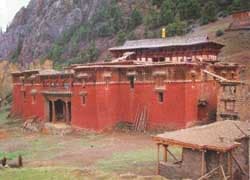
Karma Gön Monastery
Karma Gön Monastery, the original seat of the Karma Kagyu sect of Tibetan Buddhism, was founded in the 12th century by the 1st Karmapa Lama, Düsum Khyenpa. Located in eastern Tibet, it served as the cradle for the Karma Kagyu lineage and was a significant administrative and religious center. Although much of its historical structures and treasures were lost during the Cultural Revolution, efforts have been made towards its preservation and restoration, with some older buildings and retreat centers remaining.

Katok
Katok Monastery, founded in 1159, is a significant "Mother Monastery" of the Nyingma school of Tibetan Buddhism, located in the Kham region of Tibet. It is renowned for its scholarship, its role in preserving the Anuyoga tradition, and its historical influence on the spread of Nyingma monasticism. The monastery's name originates from a sacred rock at its founding site, meaning "on top of the ka".