
Sveti Đurađ Monastery
Serbian Orthodox·Romania·Active (though last resident died in 2020, it was revived after 1990)·15th century
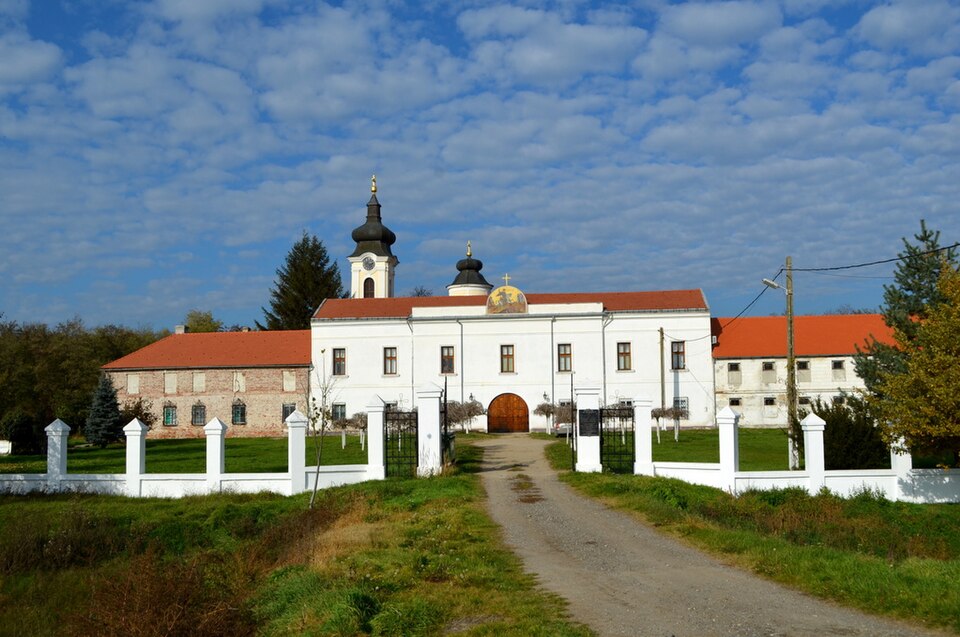
Sveti Đurađ Monastery, also known as Saint George Monastery, is a medieval Serbian Orthodox monastery located in Romania. Originally established in 1485 by Jovan Branković, the present buildings were constructed in 1794. The monastery houses significant relics, including a fragment of Saint George's skull, and its architecture blends Serbo-Byzantine foundations with Baroque elements.
Key Facts
- ›Founded in 1485 by Jovan Branković.
- ›Present buildings date to 1794, built by Iguman Augustin Petrović.
- ›Houses relics such as a fragment of Saint George's skull.
- ›Services are conducted in Serbian and Old Church Slavonic.
- ›Architecture combines Serbo-Byzantine style with Baroque additions.
- ›Listed as a historic monument by Romania's Ministry of Culture.
Serbo-Byzantine, Baroque
Fragment of the Skull of Saint George, Piece of the Chain of Saint Peter, Iconostasis Is Sumptuous and Gilded, Wall Paintings By Pavle đUrđEv
Saint George Monastery, MăNăStirea SfâNtul Gheorghe
Jovan Branković, đOrđE Branković, Iguman Augustin Petrović, Sister Evgenija, Jovan Isailović, Pavle đUrđEv
- Established In 1485.
- Present Buildings Constructed In 1794.
- Used As Barracks and An Agricultural Cooperative Office After 1944.
- Revived As A Monastery After 1990.
About Sveti Đurađ Monastery
Sveti Đurađ Monastery, also recognized as Saint George Monastery, is a significant Serbian Orthodox monastic establishment located in Mânăstire, within Timiș County, Romania. Its proximity to the Romanian-Serbian border, approximately 20 kilometers away, places it in a region with historical ties to both cultures.
History and Establishment
The monastery's foundation is definitively attributed to Jovan Branković, a Serbian despot, who established it in 1485. While legend suggests an earlier origin during the Iconoclastic movement in the late 8th century, scholarly consensus favors the 15th-century dating. The current structures date from 1794, erected by Iguman Augustin Petrović, who intended them for use as a school and monastic church. Following World War II, the monastery experienced a period of secularization, serving variously as barracks, an office for an agricultural cooperative, and even a feed store before its restoration as an active monastery after 1990.
Architecture and Features
The original church, built in 1485, was constructed of burnt brick in the Serbo-Byzantine style, featuring a cruciform base, a dome, and a separate bell tower. The church constructed in 1794 maintained the Serbo-Byzantine stylistic foundations but integrated Baroque elements. The interior is notable for its sumptuous, gilded iconostasis and wall paintings executed by Jovan Isailović and Pavle Đurđev, respectively, reflecting the characteristic Serbian Baroque artistic tradition.
Relics and Spiritual Significance
Sveti Đurađ Monastery is a repository for important Christian relics. Among its treasures is a fragment of the skull of Saint George, a relic brought to the monastery in the 15th century by Đorđe Branković. Additionally, the monastery holds a piece of the chain with which Saint Peter was bound. Services continue to be held in Serbian and Old Church Slavonic.
Current Status
The monastery is officially listed as a historic monument by Romania's Ministry of Culture. While the last resident, Sister Evgenija, passed away in 2020, the monastery was revived after 1990, indicating its ongoing significance as a spiritual and historical site, though the presence of an active monastic community at this precise moment is not confirmed by the record.
Source: Wikipedia ↗
Frequently Asked Questions
When was Sveti Đurađ Monastery founded?
While legend suggests an earlier founding during the Iconoclastic movement in the late 8th century, historical evidence points to a much more likely establishment in the medieval era. Specifically, the monastery was built by Jovan Branković in 1485.
What relics can be found at Sveti Đurađ Monastery?
The monastic church at Sveti Đurađ Monastery houses several significant relics. These include a fragment of the skull of Saint George, which was brought to the monastery in the 15th century by Đorđe Branković, and a piece of the chain used to bind Saint Peter.
What is the architectural style of Sveti Đurađ Monastery?
The original church, erected in 1485, was built in the Serbo-Byzantine style. The current church, built in 1794, preserved the Serbo-Byzantine foundations but incorporated Baroque elements, with interior decoration representative of the Serbian Baroque.
What is the current status of Sveti Đurađ Monastery?
The monastery has experienced periods of secular use, including as barracks and an agricultural cooperative office after 1944. It was revived as a monastery only after 1990. The last resident, Sister Evgenija, passed away in 2020.
Where is Sveti Đurađ Monastery located?
Sveti Đurađ Monastery is situated in Mânăstire, Timiș County, Romania. It is located approximately 20 kilometers from the Romanian-Serbian border.
Related Monasteries

Bistrița Monastery
Bistrița Monastery is a Romanian Orthodox monastery located near Piatra Neamț, dedicated in 1402. It was originally founded by Voivode Alexandru cel Bun, whose remains are interred within the church. The monastery is noted for its Byzantine architecture, intricate frescoes, and the preservation of historically significant artifacts, including the miraculous icon of Saint Anne. It also served as a vital cultural center for scribes and chroniclers.
Comana Monastery
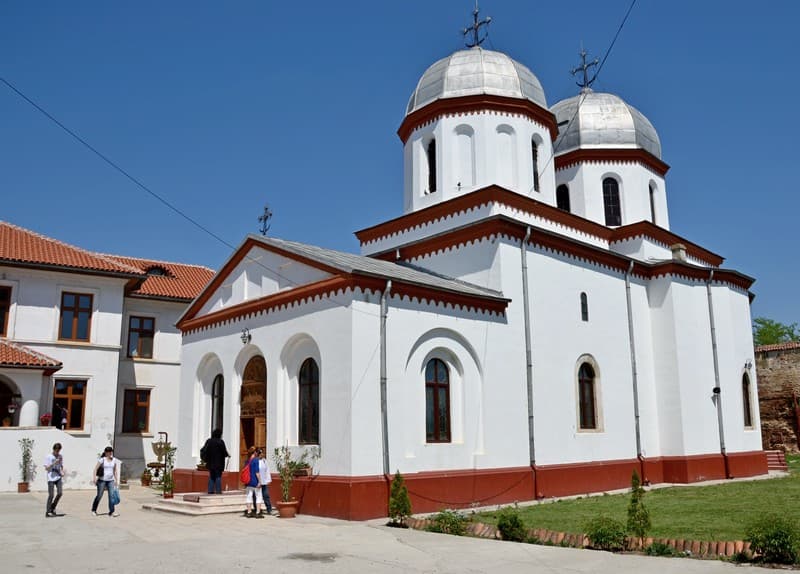
Comana Monastery is a Romanian Orthodox monastery located in Comana, Giurgiu County, Romania. Originally founded in 1461 by Vlad Țepeș as a monastery-fortress, it was rebuilt in 1589 by Radu Șerban and later restored multiple times. Archaeological discoveries on its grounds have led to speculation that it may be the burial site of Vlad Țepeș.

Dealu Monastery
Dealu Monastery is a significant 15th-century monastic complex located in Dâmbovița County, Romania. Its church is dedicated to Saint Nicholas, and its narthex serves as a notable necropolis, housing the tombs of several prominent Wallachian princes and Moldavian rulers. The monastery stands as an important historical and religious site in the region.