
Bistrița Monastery
Bistrița Monastery is a Romanian Orthodox monastery located near Piatra Neamț, dedicated in 1402. It was originally founded by Voivode Alexandru cel Bun, whose remains are interred within the church. The monastery is noted for its Byzantine architecture, intricate frescoes, and the preservation of historically significant artifacts, including the miraculous icon of Saint Anne. It also served as a vital cultural center for scribes and chroniclers.
Key Facts
- ›Dedicated in 1402 by Voivode Alexandru cel Bun, who is buried there.
- ›Features Byzantine architecture with a richly ornamented 15th-century entrance door.
- ›Houses the miraculous icon of Saint Anne, a gift from Lady Ana in 1407-1408.
- ›Surrounded by 4-meter high stone walls, rebuilt after destruction by Suleiman the Magnificent's army.
- ›The inner court bell tower was erected in 1498 by Ștefan cel Mare.
- ›Considered a donation from four Moldavian voivodes of the Mușatin dynasty.

Byzantine
Miraculous Icon of Saint Anne, 15th-Century Entrance Door, 15th-Century Frescoes, Pomelnicul De La BistrițA, Medieval Art Collection
MăNăStirea BistrițA
Alexandru Cel Bun, Lady Ana, șTefan Cel Mare, Petru Rareș, Alexandru LăPușNeanu, Empress Jelena, Manuel Ii Palaiologos, Patriarch Matthew, Alexandru, Chiajna, Anastasie, Carol Benesch
- Dedicated In 1402
- Original Walls Destroyed In 1538 By Suleiman the Magnificent's Army
- Major Reconstruction In 1855 Under Carol Benesch
About Bistrița Monastery
Bistrița Monastery is a significant Romanian Orthodox religious site situated approximately 8 kilometers west of Piatra Neamț. Dedicated in 1402, its origins are closely tied to the Moldavian Voivode Alexandru cel Bun, whose remains are interred within the monastery's church. The historical and archaeological value of Bistrița Monastery is considerable, reflecting its long-standing importance in the region.
Architectural and Artistic Significance
The monastery's church is a notable example of Byzantine architecture, characterized by its rich ornamentation. A particularly striking feature is the 15th-century entrance door, renowned for its fine craftsmanship. The interior is adorned with detailed frescoes, contributing to its artistic merit. The monastery is also enclosed by imposing 4-meter high stone walls, originally constructed during Petru Rareș's reign between 1541 and 1546, after the initial fortifications were destroyed in 1538 by the army of Suleiman the Magnificent. A chapel dating from the same period is located to the north of the main complex.
The inner court's bell tower, a prominent structure, was erected in 1498 by Ștefan cel Mare. The monastery's status as a significant foundation is further underscored by the recognition of Alexandru Lăpușneanu, who undertook extensive restorations in 1554, as a benefactor. Consequently, Bistrița Monastery is regarded as a donation from four voivodes of the Mușatin dynasty: Alexandru I, Ștefan III, Petru IV, and Alexandru Lăpușneanu.
Miraculous Icon and Cultural Hub
A particularly revered artifact preserved at Bistrița Monastery is the miraculous icon of Saint Anne. This icon was presented to the monastery between 1407 and 1408 by Lady Ana, the wife of Voivode Alexandru I. Tradition holds that the icon was a 'patronage gift' to Lady Ana from Empress Jelena, the wife of Manuel II Palaiologos, the Byzantine Emperor of Constantinople. The icon underwent restoration in the 18th century and was relocated in 1853 to a new section crafted from carved and gilded wood.
Beyond its religious and artistic significance, Bistrița Monastery served as a vital cultural center. It fostered the work of calligraphers, miniaturists, and chroniclers, and its museum today houses an important collection of medieval art. The monastery is also the site where one of the oldest monuments of Romanian medieval culture, the Pomelnicul de la Bistrița, was created, offering valuable insights into the early history of the Moldavian voivodal and church.
Burials and Reconstruction
Several important historical figures are buried within the church of Bistrița Monastery. These include Alexandru cel Bun, his wife Ana, Alexandru (son of Stephen the Great), Chiajna (wife of Stephen V of Moldavia), and Anastasie, the Metropolitan of Suceava. The monastery's physical structure has also seen significant changes over time; in 1855, it underwent major reconstruction led by the renowned architect Carol Benesch, adapting its form for continued use and preservation.
Source: Wikipedia ↗
Frequently Asked Questions
When was Bistrița Monastery founded?
Bistrița Monastery was dedicated in 1402. This significant construction was initiated by Voivode Alexandru cel Bun, a key figure in Moldavian history.
What is the architectural style of Bistrița Monastery?
The monastery's church exhibits features of Byzantine architecture. It is noted for its rich ornamentation and a finely crafted 15th-century entrance door.
What is the most remarkable artifact preserved at Bistrița Monastery?
A remarkable artifact is the miraculous icon of Saint Anne, gifted to the monastery in 1407-1408. According to tradition, it was a patronage gift from Empress Jelena, wife of Manuel II Palaiologos.
Who is buried at Bistrița Monastery?
Several notable figures are buried at the monastery, including Alexandru cel Bun, his wife Lady Ana, Alexandru (son of Stephen the Great), Chiajna (wife of Stephen V of Moldavia), and Anastasie, Metropolitan of Suceava.
What historical significance does Bistrița Monastery hold?
Bistrița Monastery is historically and archaeologically valuable, having been an important cultural center for calligraphers and chroniclers. It also houses the Pomelnicul de la Bistrița, one of the oldest monuments of Romanian medieval culture.
Has the monastery undergone significant renovations?
Yes, the monastery underwent major reconstruction in 1855 under the direction of architect Carol Benesch. The stone walls were also rebuilt, having been destroyed in 1538.
Related Monasteries
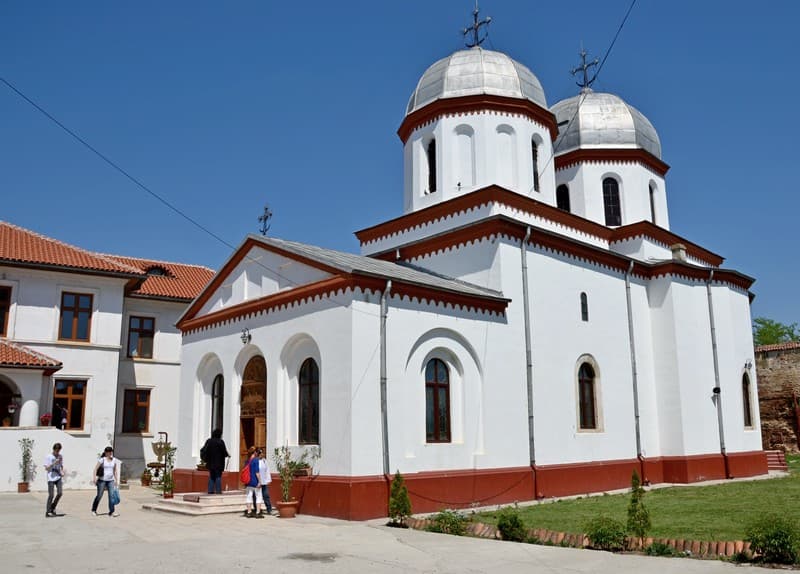
Comana Monastery
Comana Monastery is a Romanian Orthodox monastery located in Comana, Giurgiu County, Romania. Originally founded in 1461 by Vlad Țepeș as a monastery-fortress, it was rebuilt in 1589 by Radu Șerban and later restored multiple times. Archaeological discoveries on its grounds have led to speculation that it may be the burial site of Vlad Țepeș.

Bogdana Monastery
Bogdana Monastery is a Romanian Orthodox monastery located in Rădăuți, northern Romania, and its church stands as the oldest still-standing religious building in Moldavia. Founded by Bogdan I of Moldavia around 1360, it served as the necropolis for the House of Mușat voievodes, housing the graves of Moldavian rulers. The monastery's interior paintings have undergone several restorations and enlargements throughout its history, with the current frescoes dating from the late 19th century.

Bârnova Monastery
Bârnova Monastery is a Romanian Orthodox monastery located in Bârnova, within the Iași metropolitan area of Moldavia, Romania. It was established in 1628 by Miron Barnovschi-Movilă, a Moldavian Voivode, and is recognized on the National Register of Historic Monuments. The monastery's courtyard hosts the oldest tree in Iași County, a 675-year-old hybrid lime tree, predating the first mention of Iași as an urban settlement.