
Saint George Monastery
Saint George Monastery, also known as Deir Mar Georges, is a historic Greek Orthodox monastery located in the "Valley of the Christians" in northwestern Syria. Said to have been built by Byzantine Emperor Justinian I in the 6th century, possibly over an ancient temple, the monastery features Byzantine-styled stone architecture and houses significant religious artifacts. It plays a role in regional Christian life, particularly during pilgrimages, and was revitalized by Patriarch John X.
Key Facts
- ›Located in the "Valley of the Christians" in northwestern Syria.
- ›Said to have been founded by Byzantine Emperor Justinian I in the 6th century.
- ›The modern church was rebuilt in 1857.
- ›Features a 13th-century chapel with an older iconostasis.
- ›Houses a manuscript attributed to Caliph Umar ibn al-Khattab.
- ›Attacked by gunmen during the Syrian CIVIL war in 2013.

Byzantine
Triple Arch Entrance With Byzantine Columns, Historic Stone With Religious Carvings, Wooden Iconostases With Carved Icons, 13th-Century Chapel, Manuscript By Caliph Umar Ibn Al-Khattab, Large Amphorae
Deir Mar Georges
Justinian I, John X
Founding By Emperor Justinian I, Rebuilding of the Modern Church, Attack During the Syrian Civil War
About Saint George Monastery
Saint George Monastery, also known by its Arabic name Deir Mar Georges, is a significant historical and religious site located in the village of al-Mishtaya, within the "Valley of the Christians" (Wadi al-Nasara) in northwestern Syria. This region has been a center of Christianity since the 6th century, with the monastery itself said to have been established by Byzantine Emperor Justinian I during that same period. It is believed to have been constructed over the foundations of an ancient temple dedicated to a deity named Humaira.
Architecture and Artifacts
The monastery is constructed entirely from stone in a Byzantine style, covering an area of 6,000 square meters. The modern church was rebuilt in 1857, but many older elements are preserved. The entrance features a distinctive triple arch supported by two central columns of Byzantine origin. A notable large, historic stone with religious carvings marks the monastery's southern gate. Inside, the wooden iconostases are adorned with intricate carvings and gold-painted icons illustrating scenes from the life of Christ. Beneath the main courtyard lies a chapel dating back to the 13th century, complete with a smaller, centuries-old iconostasis featuring scenes from the life of Saint George. This lower level also provides access to what is believed to be the original 6th-century monastery structure and contains several large amphorae. The monastery's collection extends to numerous other ancient items, including crosses, manuscripts, books, carvings, and tools. Notably, it houses a manuscript attributed to Caliph Umar ibn al-Khattab that discusses relations between Muslims and Christians.
Religious Significance and Modern History
Saint George Monastery is a focal point for Christian pilgrimage, particularly during the feast days of Saint George (May 6) and the elevation of the Holy Cross (September 14). The monastery experienced a period of revitalization under Patriarch John X of Antioch, who served as its abbot from 1995 to 2002. In more recent times, the monastery faced adversity during the Syrian civil war. In 2013, it was attacked by gunmen but was successfully defended by volunteers from the People's Defense Forces, though the defense came at the cost of eleven lives.
Source: Wikipedia ↗
Frequently Asked Questions
Where is Saint George Monastery located?
Saint George Monastery is situated in the village of al-Mishtaya, within the "Valley of the Christians" (Wadi al-Nasara) in northwestern Syria, a region known for its significant Christian population.
When was Saint George Monastery founded?
Tradition states that the monastery was founded by Byzantine Emperor Justinian I in the 6th century, possibly built over the remains of an ancient temple.
What is notable about the architecture of Saint George Monastery?
The monastery is built entirely from Byzantine-styled stone. Its entrance has a triple arch with two central supporting columns of Byzantine origin, and a large, historic stone with religious carvings is found at the southern gate.
What significant artifacts are preserved at Saint George Monastery?
The monastery preserves many older items, including wooden iconostases with impressive carvings and gold-painted icons depicting scenes from the life of Christ. It also houses a manuscript attributed to Caliph Umar ibn al-Khattab and has an older 13th-century chapel with icons depicting scenes from the life of Saint George.
When is Saint George Monastery busiest?
The monastery sees the most activity during pilgrimages, particularly on the feast of Saint George, celebrated on May 6, and the feast of the elevation of the Holy Cross on September 14.
Has Saint George Monastery been affected by recent conflicts?
Yes, in 2013, during the Syrian civil war, gunmen attacked the monastery. Volunteers of the People's Defense Forces successfully repelled the attackers, though eleven defenders lost their lives.
Related Monasteries
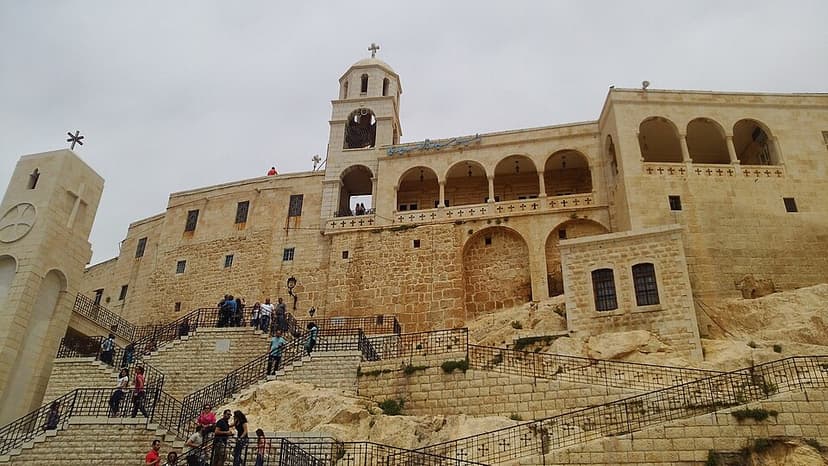
Our Lady of Saidnaya Monastery
Our Lady of Saidnaya Patriarchal Monastery is an ancient Greek Orthodox monastery located in Saidnaya, Syria, traditionally founded by Emperor Justinian I in 547 AD. It is renowned as a significant pilgrimage site, particularly for its icon of Saint Mary attributed to Saint Luke, known as Shaghoura. The monastery has a long history of veneration and has undergone various historical events, including damage from earthquakes and conflict, yet remains an important religious center.

Saint Thekla Convent
The Convent of Saint Thecla, located in the Aramaic-speaking village of Maaloula, Syria, is a significant Greek Orthodox pilgrimage site administered by the Greek Orthodox Patriarchate of Antioch. Founded in 1935 around the grotto of Saint Thecla, the convent is built upon a legend of the saint's miraculous escape and subsequent life in the area. It remains an active monastic community and a major destination for Christian pilgrims seeking spiritual solace and healing from the grotto's sacred spring.
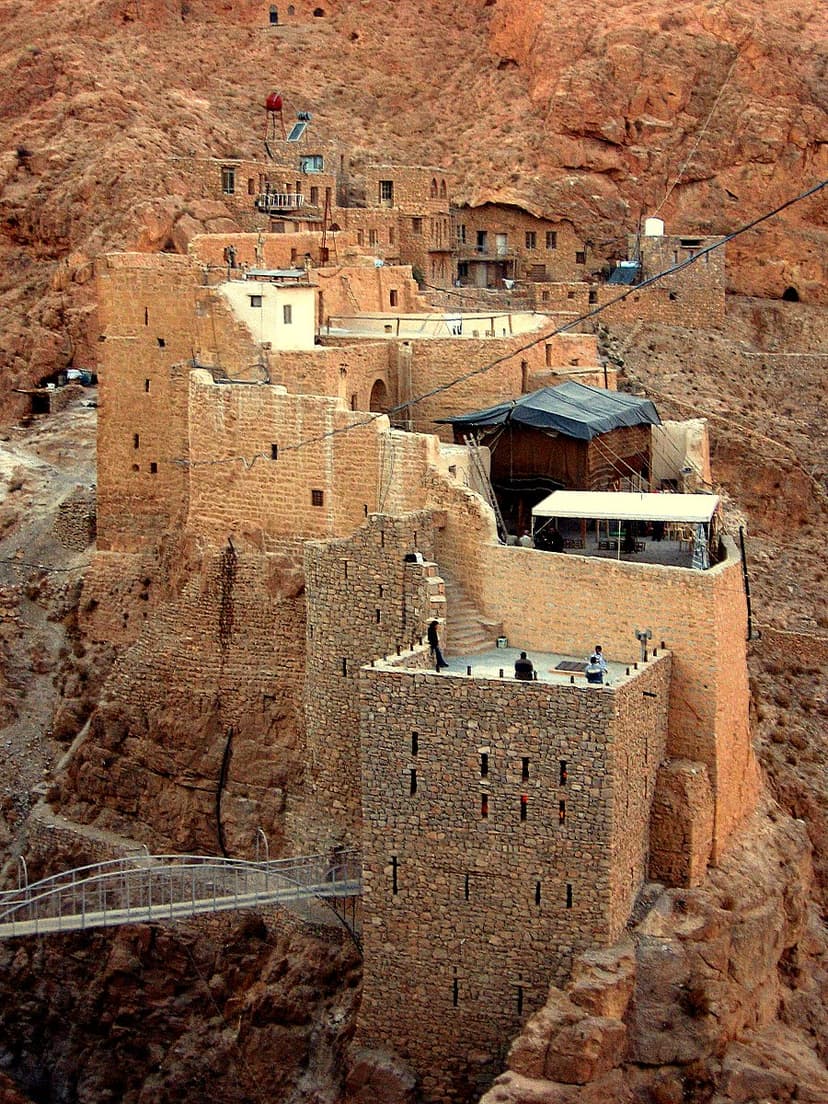
Monastery of St. Moses the Abyssinian
The Monastery of Saint Moses the Abyssinian, dedicated to Moses the Black, is a historic monastic community of the Syriac Catholic Church situated on the eastern slopes of the Anti-Lebanon Mountains near Nabk, Syria. Its main church contains significant frescoes from the 11th and 12th centuries, representing a rare surviving medieval church decoration program in greater Syria. After a period of abandonment, the monastery was restored in 1992 and now operates as a monastic community focused on prayer, work, hospitality, and dialogue.