
Monastery of St. Moses the Abyssinian
Syriac Catholic·Syria·active·6th century
The Monastery of Saint Moses the Abyssinian, dedicated to Moses the Black, is a historic monastic community of the Syriac Catholic Church situated on the eastern slopes of the Anti-Lebanon Mountains near Nabk, Syria. Its main church contains significant frescoes from the 11th and 12th centuries, representing a rare surviving medieval church decoration program in greater Syria. After a period of abandonment, the monastery was restored in 1992 and now operates as a monastic community focused on prayer, work, hospitality, and dialogue.
Key Facts
- ›Located approximately 80 km north of Damascus, Syria, on the eastern slopes of the Anti-Lebanon Mountains.
- ›Features precious frescoes dating to the 11th and 12th centuries in its main church.
- ›Earliest historical reference by John Chrysostom in a 6th-century manuscript.
- ›Served as the seat of a bishopric until the end of the 14th century.
- ›Restored in 1992 by Paolo Dall'Oglio and Jacques Mourad under the Syriac Catholic Church.
- ›The site may have Neolithic roots, with ancient structures possibly dating back 10,000 years.
Romanesque, Mediaeval
11th- and 12th-Century Frescoes, Roman Watchtowers, Neolithic Ruins
Dayrā D-MāR MūšE KūšāYā, Dayr MāR MūSá Al-ḥAbashī, Monastery of St. Moses
Moses the Black, John Chrysostom, Paolo Dall'Oglio, Jacques Mourad
Restoration of Community In 1992, Abandonment In the 19th Century
About Monastery of St. Moses the Abyssinian
Monastery of Saint Moses the Abyssinian
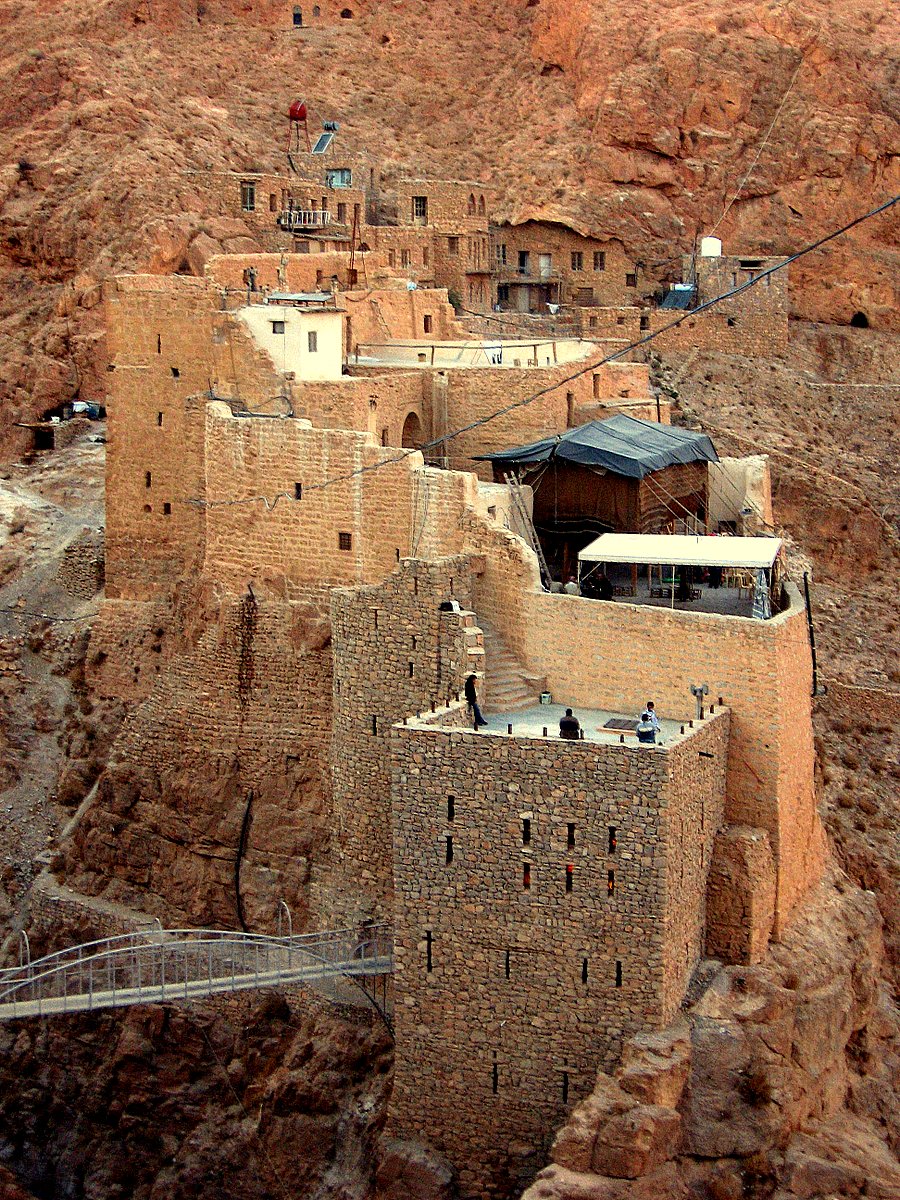
The Monastery of Saint Moses the Abyssinian, known in Syriac as Dayrā d-Mār Mūše Kūšāyā and in Arabic as Dayr Mār Mūsá al-Ḥabashī, is a significant monastic site of the Syriac Catholic Church. It is situated in a remote and striking location on the eastern slopes of the Anti-Lebanon Mountains, approximately 80 kilometers north of Damascus, near the town of Nabk, Syria.
History and Significance
The earliest historical reference to a monastic presence at this site comes from John Chrysostom in a 6th-century manuscript, which describes a "convent of Mushe." Archaeological discoveries near the monastery in 2009 suggest that the area may have been inhabited as far back as the Neolithic period, with potential structures dating back 10,000 years. The oldest extant buildings on the site are thought to be Roman watchtowers, later adapted and rebuilt. Historical records indicate the monastery served as a bishopric seat until the late 14th century.
The main church of the monastic complex is renowned for its precious frescoes, which date from the 11th and 12th centuries. These artworks represent the only complete program of medieval church decoration that has survived in greater Syria and provide crucial evidence for the evolution of the medieval Syrian school of painting. The monastery underwent significant rebuilding in the 11th and 16th centuries, with further reconstruction of a Roman tower in the 12th century likely in response to seismic activity.
Restoration and Modern Community
After a period of abandonment in the 19th century, the monastery's structures had significantly deteriorated by the late 20th century. In 1992, the community was revived by Paolo Dall'Oglio, an orientalist Jesuit priest, along with deacon Jacques Mourad (later Archbishop of Homs). Under the Syriac Catholic Church, they established the "Al-Khalil Monastic Community of Deir Mar Musa al-Habashi," a double monastic community comprising both men and women. This community is dedicated to the four pillars of prayer, work, hospitality, and dialogue, continuing the monastery's long spiritual and historical legacy.
Source: Wikipedia ↗
Frequently Asked Questions
To whom is the Monastery of Saint Moses the Abyssinian dedicated?
The monastery is dedicated to Moses the Black, an Egyptian monk and Desert Father. While some inscriptions refer to him as the prophet Moses, the association with Moses the Black is noted from the 17th century, possibly due to the arrival of Abyssinian monks in the 15th century.
What is the historical significance of the frescoes at the monastery?
The frescoes in the main church, dating from between 1058 and 1208, are considered the only complete program of medieval church decoration to have survived in greater Syria. They offer important insights into the development of the medieval Syrian school of painting.
When was the monastery founded?
The earliest manuscript and coinage attestations suggest the monastery was likely founded in the sixth century. The site also contains ancient structures that may date back to the Neolithic period.
What is the current status of the Monastery of Saint Moses the Abyssinian?
The monastery was restored in 1992 and now houses an active monastic community of the Syriac Catholic Church. It operates as the 'Al-Khalil Monastic Community of Deir Mar Musa al-Habashi,' focused on prayer, work, hospitality, and dialogue.
Are there any ancient structures at the monastery site?
Yes, ancient building ruins, stone circles, lines, and tombs were discovered near the monastery, potentially dating back 10,000 years to the Neolithic period. The oldest extant structures on the site are believed to be Roman watchtowers.
Related Monasteries
Our Lady of Saidnaya Monastery
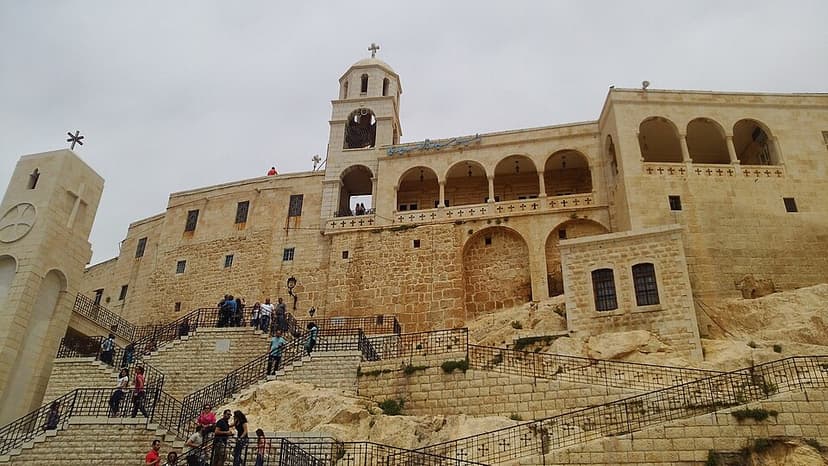
Our Lady of Saidnaya Patriarchal Monastery is an ancient Greek Orthodox monastery located in Saidnaya, Syria, traditionally founded by Emperor Justinian I in 547 AD. It is renowned as a significant pilgrimage site, particularly for its icon of Saint Mary attributed to Saint Luke, known as Shaghoura. The monastery has a long history of veneration and has undergone various historical events, including damage from earthquakes and conflict, yet remains an important religious center.

Saint George Monastery
Saint George Monastery, also known as Deir Mar Georges, is a historic Greek Orthodox monastery located in the "Valley of the Christians" in northwestern Syria. Said to have been built by Byzantine Emperor Justinian I in the 6th century, possibly over an ancient temple, the monastery features Byzantine-styled stone architecture and houses significant religious artifacts. It plays a role in regional Christian life, particularly during pilgrimages, and was revitalized by Patriarch John X.

Mar Sarkis
Mar Sarkis is an ancient monastery located in the town of Maaloula, Syria, renowned as one of the oldest surviving monasteries in the region. It is built on the site of a former pagan temple and features elements dating back to the Byzantine period. The monastery is dedicated to Saint Sarkis, a Roman soldier martyred for his Christian faith, and is distinguished by housing two of the world's oldest icons, including one depicting the Last Supper.