
Our Lady of Saidnaya Monastery
Our Lady of Saidnaya Patriarchal Monastery is an ancient Greek Orthodox monastery located in Saidnaya, Syria, traditionally founded by Emperor Justinian I in 547 AD. It is renowned as a significant pilgrimage site, particularly for its icon of Saint Mary attributed to Saint Luke, known as Shaghoura. The monastery has a long history of veneration and has undergone various historical events, including damage from earthquakes and conflict, yet remains an important religious center.
Key Facts
- ›Traditionally founded by Byzantine Emperor Justinian I in 547 AD.
- ›Houses an icon of Saint Mary known as Shaghoura, attributed to Saint Luke.
- ›An important pilgrimage site for Christians in the Middle East and North Africa.
- ›Partially damaged by an earthquake in 1759 and during the Syrian CIVIL war.
- ›Features a wooden iconostasis in front of the altar and a separate pilgrimage shrine.
- ›Pilgrims annually visit on September 8th to honor our Lady of Saidnaya.
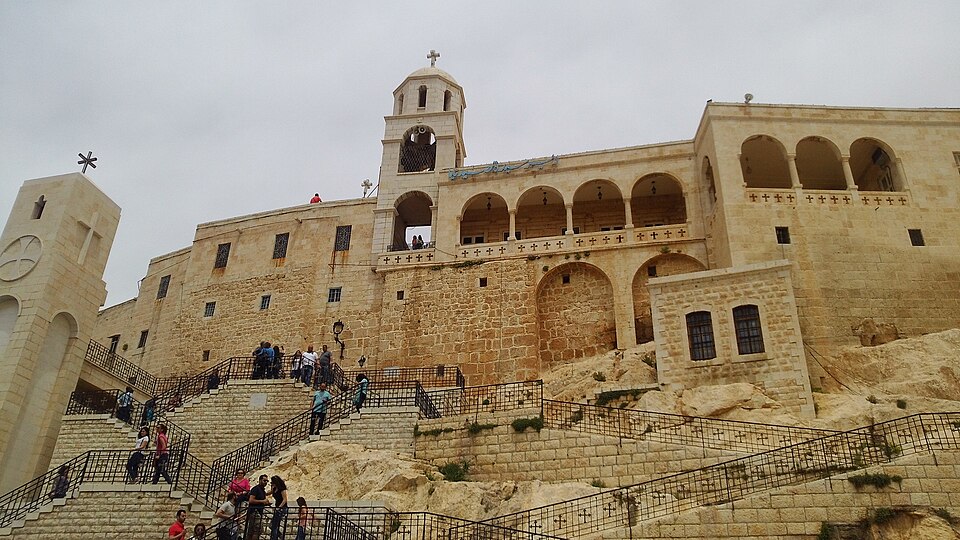
Icon of Saint Mary Attributed To Saint Luke, Wooden Iconostasis, Pilgrimage Shrine, Ex Votos Left By Pilgrims
دير سيدة صيدنايا البطريركي
Justinian I, Saint Luke
Founded By Byzantine Emperor Justinian I, Damaged By Earthquake In 1759, Potentially Damaged By Druze Rebels In 1860, Damaged During the Syrian Civil War
About Our Lady of Saidnaya Monastery
Our Lady of Saidnaya Patriarchal Monastery
Our Lady of Saidnaya Patriarchal Monastery is a significant and ancient religious site located in Saidnaya, Syria. Steeped in tradition, it is believed to have been founded in 547 AD by the Byzantine Emperor Justinian I following a divine vision. The monastery is a spiritual heart for many Christians, drawing pilgrims from across the Middle East and North Africa.
Historical Significance and Tradition
The monastery's founding is attributed to a vision Emperor Justinian I experienced of the Virgin Mary while hunting. According to tradition, the Virgin Mary guided him on the location and design of the church. The monastery was officially dedicated on the Feast of the Nativity of the Virgin Mary, and September 8th continues to be a major date for annual Christian pilgrimages to honor Our Lady of Saidnaya.
Throughout the Middle Ages, Our Lady of Saidnaya was a celebrated pilgrimage destination, noted in numerous Latin pilgrim accounts. These early descriptions sometimes detailed unique aspects of the monastery's revered icon.
Description and Notable Features
The monastery's main chapel features a collection of icons and a distinctive wooden iconostasis positioned before the altar. A separate pilgrimage shrine is home to the highly venerated icon of Mary, known as Shaghoura, meaning "the Illustrious." This icon is concealed behind an elaborate silver-doored niche. The walls of the shrine are adorned with later icons and numerous beaten silver crosses and other religious symbols, left as offerings by pilgrims.
Historical Trials and Resilience
Our Lady of Saidnaya has weathered centuries of history, including periods of damage. An earthquake in 1759 caused partial destruction, and the monastery may have also been affected by anti-Christian riots in 1860. By the late 19th century, only the apse of the medieval church remained, incorporated into the modern structure. More recently, the monastery sustained damage during the ongoing Syrian civil war.
Modern Devotion and Offerings
Despite these historical challenges, the monastery continues its role as an active center of faith. It is run by a religious order of nuns. Notably, in modern times, visitors have left unique offerings, such as space helmets from returning astronauts, reflecting a blend of historical devotion and contemporary connection.
Source: Wikipedia ↗
Frequently Asked Questions
When was Our Lady of Saidnaya Monastery founded?
Tradition holds that Our Lady of Saidnaya Monastery was founded by the Byzantine emperor Justinian I in 547 AD. This tradition is based on a vision the emperor is said to have had of the Virgin Mary.
What is the significance of the icon of Saint Mary at Saidnaya?
The monastery is famous for its icon of Saint Mary, known as Shaghoura, which is attributed to Saint Luke. This icon is a major draw for Christian pilgrims visiting the site.
What is the religious affiliation of Our Lady of Saidnaya Monastery?
Our Lady of Saidnaya Monastery belongs to the Greek Orthodox Church of Antioch. It is operated by a religious order of nuns.
Has the monastery experienced any damage throughout its history?
Yes, the monastery has suffered damage over the centuries. It was partially damaged by an earthquake in 1759 and also sustained damage during the Syrian civil war. Some accounts suggest it may have been affected by Druze rebels in 1860.
What architectural features are notable at the monastery?
The main chapel is adorned with numerous icons and features a wooden iconostasis before the altar. The pilgrimage shrine, separate from the main chapel, houses the Shaghoura icon behind an ornate niche.
Are there any unusual items left as offerings at the monastery?
Besides traditional ex votos like silver crosses, historical accounts mention unusual offerings. Historian William Dalrymple notes that visitors have left space helmets at the monastery, including those from Syrian astronauts returning from the Mir space station.
Related Monasteries

Saint George Monastery
Saint George Monastery, also known as Deir Mar Georges, is a historic Greek Orthodox monastery located in the "Valley of the Christians" in northwestern Syria. Said to have been built by Byzantine Emperor Justinian I in the 6th century, possibly over an ancient temple, the monastery features Byzantine-styled stone architecture and houses significant religious artifacts. It plays a role in regional Christian life, particularly during pilgrimages, and was revitalized by Patriarch John X.

Saint Thekla Convent
The Convent of Saint Thecla, located in the Aramaic-speaking village of Maaloula, Syria, is a significant Greek Orthodox pilgrimage site administered by the Greek Orthodox Patriarchate of Antioch. Founded in 1935 around the grotto of Saint Thecla, the convent is built upon a legend of the saint's miraculous escape and subsequent life in the area. It remains an active monastic community and a major destination for Christian pilgrims seeking spiritual solace and healing from the grotto's sacred spring.
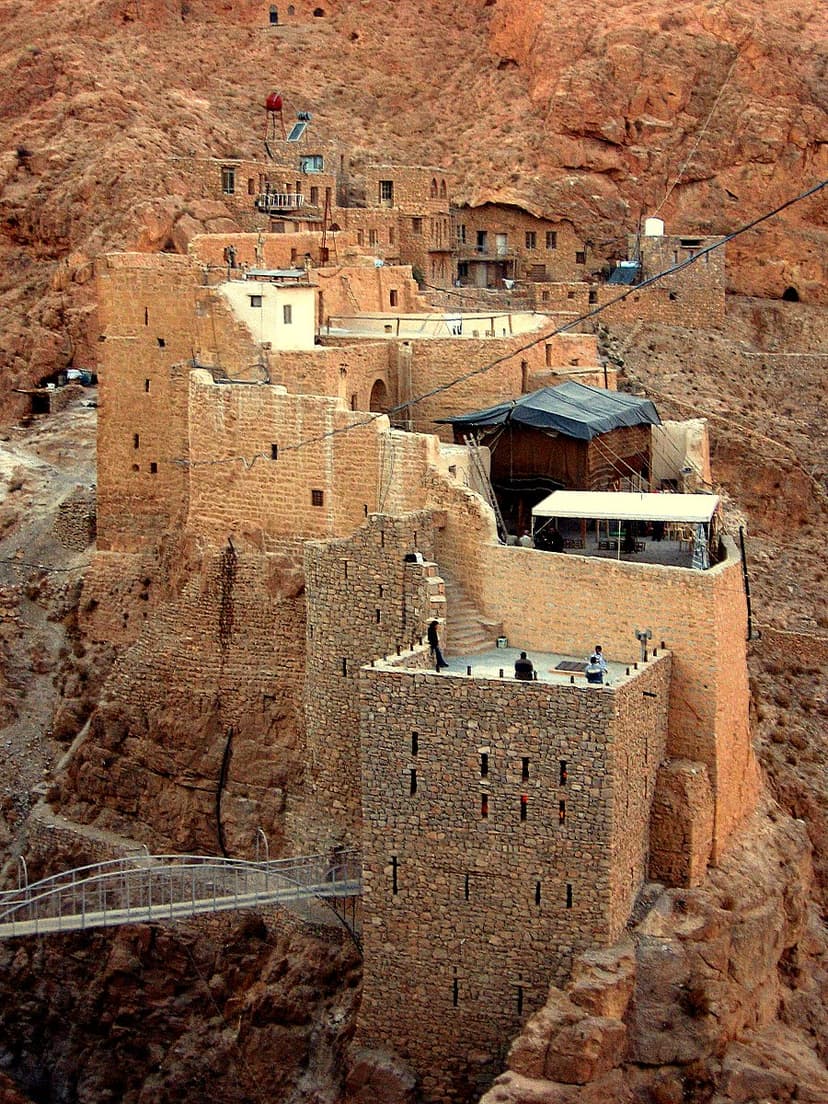
Monastery of St. Moses the Abyssinian
The Monastery of Saint Moses the Abyssinian, dedicated to Moses the Black, is a historic monastic community of the Syriac Catholic Church situated on the eastern slopes of the Anti-Lebanon Mountains near Nabk, Syria. Its main church contains significant frescoes from the 11th and 12th centuries, representing a rare surviving medieval church decoration program in greater Syria. After a period of abandonment, the monastery was restored in 1992 and now operates as a monastic community focused on prayer, work, hospitality, and dialogue.