
Justinian I
Justinian I was a prominent Roman emperor whose reign (527-565) was marked by an ambitious effort to restore the empire and a significant codification of Roman law. He is chiefly remembered for the Corpus Juris Civilis, the partial reconquest of the Western Roman Empire, and the construction of the Hagia Sophia. His reign significantly influenced the development of civil law and Byzantine culture.
Key Facts
- ›Justinian I was Roman emperor from 527 to 565.
- ›He initiated the renovatio imperii, aiming to restore the former territories of the Roman Empire.
- ›His general Belisarius reconquered the Vandal Kingdom in North Africa and the Ostrogothic Kingdom in Italy.
- ›Justinian commissioned the Corpus Juris Civilis, a comprehensive rewriting of Roman law that forms the basis of CIVIL law in many modern states.
- ›He oversaw the construction of the Hagia Sophia in Constantinople.
- ›Justinian was born in 482 near Naissus (modern-day Niš, Serbia) and was a native speaker of Latin.
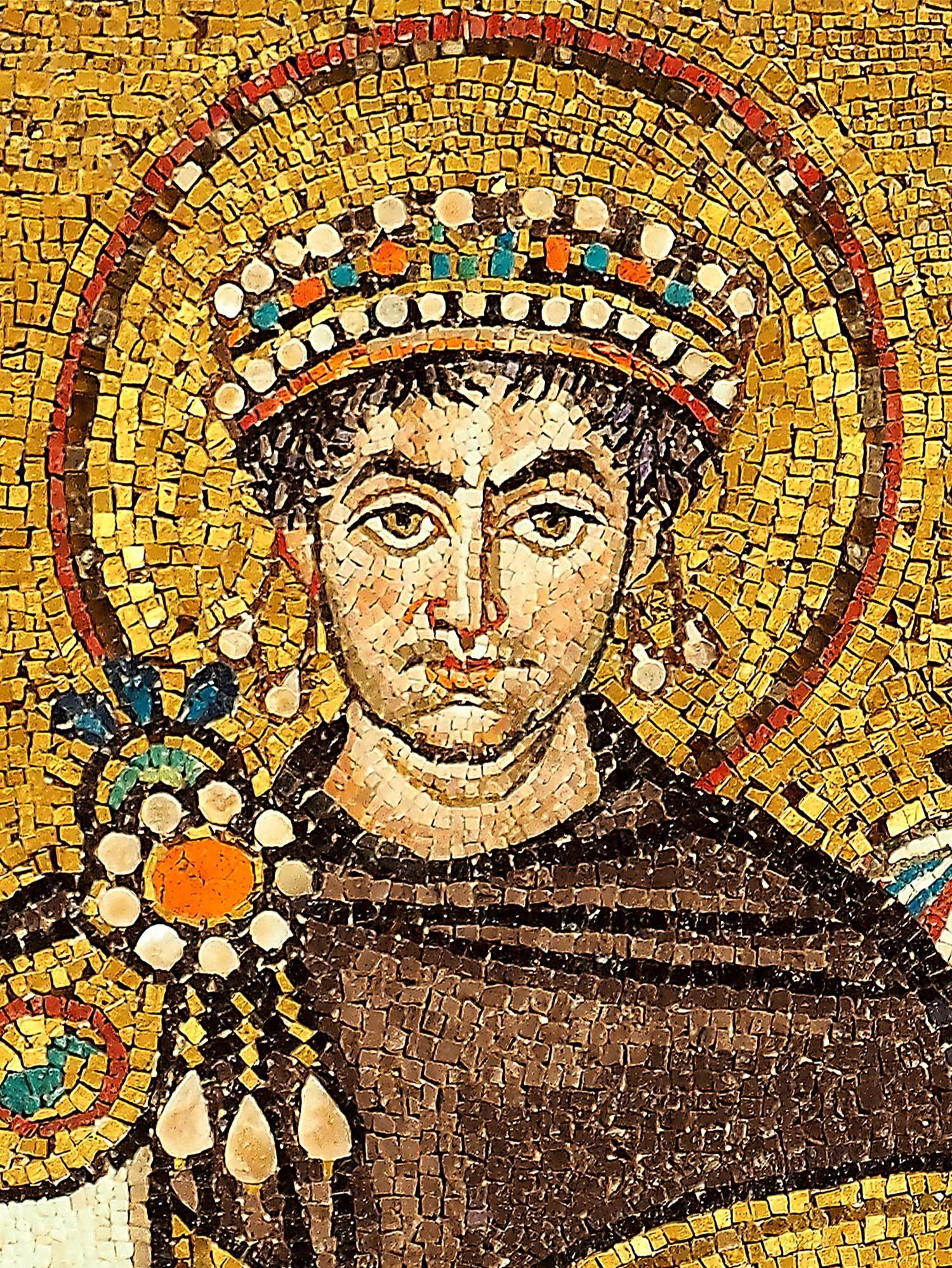
Justinian the Great
About Justinian I
Justinian I, also known as Justinian the Great, was a Roman emperor who reigned from 527 to 565 AD. His rule is considered a pivotal period in the history of the Byzantine Empire, characterized by ambitious efforts to restore imperial territories and a profound legal and cultural legacy.
Life and Historical Context
Born in 482 near Naissus (modern-day Niš, Serbia), Justinian hailed from a peasant family of Thraco-Roman or Illyro-Roman origin. He was adopted and educated by his uncle, Justin I, who later became emperor. Justinian received a comprehensive education in jurisprudence, theology, and Roman history. He served in the imperial guard before rising through the ranks, eventually becoming co-emperor in 527 and sole ruler upon his uncle's death later that year.
His reign was marked by considerable energy, earning him the moniker "the emperor who never sleeps." Around 525, he married Theodora, a woman of humble origins who became a powerful and influential empress. Justinian was surrounded by talented advisors and generals, including Tribonian, his legal expert, and Belisarius and Narses, his most successful military commanders.
Major Contributions
Justinian's most enduring legacy is the Corpus Juris Civilis, a systematic codification of Roman law initiated early in his reign. This monumental work, comprising the Codex Justinianeus, Digesta, Institutiones, and Novellae, preserved and organized centuries of Roman legal precedent. It became the foundation for civil law in many modern European nations and continues to be studied and admired for its comprehensiveness and clarity.
Another significant aspect of his reign was the renovatio imperii romanorum, or "restoration of the Roman Empire." Justinian's generals, particularly Belisarius, achieved remarkable military successes, reconquering North Africa from the Vandals and large parts of Italy from the Ostrogoths. These campaigns, though costly, re-established Roman control over key western Mediterranean territories and significantly increased the empire's revenue.
Justinian also presided over a flourishing of Byzantine culture and initiated an extensive building program. The most iconic result of this program is the Hagia Sophia in Constantinople, a marvel of architecture that served as the principal church of the Eastern Roman Empire and remains a testament to Byzantine artistry and engineering.
Challenges and Conflicts
Justinian's reign was not without its challenges. He faced the devastating Nika riots in 532, a popular uprising that threatened his throne but was brutally suppressed by his generals, reportedly with immense loss of civilian life. He also engaged in protracted wars with the Sasanian Empire in the East and dealt with internal issues such as plague outbreaks. The reconquest of Italy was a particularly prolonged and destructive conflict. Despite enacting laws that improved the rights of women and slaves, he also implemented harsh legislation against philosophical inquiry, paganism, Judaism, and homosexual acts.
Legacy
Justinian I is remembered as one of the most significant and influential Roman emperors. His legal reforms fundamentally shaped Western legal tradition, while his military ambitions temporarily reasserted Roman power in the West. The Hagia Sophia stands as a lasting monument to his reign, symbolizing the power and cultural achievements of the Byzantine Empire under his rule.
Source: Wikipedia ↗
Frequently Asked Questions
Who was Justinian I?
Justinian I was a Roman emperor who reigned from 527 to 565 AD. He is known for his ambitious attempts to restore the Roman Empire and for his significant legal reforms.
What is Justinian I most famous for?
He is most famous for the Corpus Juris Civilis, a comprehensive codification of Roman law that continues to influence modern legal systems. He is also remembered for his military campaigns to reconquer lost territories and for commissioning the Hagia Sophia.
Did Justinian I reconquer the Western Roman Empire?
Justinian initiated ambitious campaigns that led to the partial recovery of territories of the defunct Western Roman Empire. His generals reconquered the Vandal Kingdom in North Africa and significant parts of Italy from the Ostrogoths.
What was the Corpus Juris Civilis?
The Corpus Juris Civilis was a complete revision and codification of Roman law, compiled under Justinian's direction. It consisted of the Codex Justinianeus, the Digesta, the Institutiones, and the Novellae, and it preserved Roman legal traditions for centuries.
What role did his wife Theodora play?
Theodora, an actress and former prostitute, married Justinian and became a highly influential figure in his reign. She played a crucial role in convincing Justinian to stay and suppress the Nika riots.
What major building did Justinian commission?
Justinian commissioned the Hagia Sophia in Constantinople, a monumental architectural achievement that became a landmark of Byzantine architecture and a symbol of the empire.
Related Saints
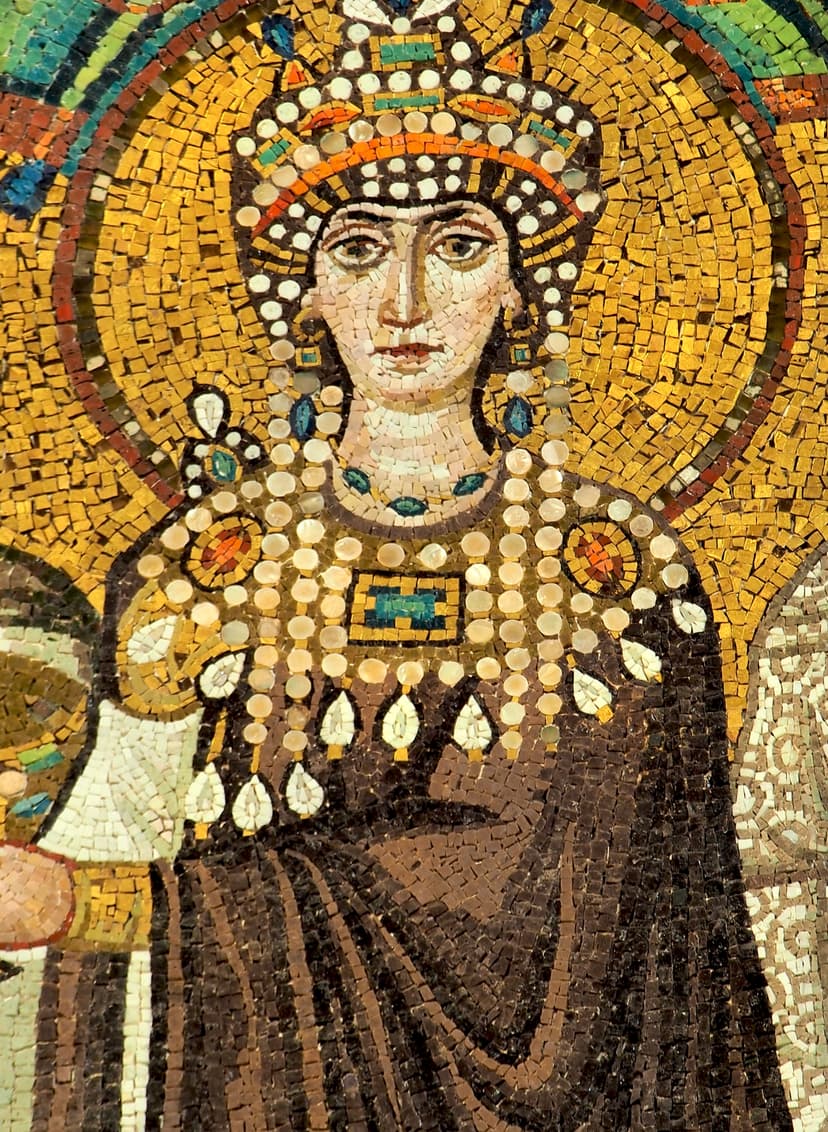
Theodora (wife of Justinian I)
Theodora was the wife of Byzantine Emperor Justinian I and served as Empress from 527 until her death. She is remembered as a formidable political advisor who played a crucial role in quelling the Nika riots and advocating for marginalized groups, particularly women. Revered as a saint in Eastern Orthodox and Oriental Orthodox traditions, she remains an influential figure in history and culture.
John III of Constantinople
John Scholasticus served as Patriarch of Constantinople from 565 to 577 AD, a period marked by his significant contributions to canon law. He is remembered for his methodical classification of canon law in his "Digest of Canon Law" and his "Nomocanon," which organized ecclesiastical and civil laws. John also played a role in attempts to reconcile Chalcedonian and Non-Chalcedonian factions within Christianity.
Sampson the Hospitable
Sampson the Hospitable was a physician from Constantinople who dedicated his life to serving the poor and sick. He is remembered for his immense charity, establishing a free clinic in his home and later founding a large hospital with the support of Emperor Justinian. His devotion to the needy led to his veneration as a saint in both Eastern and Catholic traditions.