
Theodora (wife of Justinian I)
November 14·6th century·Byzantine Empire
Theodora was the wife of Byzantine Emperor Justinian I and served as Empress from 527 until her death. She is remembered as a formidable political advisor who played a crucial role in quelling the Nika riots and advocating for marginalized groups, particularly women. Revered as a saint in Eastern Orthodox and Oriental Orthodox traditions, she remains an influential figure in history and culture.
Key Facts
- ›Theodora was born around 490/500 in Constantinople to a circus keeper and a dancer/actress.
- ›She worked as a courtesan and actress in her youth before marrying Justinian I.
- ›Theodora was instrumental in persuading Justinian not to flee during the Nika riots in 532.
- ›She advocated for the rights of women, including establishing a convent for former prostitutes.
- ›Theodora supported Miaphysite Christianity, often in opposition to her husband's Chalcedonian leanings.
- ›She died of cancer on June 28, 548, and was buried in the Church of the Holy Apostles in Constantinople.
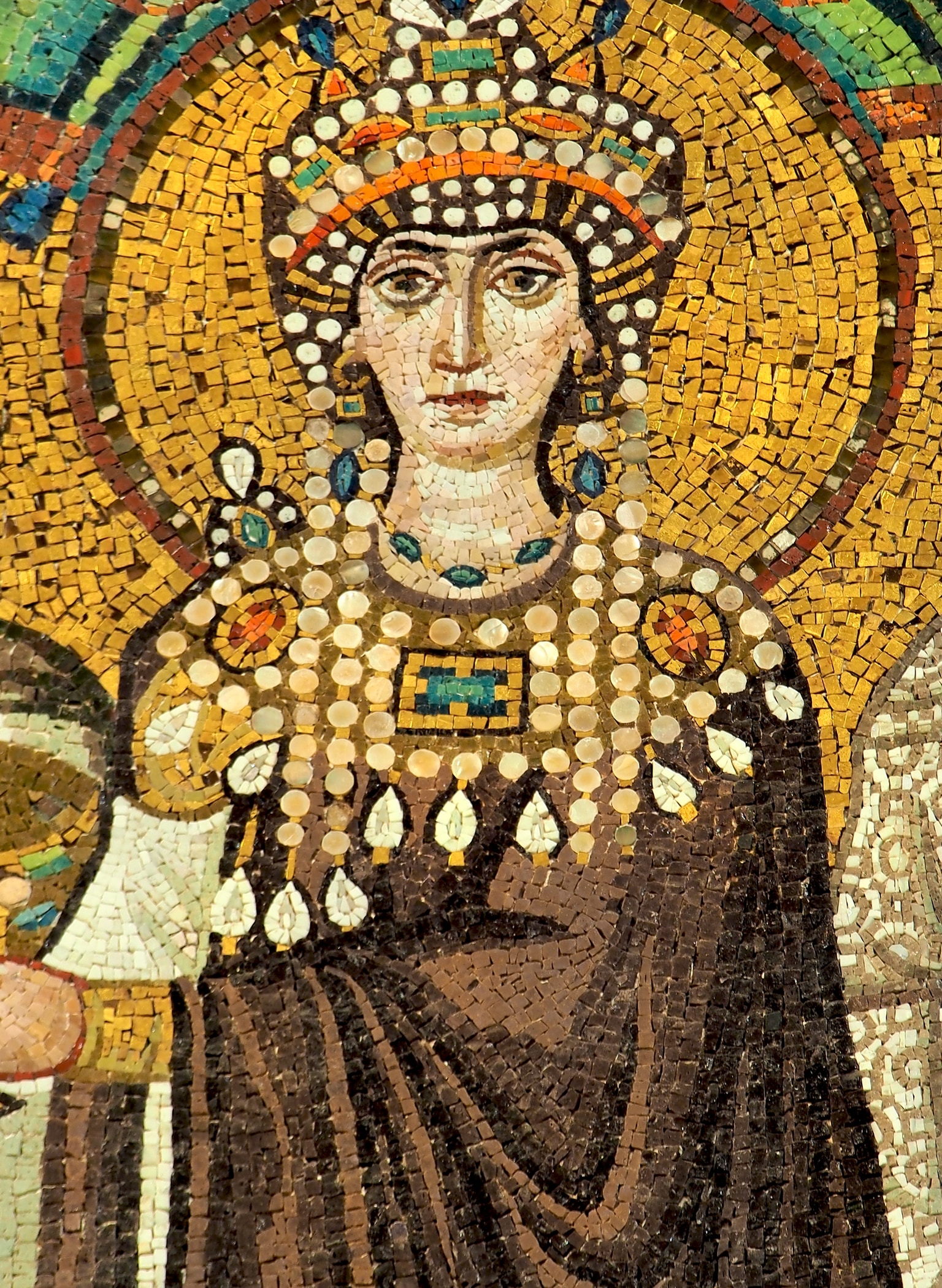
About Theodora (wife of Justinian I)
Theodora (Empress)
Theodora (c. 490/500 – June 28, 548) was the Empress of the Eastern Roman Empire as the wife of Emperor Justinian I. She is recognized as a saint in the Eastern Orthodox and Oriental Orthodox Churches and is remembered for her significant political influence, her advocacy for marginalized groups, and her role in shaping Byzantine policy.
Early Life and Rise to Power
Born into humble origins in Constantinople, Theodora's early life was marked by her work as a courtesan and actress, professions often intertwined with prostitution in the 6th century. Her father, Acacius, was a bear keeper for the Hippodrome's Green faction. After his death, her family faced financial hardship, and she and her sisters became performers. Despite the social stigma attached to her past, she met and married Justinian, who was then a prince. Following Justinian's ascension to the throne in 527, Theodora was crowned Empress, proving to be an astute and influential political partner.
Political Influence and Key Actions
Theodora was a crucial advisor to Justinian, participating actively in state councils and wielding considerable influence. She is famously credited with persuading Justinian and his court not to flee Constantinople during the violent Nika riots of 532, a decision that helped quell the rebellion and preserve the empire. Her actions were often characterized by determination and loyalty, though some contemporary accounts describe her as vindictive and capable of cruelty.
Social Reforms and Religious Policy
Beyond her political acumen, Theodora dedicated herself to social reform, particularly concerning the welfare of women. She worked to abolish prostitution and established a convent, the Metanoia, for women seeking to leave that life. She also championed legal reforms that offered greater protections and divorce options for women. Religiously, Theodora was a staunch supporter of Miaphysite Christianity, often acting in opposition to her husband's support for Chalcedonian Christianity. She provided sanctuary and support to Miaphysite clergy and founded monasteries, significantly influencing the religious landscape of the empire.
Legacy
Theodora died of cancer in 548. Her reign as Empress was a period of significant political and social upheaval, and her active participation in governance left an indelible mark on Byzantine history. While historical accounts, particularly those of Procopius, offer divergent perspectives on her character, her strength, intelligence, and dedication to her beliefs continue to be recognized. Her life has inspired numerous works of art, literature, and continues to be a subject of historical and cultural interest.
Source: Wikipedia ↗
Frequently Asked Questions
What were Theodora's humble origins?
Theodora was born into humble circumstances in Constantinople, the daughter of a circus bear keeper. In her youth, she worked as a courtesan and an actress, roles that were often associated with prostitution at the time.
What was Theodora's role in the Nika riots?
During the Nika riots in 532, when the city was in chaos and Justinian and his advisors considered fleeing, Theodora delivered a powerful speech urging them to stay and fight. Her courage and resolve are credited with bolstering their morale and leading to the suppression of the revolt.
How did Theodora help women?
Theodora was a strong advocate for women, working to end prostitution and establishing a convent called the Metanoia for former prostitutes. She also influenced laws to provide women with more avenues for divorce and protection.
What was Theodora's religious affiliation?
While Justinian was a proponent of Chalcedonian Christianity, Theodora was reputedly a Miaphysite. She actively supported Miaphysite clergy and communities, often providing them with sanctuary and aid.
What is the primary source for information about Theodora's life?
The primary historical source for much of Theodora's life is the work of Procopius, a contemporary historian. However, his writings present conflicting views, with his public accounts being largely positive and his "Secret History" offering a highly critical and often slanderous portrayal.
When did Theodora die and where is she buried?
Theodora died on June 28, 548, likely from cancer. She was buried in the Church of the Holy Apostles in Constantinople, where Justinian visited her tomb years later.
Related Saints
Anna Maria Rubatto
Anna Maria Rubatto, also known as Maria Francesca of Jesus, was an Italian Roman Catholic nun and the founder of the Capuchin Sisters of Mother Rubatto. She is primarily remembered for her extensive charitable work in Uruguay and Argentina, and for her canonization as the first Uruguayan person to be beatified.
Marcellin Champagnat
Marcellin Champagnat was a French Catholic priest and founder of the Marist Brothers, a religious congregation dedicated to education. He is remembered for his deep commitment to educating impoverished children in rural areas and for fostering a spirit of love and unity within his congregation. Canonized in 1999, his feast day is celebrated on June 6th.
Mary Euphrasia Pelletier
Mary Euphrasia Pelletier was a French religious sister who founded the Sisters of the Good Shepherd and served as its first superior general. She is remembered for her significant work in establishing a global congregation dedicated to aiding women and girls at risk of exploitation and for establishing contemplative communities within the order. Canonized in 1940, her feast day is celebrated on April 24th.