
Saint Thekla Convent
The Convent of Saint Thecla, located in the Aramaic-speaking village of Maaloula, Syria, is a significant Greek Orthodox pilgrimage site administered by the Greek Orthodox Patriarchate of Antioch. Founded in 1935 around the grotto of Saint Thecla, the convent is built upon a legend of the saint's miraculous escape and subsequent life in the area. It remains an active monastic community and a major destination for Christian pilgrims seeking spiritual solace and healing from the grotto's sacred spring.
Key Facts
- ›The convent is a Greek Orthodox monastery administered by the Greek Orthodox Patriarchate of Antioch.
- ›It was built in 1935 around the grotto of Saint Thecla, a site of Christian pilgrimage.
- ›The village of Maaloula is known for its adherence to Christianity and the Aramaic language.
- ›According to legend, Saint Thecla escaped Roman soldiers by passing through a miraculously divided rock face into the grotto.
- ›The grotto contains a sacred spring believed to have healing properties.
- ›The convent houses an active community of seven nuns and a mother superior.

Grotto of Saint Thecla, Sacred Spring With Healing Waters, Guest-House For Pilgrims, Iconostasis With 18th and 19th-Century Icons
Mar Taqla Convent, دير مار تقلا
Saint Thecla, Pelagia Sayyaf
- Rebuilding of the Monastery of St. Thecla and the Church of St. John the Baptist In 1756.
- Record of Four Monks At St. Thecla In 1840.
- Construction of A Church Over the Remains of An Ancient Church In 1906.
- Beginning of the Convent Building Construction In 1935.
About Saint Thekla Convent
The Convent of Saint Thecla (Mar Taqla) is a significant Greek Orthodox monastery located in the Aramaic-speaking village of Maaloula, Syria. Administered by the Greek Orthodox Patriarchate of Antioch, the convent was established in 1935, centered around the ancient grotto of Saint Thecla. This site is a major destination for Christian pilgrimage within Syria.
Legend and Significance
The convent's origins are deeply tied to the legend of Saint Thecla, a noble pagan woman who, according to tradition, fled an arranged marriage to embrace Christianity. Pursued by Roman soldiers, she is said to have reached a dead end in the Qalamoun mountains near Maaloula. In her desperation, she prayed for divine intervention, and the rocky barrier miraculously parted, allowing her to escape into a grotto. She is believed to have spent the remainder of her life there. Within the grotto, she discovered a natural spring, the waters of which are considered sacred and are reputed to possess healing properties, capable of curing ailments such as paralysis, rheumatism, and infertility. Saint Thecla is also credited with healing the sick and preaching the Christian faith, dying at the age of 90 and being buried in the grotto.
Pilgrimage and Community
Saint Thecla's reputation as a healing saint has made the convent a focal point for pilgrims who visit to pay their respects and fulfill vows. Historically, pilgrims would spend time in the grotto, drink from the holy spring, and offer prayers. The convent today houses an active monastic community consisting of a mother superior and seven nuns, who dedicate their lives to prayer and hospitality. They welcome visitors, guide them through the convent, and engage in various crafts, including sewing, embroidery, and icon decoration. The nuns also manage a small orphanage and are involved in parish activities, particularly the liturgies held on Sundays and feast days. Despite the region's history of Islamic penetration, the convent has continued to prosper due to the enduring faith of the local Christian population and the veneration of Saint Thecla, which often extends to local Muslim communities.
Historical Context and Architecture
The Qalamoun region has a long history of Christianity, with the presence of early monasteries dating back to the fourth century. While Islam gradually spread into the region, Christian resistance in the mountainous areas, including Maaloula, was persistent. The monastery of Saint Thecla and the church of Saint John the Baptist were rebuilt in 1756. A church was constructed over the remains of an older structure in 1906, and the main convent building was erected in 1935, with a second floor added in 1959. The convent's facilities include a reception room, refectory, display rooms for religious artifacts, nuns' cells, a kitchen, and a restored patriarchal residence. A guest-house for visitors was built in 1934, and a ladder provides direct access from the main building to the shrine of Saint Thecla in the rock-grotto, which is divided into a sacred spring and two small churches.
Source: Wikipedia ↗
Frequently Asked Questions
Where is the Convent of Saint Thecla located?
The Convent of Saint Thecla is situated in the village of Maaloula, Syria, northeast of Damascus. It is located in the mountainous Qalamoun region at an altitude of 1600 meters.
What is the significance of the grotto of Saint Thecla?
The grotto is believed to be where Saint Thecla took refuge and spent the rest of her life. It contains a sacred spring whose waters are considered holy and are thought to cure ailments like paralysis, rheumatism, and infertility.
Is the Convent of Saint Thecla still active?
Yes, the Convent of Saint Thecla remains an active monastic community. It is administered by the Greek Orthodox Patriarchate of Antioch and is home to a mother superior and seven nuns who follow a life of prayer and hospitality.
Who visits the Convent of Saint Thecla?
The convent is a major pilgrimage site, drawing many Christian visitors from Syria and the Near East. It is also visited by local inhabitants, including Muslims, who venerate Saint Thecla and seek her intercession.
What are the daily activities of the nuns at the convent?
The nuns' daily lives primarily consist of fulfilling prayer obligations, both individually and communally. They also welcome visitors, guide them through the convent, and engage in manual crafts such as sewing, embroidery, and icon decorating. They also run a small orphanage.
Related Monasteries
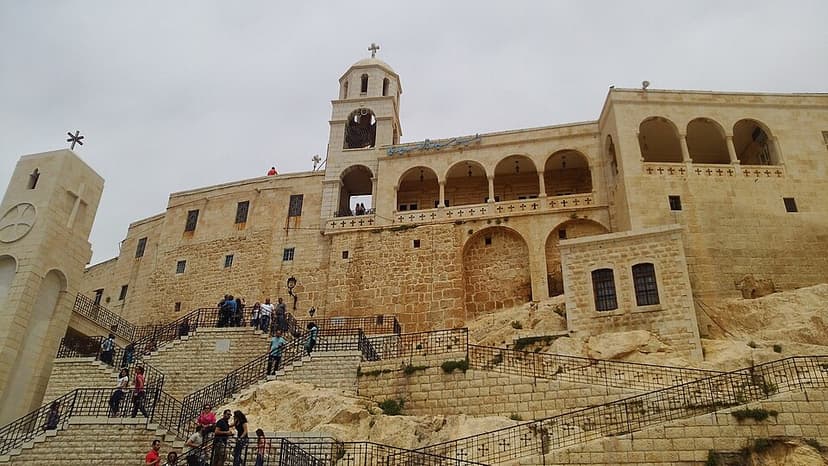
Our Lady of Saidnaya Monastery
Our Lady of Saidnaya Patriarchal Monastery is an ancient Greek Orthodox monastery located in Saidnaya, Syria, traditionally founded by Emperor Justinian I in 547 AD. It is renowned as a significant pilgrimage site, particularly for its icon of Saint Mary attributed to Saint Luke, known as Shaghoura. The monastery has a long history of veneration and has undergone various historical events, including damage from earthquakes and conflict, yet remains an important religious center.

Saint George Monastery
Saint George Monastery, also known as Deir Mar Georges, is a historic Greek Orthodox monastery located in the "Valley of the Christians" in northwestern Syria. Said to have been built by Byzantine Emperor Justinian I in the 6th century, possibly over an ancient temple, the monastery features Byzantine-styled stone architecture and houses significant religious artifacts. It plays a role in regional Christian life, particularly during pilgrimages, and was revitalized by Patriarch John X.
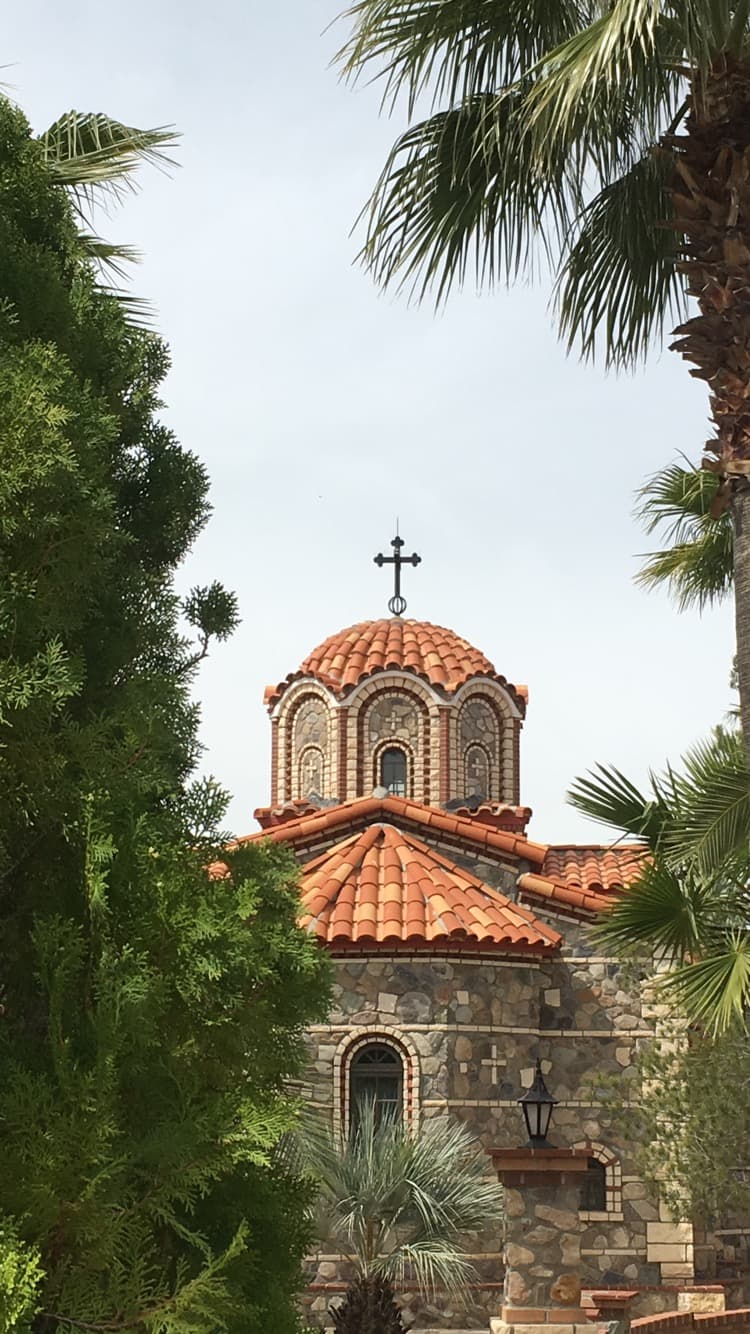
St. Anthony's Greek Orthodox Monastery
St. Anthony's Greek Orthodox Monastery, established in 1995 in the Sonoran Desert, is the largest Orthodox monastic complex in the Western Hemisphere. Founded by Elder Ephraim with six monks from Mount Athos, it is dedicated to Saint Anthony the Great and practices Hesychasm and cenobitic monasticism. The monastery is open to visitors and offers guest facilities, with specific rules for respectful conduct.