
St. Anthony's Greek Orthodox Monastery
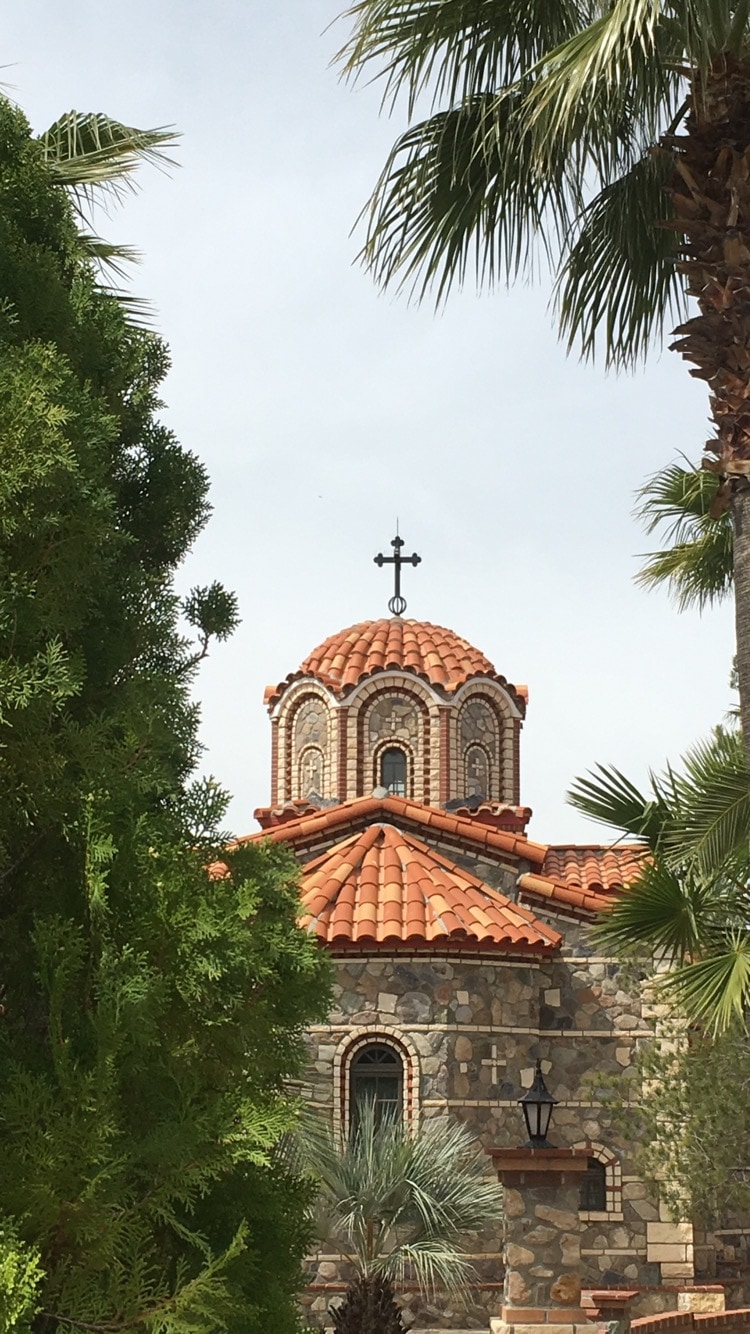
St. Anthony's Greek Orthodox Monastery, established in 1995 in the Sonoran Desert, is the largest Orthodox monastic complex in the Western Hemisphere. Founded by Elder Ephraim with six monks from Mount Athos, it is dedicated to Saint Anthony the Great and practices Hesychasm and cenobitic monasticism. The monastery is open to visitors and offers guest facilities, with specific rules for respectful conduct.
Key Facts
- ›Established in 1995 by Elder Ephraim.
- ›Largest Orthodox monastic complex in the Western Hemisphere.
- ›Home to approximately 50 monks as of 2021.
- ›Practices Hesychasm and cenobitic monasticism.
- ›Includes an eponymous church, seven chapels, and extensive grounds with gardens and orchards.
- ›Open to visitors daily with specific rules of conduct.
- Largest Orthodox Monastic Complex In the Western Hemisphere
- Chapel of the Prophet Elias Visible From Miles Away
- Extensive Gardens, Vineyards, Citrus Orchards, and Olive Groves
- Spanish Fountains and Gazebos
- Bookstore
Elder Ephraim, Saint Anthony the Great, Seraphim of Sarov, Demetrius of Thessaloniki, John the Baptist, George the Martyr, Nicholas the Wonderworker, Panteleimon the Healer, Nectarios of Aegina, Prophet Elias
About St. Anthony's Greek Orthodox Monastery
St. Anthony's Greek Orthodox Monastery is a significant monastic center located in the Sonoran Desert near Florence, Arizona. Established in 1995, it holds the distinction of being the largest Orthodox monastic complex in the Western Hemisphere. The monastery was founded by Elder Ephraim, a former abbot of Philotheou Monastery on Mount Athos, who sent six monks to establish a new community dedicated to Saint Anthony the Great, the father of Christian monasticism.
Monastic Life and Structure
The monks at St. Anthony's practice Hesychasm, a tradition of mystical prayer and contemplation, alongside cenobitic monasticism. Their daily lives are governed by a strict schedule of prayer, spiritual reading, and manual labor, all performed under the guidance of their abbot, who serves as their spiritual father. The work undertaken by the monks is diverse, including gardening, construction, woodworking, icon writing, and hospitality.
The monastery's grounds are extensive and thoughtfully designed, featuring an eponymous church dedicated to Saint Anthony and Nectarios of Aegina, seven smaller chapels honoring various saints such as Seraphim of Sarov and John the Baptist, a central courtyard, and a bookstore. The desert landscape has been cultivated with a vegetable garden, vineyard, citrus orchards, and an olive grove, interconnected by pathways and adorned with gazebos and Spanish fountains.
Visitors and Accessibility
St. Anthony's Greek Orthodox Monastery welcomes visitors of all religious backgrounds to experience its serene environment. The monastery is open daily from 10:30 am to 2:30 pm, and entry is free. Pilgrims have the option to arrange stays in the monastery's guest facilities. Visitors are expected to adhere to specific rules of conduct, which include maintaining a quiet demeanor, refraining from smoking, and dressing modestly in loose-fitting clothing. A chapel dedicated to the Prophet Elias, completed in 2008, is situated on a hill east of the monastery and is visible from a considerable distance, serving as a landmark for the spiritual community.
Source: Wikipedia ↗
Frequently Asked Questions
When was St. Anthony's Greek Orthodox Monastery founded?
St. Anthony's Greek Orthodox Monastery was established in the summer of 1995. It was founded by Elder Ephraim, who sent six monks of Athonite heritage to the Sonoran Desert.
Where is St. Anthony's Greek Orthodox Monastery located?
The monastery is situated in the Sonoran Desert, outside of Florence, Arizona, in the United States. Its remote desert location is a defining characteristic of its setting.
What is the size and significance of St. Anthony's Greek Orthodox Monastery?
It is recognized as the largest Orthodox monastic complex in the Western Hemisphere. As of 2021, it housed approximately 50 monks, contributing to its significant presence.
Can visitors go to St. Anthony's Greek Orthodox Monastery?
Yes, the monastery is open to both Orthodox and non-Orthodox visitors free of charge. Visitors are welcome daily between 10:30 am and 2:30 pm, with specific rules of conduct to be observed.
What kind of monastic life is practiced at St. Anthony's?
The monks at St. Anthony's practice Hesychasm, a mystical tradition of contemplative prayer, and adhere to cenobitic monasticism. This involves a structured daily schedule of prayer, spiritual reading, and work under obedience to their abbot.
What are some notable features of the monastery's grounds?
The grounds include an eponymous church dedicated to Saint Anthony and Nectarios of Aegina, seven chapels dedicated to various saints, a central courtyard, and a bookstore. The landscape also features gardens, vineyards, citrus orchards, and olive groves connected by pathways and gazebos.
Related Monasteries

Saint Thekla Convent
The Convent of Saint Thecla, located in the Aramaic-speaking village of Maaloula, Syria, is a significant Greek Orthodox pilgrimage site administered by the Greek Orthodox Patriarchate of Antioch. Founded in 1935 around the grotto of Saint Thecla, the convent is built upon a legend of the saint's miraculous escape and subsequent life in the area. It remains an active monastic community and a major destination for Christian pilgrims seeking spiritual solace and healing from the grotto's sacred spring.
Our Lady of Saidnaya Monastery
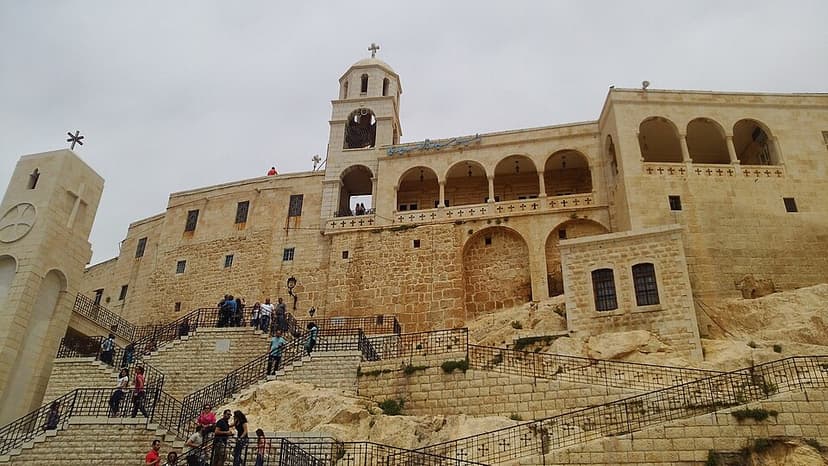
Our Lady of Saidnaya Patriarchal Monastery is an ancient Greek Orthodox monastery located in Saidnaya, Syria, traditionally founded by Emperor Justinian I in 547 AD. It is renowned as a significant pilgrimage site, particularly for its icon of Saint Mary attributed to Saint Luke, known as Shaghoura. The monastery has a long history of veneration and has undergone various historical events, including damage from earthquakes and conflict, yet remains an important religious center.

Saint George Monastery
Saint George Monastery, also known as Deir Mar Georges, is a historic Greek Orthodox monastery located in the "Valley of the Christians" in northwestern Syria. Said to have been built by Byzantine Emperor Justinian I in the 6th century, possibly over an ancient temple, the monastery features Byzantine-styled stone architecture and houses significant religious artifacts. It plays a role in regional Christian life, particularly during pilgrimages, and was revitalized by Patriarch John X.