
Dealu Monastery
Dealu Monastery is a significant 15th-century monastic complex located in Dâmbovița County, Romania. Its church is dedicated to Saint Nicholas, and its narthex serves as a notable necropolis, housing the tombs of several prominent Wallachian princes and Moldavian rulers. The monastery stands as an important historical and religious site in the region.
Key Facts
- ›Founded in the 15th century.
- ›The church is dedicated to Saint Nicholas.
- ›Features one of the largest funerary narthexes in Romania.
- ›Serves as the burial site for several Wallachian voivodes, including Vlad II Dracul and Mihai Viteazul.
- ›Located 6 km north of Târgoviște in Dâmbovița County, Romania.

Necropolis Within the Narthex, Tombs of Wallachian Princes
Vlad Ii Dracul, Vladislav Ii, Radu Iv Cel Mare, Vlad V Cel TâNăR, Radu Vi BăDica, Vlad Vii îNecatul, Mihai Viteazul, Mihail Movilă
About Dealu Monastery
Dealu Monastery is a historic monastic site dating back to the 15th century, situated in Dâmbovița County, Romania. Its primary church is dedicated to Saint Nicholas, a figure revered in Orthodox Christianity. The monastery holds significant historical importance, largely due to its role as a necropolis for several prominent figures in Romanian history.
Necropolis and Royal Burials
The narthex of Dealu Monastery is recognized as one of the largest funerary spaces within Romania. This area serves as the burial ground for a notable number of voivodes (princes) and other significant individuals. Chronologically, those interred here include Vlad II Dracul, Prince of Wallachia, and his descendants such as Vladislav II, Radu IV cel Mare, and Vlad V cel Tânăr. The necropolis also contains the tomb of Radu VI Bădica, Vlad VII Înecatul, and the head of Mihai Viteazul, a pivotal figure in Romanian unification. Mihail Movilă, Prince of Moldavia, is also buried at Dealu Monastery, underscoring its historical connections across principalities.
Location and Significance
The monastery is located approximately six kilometers north of Târgoviște, a city with deep historical roots in Wallachia. Its 15th-century origins place it within a period of significant political and cultural development in the region. Dealu Monastery stands as a testament to this era, preserving architectural elements and serving as a repository of historical memory through its royal and princely burials.
Source: Wikipedia ↗
Frequently Asked Questions
When was Dealu Monastery founded?
Dealu Monastery was founded in the 15th century. Historical records place its establishment during this period, making it a significant historical monument.
What is the significance of the narthex at Dealu Monastery?
The narthex of Dealu Monastery is of particular importance as it is considered one of the largest funerary spaces in the country. It serves as the burial place for several voivodes, princes, and clergymen.
Who is buried at Dealu Monastery?
Dealu Monastery is the final resting place for numerous notable figures from Romanian history. This includes princes of Wallachia such as Vlad II Dracul, Vladislav II, Radu IV cel Mare, Vlad V cel Tânăr, Radu VI Bădica, and Vlad VII Înecatul. The head of Mihai Viteazul and Mihail Movilă, Prince of Moldavia, are also interred there.
What is the primary dedication of the church at Dealu Monastery?
The church within Dealu Monastery is dedicated to Saint Nicholas. This dedication marks its religious significance within the monastic complex.
Where is Dealu Monastery located?
Dealu Monastery is situated in Dâmbovița County, Romania. It is located approximately 6 kilometers north of the city of Târgoviște.
Related Monasteries

Sinaia Monastery
Sinaia Monastery, established in 1695 by Prince Mihail Cantacuzino, is a significant religious and historical site located in Prahova County, Romania. Named in honor of Saint Catherine's Monastery on Mount Sinai, it served as both a spiritual center and a fortified stronghold. The monastery complex features two courtyards with distinct churches in the Byzantine style, a valuable library, and a museum, and it continues to house an active Orthodox monastic community.

Bistrița Monastery
Bistrița Monastery is a Romanian Orthodox monastery located near Piatra Neamț, dedicated in 1402. It was originally founded by Voivode Alexandru cel Bun, whose remains are interred within the church. The monastery is noted for its Byzantine architecture, intricate frescoes, and the preservation of historically significant artifacts, including the miraculous icon of Saint Anne. It also served as a vital cultural center for scribes and chroniclers.
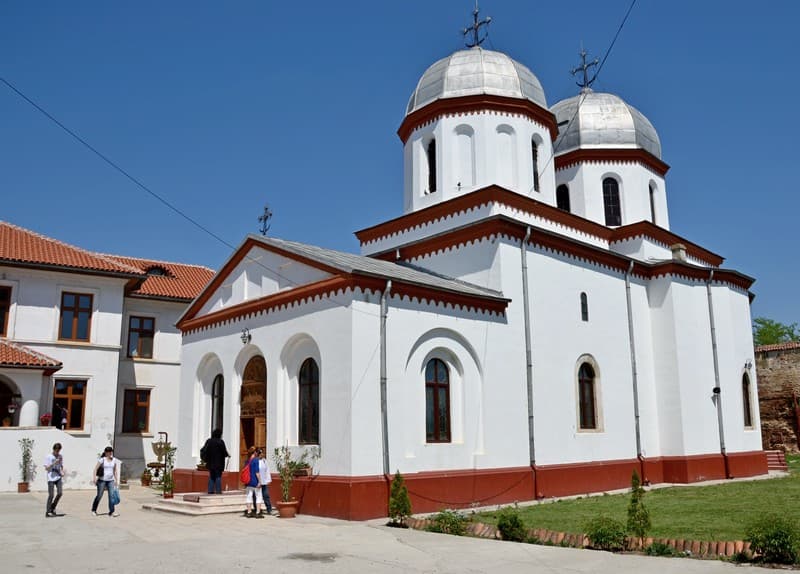
Comana Monastery
Comana Monastery is a Romanian Orthodox monastery located in Comana, Giurgiu County, Romania. Originally founded in 1461 by Vlad Țepeș as a monastery-fortress, it was rebuilt in 1589 by Radu Șerban and later restored multiple times. Archaeological discoveries on its grounds have led to speculation that it may be the burial site of Vlad Țepeș.