
St Andrew's Blackfriars
St Andrew's Blackfriars, originally the Dominican friary of St Mary, was a significant religious institution in St Andrews, Scotland, with its actual foundation likely occurring in the mid-15th century. It served the needs of the University of St Andrews and underwent expansion before being damaged and ultimately destroyed by Protestant reformers during the Scottish Reformation. Today, only the ruins of the friary remain.
Key Facts
- ›The friary's actual foundation is believed to be in the MID-15th century, despite earlier spurious claims.
- ›Its foundation was likely episcopal, with the Archbishop of St Andrews claiming patronage.
- ›The friary expanded in the 1510s, increasing its number of brothers and absorbing other houses like the Hospital of St Nicholas.
- ›It was severely damaged in 1547 and subsequently destroyed by Protestant reformers between June 14 and June 22, 1559.
- ›The property of the house was granted to the burgh of St Andrews in 1567.
- ›The modern name "Blackfriars" refers to the Dominican friary and its present-day ruins.
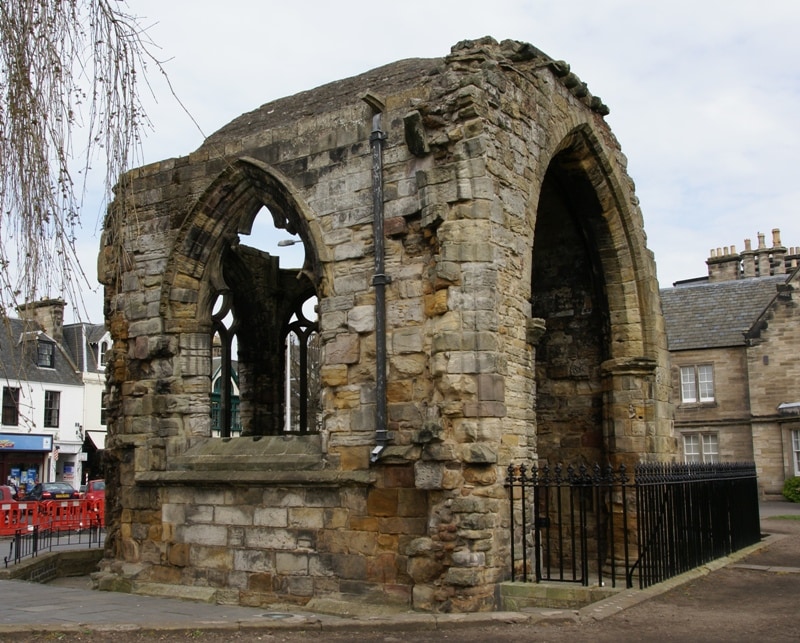
Remains of A Vaulted Apse
Dominican Friary of St Mary
James Beaton
- Scottish Reformation
- Destruction By Protestant Reformers In 1559
- Damage By Norman Leslie's Forces In 1547
- Absorption of Hospital of St Nicholas and Dominican Friary At Cupar
About St Andrew's Blackfriars
St Andrew's Blackfriars, historically known as the Dominican friary of St Mary, stands as a testament to medieval religious life in St Andrews, Scotland. While some historical accounts suggest an earlier foundation, the friary's actual establishment is widely believed to have occurred in the mid-15th century, likely serving the growing needs of the University of St Andrews. The friary's existence was marked by periods of expansion and eventual destruction during the tumultuous era of the Scottish Reformation.
History and Development
The precise origins of St Andrew's Blackfriars are somewhat debated, with later sources positing a late 13th-century founding. However, more reliable evidence points to its actual foundation in the mid-15th century, with the first recorded prior documented in 1464. It is probable that the foundation was an episcopal initiative, with the Archbishop of St Andrews and his predecessors claiming a role as founders. The friary's strategic importance is underscored by its expansion in the early 16th century, which saw an increase in its brothers and the integration of other religious houses, such as the Hospital of St Nicholas and the Dominican friary at Cupar.
Decline and Legacy
The friary's operational history was dramatically cut short by the religious and political upheaval of the 16th century. In 1547, the friary suffered severe damage at the hands of Norman Leslie's forces. A more definitive end came between June 14 and June 22, 1559, when Protestant reformers expelled the friars from their "destroyed place" as part of a broader movement against Catholic institutions. Following its abandonment, the property of the house was formally granted to the burgh of St Andrews in 1567. Today, the remnants of St Andrew's Blackfriars, most notably a vaulted apse, are visible at the junction of Bell Street and South Street, serving as a poignant reminder of its historical presence.
Source: Wikipedia ↗
Frequently Asked Questions
When was St Andrew's Blackfriars founded?
While some later sources suggest a late 13th-century foundation, the actual establishment of the Dominican friary of St Mary, now known as St Andrew's Blackfriars, likely occurred in the mid-15th century. The first known prior is attested in 1464.
What happened to St Andrew's Blackfriars?
The friary was severely damaged by forces in 1547. Following this, Protestant reformers expelled the friars from their "destroyed place" between June 14 and June 22, 1559, as part of the Scottish Reformation's hostility towards friaries. The property was later given to the burgh of St Andrews.
What remains of St Andrew's Blackfriars today?
Today, only the ruins of the friary are present. The remains of a vaulted apse can be seen where Bell Street meets South Street, outside Madras College in St Andrews.
Why was St Andrew's Blackfriars important?
The foundation of the Dominican house was probably prompted by the needs of the nearby University of St Andrews. The friary also expanded its influence by taking over other religious houses in the early 16th century.
Related Monasteries
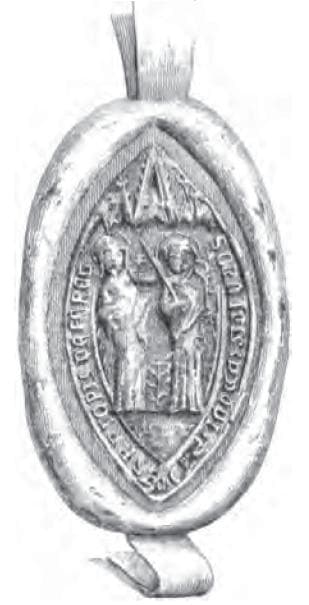
Perth Charterhouse
Perth Charterhouse, also known as Domus Vallis Virtutis, was the sole Carthusian monastery established in Scotland, founded in 1429 by King James I. It served as a significant religious center and a royal mausoleum for King James I and his queen, Joan Beaufort, before its destruction during the Scottish Reformation. Although its buildings no longer survive above ground, its historical importance is remembered, with modern sites like King James VI Hospital occupying its former location.
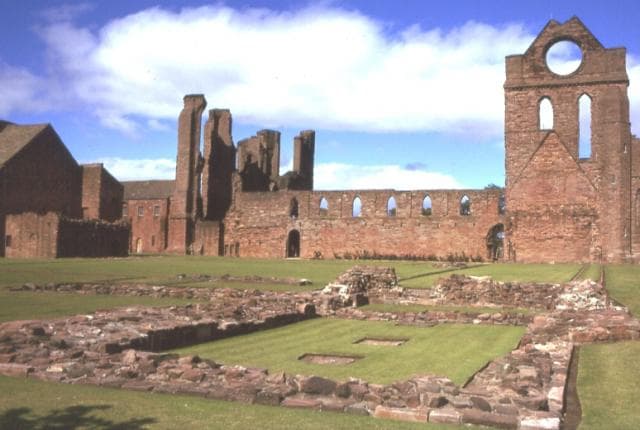
Arbroath Abbey
Arbroath Abbey, a ruined Cistercian monastery located in Arbroath, Scotland, was founded in 1178 by King William the Lion. It is renowned as the site where the Declaration of Scottish Independence was likely drafted in 1320. The Abbey, once the wealthiest in Scotland, is now managed by Historic Environment Scotland and is a popular tourist attraction, notable for its distinctive red sandstone ruins.
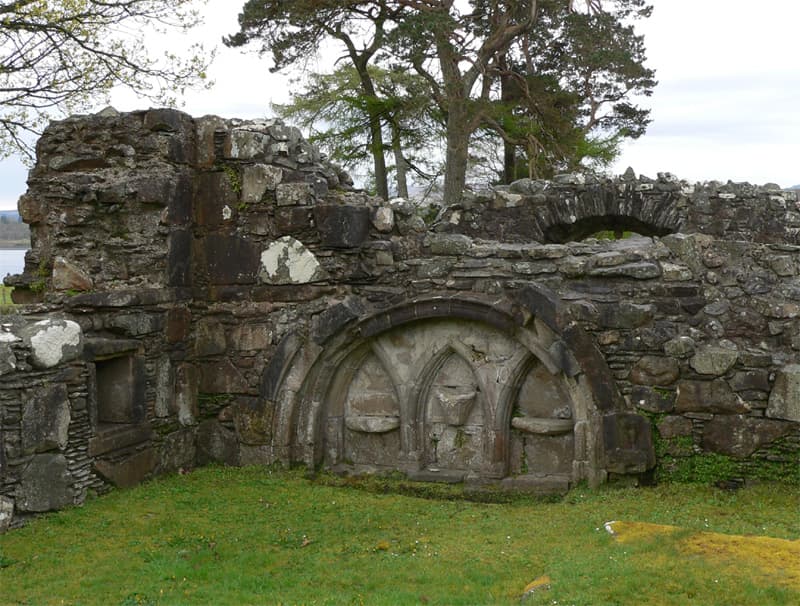
Ardchattan Priory
Ardchattan Priory was a Valliscaulian monastic community established in 1230 by Duncan Macdougall in Ardchattan, Argyll, Scotland. It holds historical significance as the site of a council of local chiefs held by Robert the Bruce in 1308, believed to be the last Gaelic-speaking parliament. Over time, the priory transitioned from its original monastic function, with parts converted into a dwelling and the church eventually falling into disuse and ruin.