
Ardchattan Priory
Ardchattan Priory was a Valliscaulian monastic community established in 1230 by Duncan Macdougall in Ardchattan, Argyll, Scotland. It holds historical significance as the site of a council of local chiefs held by Robert the Bruce in 1308, believed to be the last Gaelic-speaking parliament. Over time, the priory transitioned from its original monastic function, with parts converted into a dwelling and the church eventually falling into disuse and ruin.
Key Facts
- ›Founded in 1230 by Duncan Macdougall, Lord of Argyll.
- ›Site of Robert the Bruce's council in 1308, possibly the last Gaelic parliament.
- ›Incorporated as a cell of Beauly Priory in 1510 and may have become Cistercian.
- ›Transformed by Clan Campbell in the 16th century, with parts becoming a private dwelling.
- ›The monastic church is now heavily ruined, with the choir and transepts surviving.
- ›The priory church and surrounding grounds are a designated scheduled monument.
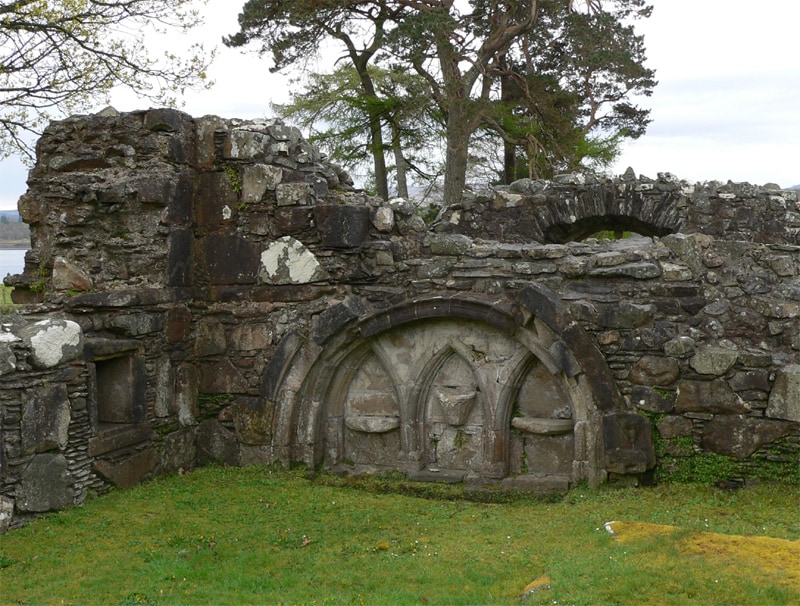
Gothic
- 13th-Century Nave and Transepts
- 15th-Century Choir
- Stone Screen Separating Choir
- Tomb Chest
- Piscina
- 15th-Century Refectory With Vaulted Pulpit
- Carved Stones
- Gardens
- Yew Trees Allegedly Inspected By Robert the Bruce
Duncan Macdougall, Robert the Bruce, Gillichattan Mor, SéOn Carsuel
Founding of the Priory By Duncan Macdougall, Robert the Bruce's Council In 1308, Incorporation As A Cell of Beauly Priory, Annexation To the Bishopric of the Isles, Conversion of Buildings By Clan Campbell, New Parish Church Erected, Priory Church Quarried For Stone
About Ardchattan Priory
Ardchattan Priory was a Valliscaulian monastic community situated in Ardchattan, Argyll, Scotland. Its history spans several centuries, marked by its founding, significant historical events, and eventual transformation and ruin.
History and Significance
The priory was established in 1230 by Duncan MacDougall, Lord of Argyll. A notable historical event occurred in 1308 when Robert the Bruce convened a council of local chiefs at the priory, an assembly widely believed to be the last Gaelic-speaking parliament in Scotland. From the early 14th century, the Prior of Ardchattan held the important position of chantership of Lismore Cathedral. By April 1510, the priory was incorporated as a cell of Beauly Priory, and there is some indication it may have become Cistercian, though evidence is slight. In 1615, the priory was annexed to the bishopric of the Isles.
Transformation and Decline
During the 16th century, Ardchattan Priory came under the control of Clan Campbell. They adapted the south range of the conventual buildings for use as a private dwelling. The choir and transepts of the church were utilized for parochial worship. Following the construction of a new parish church between 1731 and 1732, the monastic church fell into disuse, primarily serving as a burial site. Subsequently, the priory church was quarried for its stone, leading to its present heavily ruined state.
Architectural Remains and Gardens
Architecturally, the priory church was cruciform, featuring a small 13th-century nave and transepts, alongside a larger 15th-century choir. The surviving remains are complicated by two 17th-century burial enclosures. The stone screen that once separated the choir remains, as does a tomb chest and piscina further east. Though the nave has largely vanished, it once possessed a narrow north aisle. The cloister, measuring fifteen by sixteen meters, was located to the south of the church and is now largely built over by a later house. The 15th-century refectory is the sole surviving claustral building, though it was subdivided in 1713. The vaulted refectory pulpit has been restored. The priory structure, burial ground, and carved stones are recognized as a scheduled monument by Historic Environment Scotland.
The priory site also features significant gardens. While the monks would have maintained gardens for practical needs, the scenic location, offering views of Loch Etvie, Ben Cruachan, and the hills of Mull, was recognized and developed with the house in the early 17th century. Most of the current garden design dates from the 19th and 20th centuries, encompassing woodland and formal sections, shrub walks, a wildflower meadow, herbaceous beds, and a walled kitchen garden. The gardens are also listed by Historic Environment Scotland due to their historical, horticultural, and scenic importance. Legends suggest that the priory's yew trees were inspected by Robert the Bruce and used to craft longbows for the Battle of Bannockburn.
Source: Wikipedia ↗
Frequently Asked Questions
When was Ardchattan Priory founded?
Ardchattan Priory was founded in 1230 by Duncan MacDougall, Lord of Argyll.
What is the historical significance of Ardchattan Priory?
In 1308, Robert the Bruce held a council of local chiefs at the Priory, which is believed to have been the last Gaelic-speaking parliament in Scotland. The Prior also held the chantership of Lismore Cathedral from the early 14th century.
What happened to Ardchattan Priory after its monastic use?
In the 16th century, Clan Campbell took possession of the Priory. They converted the south range of the buildings into a private dwelling, while the church's choir and transepts were used for parochial worship. The monastic church later fell into disuse and was quarried for stone, leaving it heavily ruined.
What remains of Ardchattan Priory today?
The priory church, which was cruciform, has a surviving stone screen separating the choir from the rest of the church, along with a tomb chest and piscina. The 15th-century refectory is the only claustral building to survive, and its vaulted pulpit has been restored. The priory structure, burial ground, and carved stones are collectively a scheduled monument.
Are the gardens at Ardchattan Priory of historical interest?
Yes, the gardens are listed by Historic Environment Scotland for their high historical, horticultural, and scenic value. While the monks would have had practical gardens, the site was developed with the house in the early 17th century, and most of the present garden was created in the 19th and 20th centuries.
Related Monasteries

Inchmahome Priory
Inchmahome Priory, founded in 1238 by Walter Comyn, Earl of Menteith, was a monastic institution for the Augustinian order situated on an island in the Lake of Menteith, Scotland. Despite its picturesque location and royal visits from figures like Robert the Bruce and Queen Mary, the priory experienced a decline following the Scottish Reformation and the shift in monastic leadership. Today, its 13th-century structures are largely in ruins, maintained by Historic Environment Scotland as a scheduled monument accessible to the public.
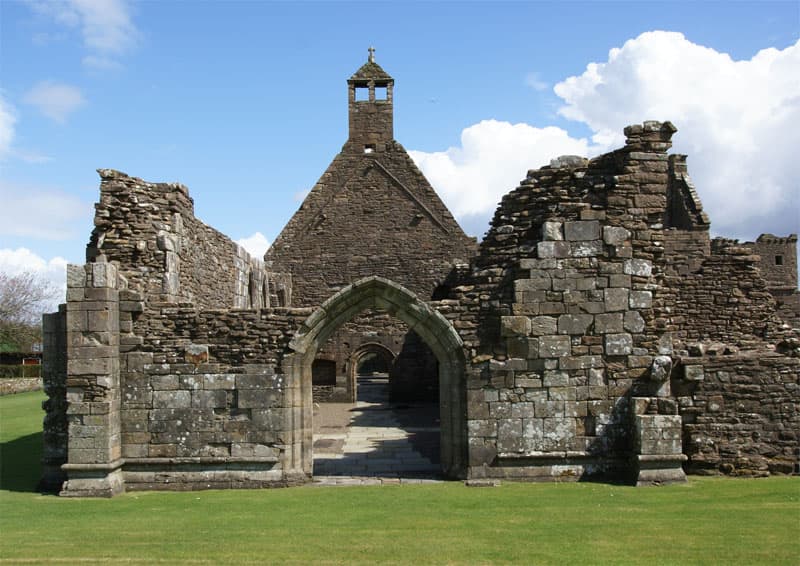
Crossraguel Abbey
The Abbey of Saint Mary of Crossraguel is a significant ruin of a former Cluniac abbey located near Maybole, South Ayrshire, Scotland. Founded in 1244, it played a role in the Ayrshire pilgrims' trail and developed salt production and charcoal grinding in the early 16th century. Despite damage from historical conflicts and the Reformation, its ruins are among the most complete medieval religious structures in Scotland, maintained by Historic Environment Scotland and open to the public.
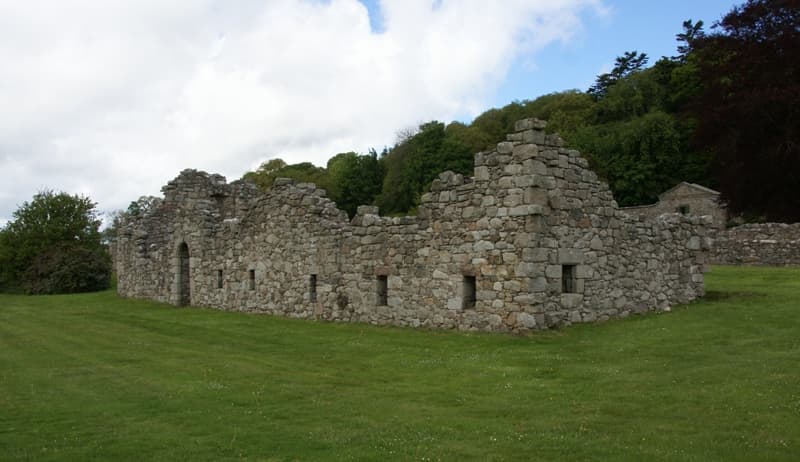
Deer Abbey
Deer Abbey was a Cistercian monastery located in Buchan, Scotland, founded in 1219 by William Comyn, Earl of Buchan, who is also buried on its grounds. Originally established near an earlier Scottish monastic community, the new abbey was dedicated to the Blessed Virgin and consistently housed a small number of monks, never exceeding fifteen. After its secularization in the 16th century, the abbey's structures were gradually dismantled and repurposed, with its grounds eventually becoming part of the Pitfour estate and later managed by Historic Scotland.