
Crossraguel Abbey
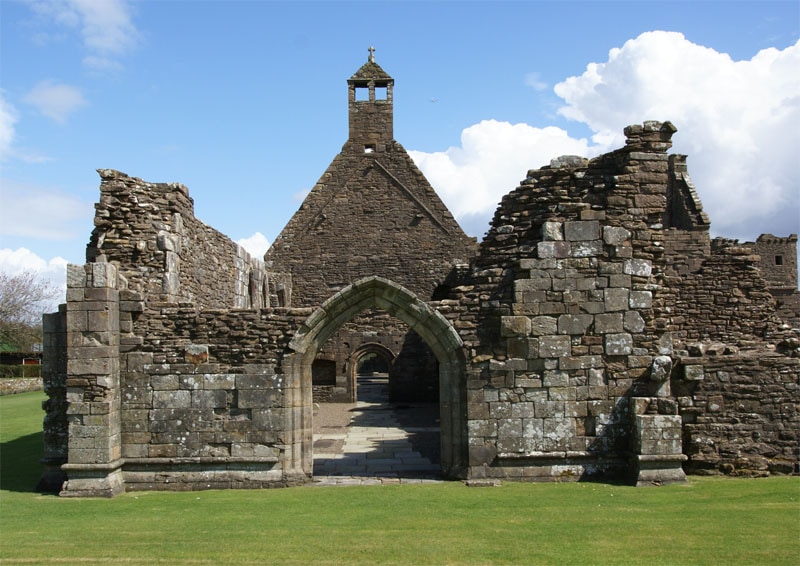
The Abbey of Saint Mary of Crossraguel is a significant ruin of a former Cluniac abbey located near Maybole, South Ayrshire, Scotland. Founded in 1244, it played a role in the Ayrshire pilgrims' trail and developed salt production and charcoal grinding in the early 16th century. Despite damage from historical conflicts and the Reformation, its ruins are among the most complete medieval religious structures in Scotland, maintained by Historic Environment Scotland and open to the public.
Key Facts
- ›Founded in 1244 by Duncan, 1st Earl of Carrick.
- ›Was a Cluniac abbey, a branch of the Benedictine order.
- ›Located on the Ayrshire pilgrims' trail between Paisley and Whithorn.
- ›Developed salt production and charcoal grinding around 1510.
- ›Ruins include the monks' church, cloister, and dovecote.
- ›Maintained by Historic Environment Scotland and open to the public.
Medieval
Monks' Church, Cloister, Dovecote, Chapter House With Benches and Abbot's Seat, Gatehouse Tower
Abbey of Saint Mary of Crossraguel
Duncan, 1st Earl of Carrick, Allan Stewart, Gilbert Kennedy, 4th Earl of Cassillis, Peter Hewat
- Founded In 1244
- Sacked By the Army of Edward I In 1307
- Rebuilt On A Grander Scale During the Middle Ages
- Developed Salt Production and Charcoal Grinding Around 1510
- Lands Obtained By the Kennedy Family Through Torture In 1570
- Monastic Life Ceased In 1601
- Intended For Rebuilding By James Vi In 1603
About Crossraguel Abbey
Overview
The Abbey of Saint Mary of Crossraguel stands as a significant ruin of a former Cluniac abbey, situated near the town of Maybole in South Ayrshire, Scotland. Its name is believed to originate from the ancient Cross of Riaghail, or St. Regulus, which once marked the site. Founded in 1244 by Duncan, 1st Earl of Carrick, the abbey's establishment involved a legal dispute with Paisley Abbey, ultimately resulting in its construction and independent abbacy.
Crossraguel Abbey was part of the Order of Cluny, a prominent monastic reform movement within Benedictine monasticism, and its monks were known as "Black monks." The abbey's strategic location placed it halfway between Paisley and Whithorn, making it a key point on the Ayrshire pilgrims' trail to the shrine of St. Ninian. During the medieval period, the abbey was rebuilt on a larger scale after being sacked by Edward I's army in 1307. By the early 16th century, under the encouragement of James IV and directed by David Kennedy, 1st Earl of Cassillis, the monks engaged in the production of salt and the grinding of charcoal for gunpowder.
Despite the Reformation's impact on many religious houses, Crossraguel was not heavily damaged, although monastic life ended with the death of the last monk in 1601. The abbey's lands were later famously acquired by the Kennedy family, Earls of Cassillis, through controversial means in 1570. Today, the ruins are among the most complete of any medieval religious house in Scotland, maintained by Historic Environment Scotland. Visitors can still explore the monks' church, cloister, dovecote, and chapter house, and climb the gatehouse tower, offering a tangible connection to its rich past.
Source: Wikipedia ↗
Frequently Asked Questions
What is the origin of the name Crossraguel Abbey?
The name "Crossraguel" is derived from the ancient Cross of Riaghail, believed to be St. Regulus, which originally stood on the site. The abbey was dedicated to Saint Mary.
When was Crossraguel Abbey founded and by whom?
Crossraguel Abbey was founded in the year 1244. Its founder was Duncan, the 1st Earl of Carrick, who sought assistance from Paisley Abbey for its establishment.
What was the religious order of Crossraguel Abbey?
Crossraguel Abbey belonged to the Order of Cluny, a reformed branch of the Benedictine order. The monks of this order were often referred to as "Black monks" due to the color of their habits.
What significant historical periods or events impacted Crossraguel Abbey?
The abbey was sacked by Edward I's army in 1307, leading to a period of rebuilding. It also experienced the effects of the Reformation around 1560, though it was not severely damaged, and monastic life ceased in 1601.
What can visitors see at Crossraguel Abbey today?
Despite being a ruin, visitors can still explore the original monks' church, cloister, and dovecote. The chapter house remains intact with benches and an abbot's seat, and visitors can climb the gatehouse tower.
Who maintains Crossraguel Abbey and is it open to the public?
The site is maintained by Historic Environment Scotland as a scheduled monument. It is open to the public for visits, with an entrance charge.
Related Monasteries

Inchmahome Priory
Inchmahome Priory, founded in 1238 by Walter Comyn, Earl of Menteith, was a monastic institution for the Augustinian order situated on an island in the Lake of Menteith, Scotland. Despite its picturesque location and royal visits from figures like Robert the Bruce and Queen Mary, the priory experienced a decline following the Scottish Reformation and the shift in monastic leadership. Today, its 13th-century structures are largely in ruins, maintained by Historic Environment Scotland as a scheduled monument accessible to the public.
Ardchattan Priory
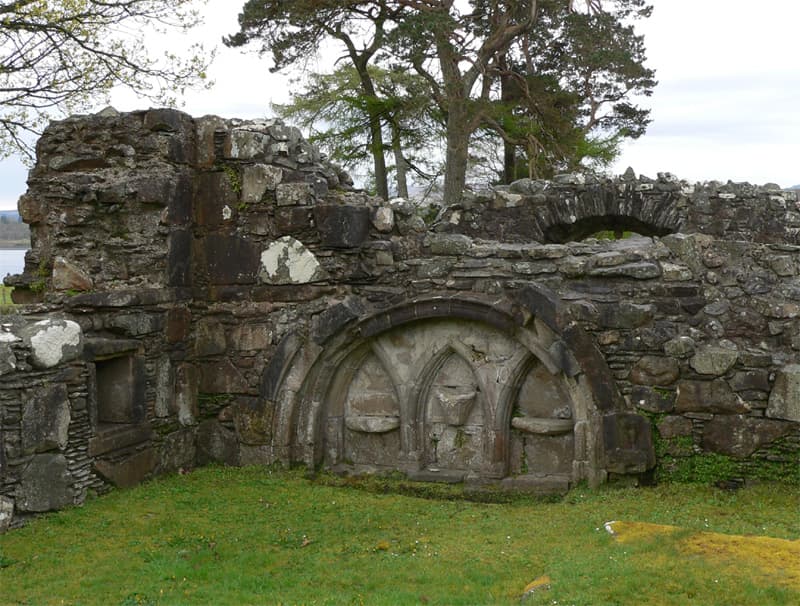
Ardchattan Priory was a Valliscaulian monastic community established in 1230 by Duncan Macdougall in Ardchattan, Argyll, Scotland. It holds historical significance as the site of a council of local chiefs held by Robert the Bruce in 1308, believed to be the last Gaelic-speaking parliament. Over time, the priory transitioned from its original monastic function, with parts converted into a dwelling and the church eventually falling into disuse and ruin.
Deer Abbey
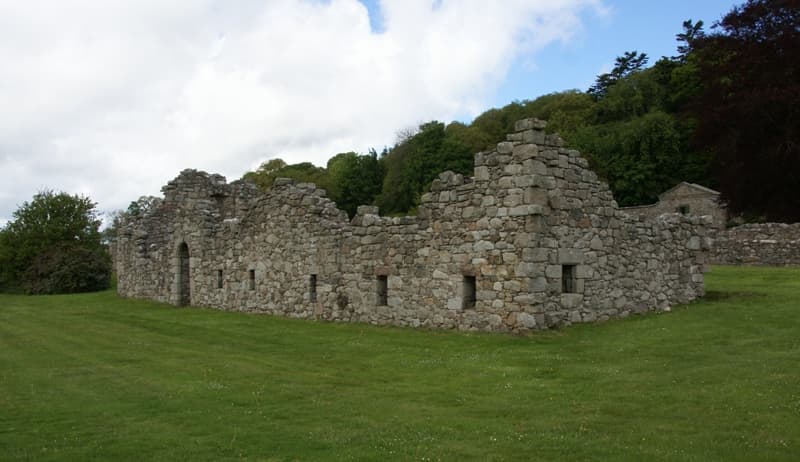
Deer Abbey was a Cistercian monastery located in Buchan, Scotland, founded in 1219 by William Comyn, Earl of Buchan, who is also buried on its grounds. Originally established near an earlier Scottish monastic community, the new abbey was dedicated to the Blessed Virgin and consistently housed a small number of monks, never exceeding fifteen. After its secularization in the 16th century, the abbey's structures were gradually dismantled and repurposed, with its grounds eventually becoming part of the Pitfour estate and later managed by Historic Scotland.