
Deer Abbey
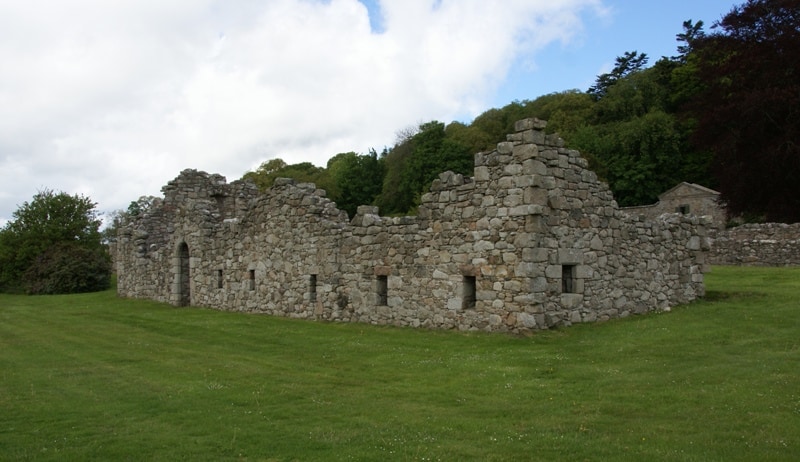
Deer Abbey was a Cistercian monastery located in Buchan, Scotland, founded in 1219 by William Comyn, Earl of Buchan, who is also buried on its grounds. Originally established near an earlier Scottish monastic community, the new abbey was dedicated to the Blessed Virgin and consistently housed a small number of monks, never exceeding fifteen. After its secularization in the 16th century, the abbey's structures were gradually dismantled and repurposed, with its grounds eventually becoming part of the Pitfour estate and later managed by Historic Scotland.
Key Facts
- ›Founded in 1219 by William Comyn, Earl of Buchan.
- ›Established as a Cistercian monastery, bringing monks from Kinloss Abbey.
- ›Always a small community, with a maximum of 15 monks at any time.
- ›Secularized in the 16th century and became a secular lordship.
- ›Fragments of the cruciform church and cloisters remain.
- ›Managed by Historic Scotland.
Gothic
Fragments of Cruciform Church, Piscina, South Range of Cloisters, William Comyn's Burial Site, Site Managed By Historic Scotland
New Deer
William Comyn, Earl of Buchan, Saint Columba, Saint Drostan, Robert Keith Ii, James Ferguson, Lord Pitfour, Eliza Ferguson
- Founded In 1219
- Secularized In the 16th Century
- Became Part of the Pitfour Estate In 1766
- Acquired By the Roman Catholic Diocese of Aberdeen Around 1926
- Custody Given To the Ministry of Works Shortly After Acquisition
About Deer Abbey
Deer Abbey was a Cistercian monastery situated in Buchan, Scotland. Its establishment in 1219 was orchestrated by William Comyn, who held the title of Earl of Buchan and is interred within the abbey's grounds. The abbey's origins are linked to an earlier community of Scottish monks or priests, with historical records on the margins of the Book of Deer suggesting a founding by Saint Columba and Saint Drostan and noting grants made in the 12th century.
Founding and Early History
In 1219, William Comyn founded the Cistercian abbey, known as New Deer, approximately two miles west of the older religious site. He granted a portion of the lands of Old Deer to the new abbey, with the remainder designated for the upkeep of a parochial church. Monks from Kinloss Abbey were brought in to establish the monastery, which was dedicated to the Blessed Virgin. Deer Abbey was characterized by its small size, consistently maintaining a community of no more than fifteen monks throughout its history. The period following the 1210s is largely undocumented until the 16th century, when the abbey began its transition towards secularization.
Secularization and Later History
The abbey was converted into a secular lordship in 1587, with Commendator Robert Keith II becoming Lord Altrie. Architectural remnants include fragments of the cruciform church, measuring 157 feet in length, and parts of the south range of the cloisters, approximately 70 by 90 feet. In 1766, the estate, including the abbey grounds, was acquired by James Ferguson, Lord Pitfour. His son later built a high enclosing wall in 1809 and utilized the grounds as an orchard. Subsequent lairds made further alterations, including the construction of a mausoleum using stones from the abbey building. By the early 20th century, the estate faced bankruptcy. The property was acquired by the Roman Catholic Diocese of Aberdeen around 1926 and subsequently placed under the care of the Ministry of Works. The abbey house was demolished, with much of its stone reportedly used for council housing. The mausoleum was relocated in the 1930s. Today, the site and its remaining structures are managed by Historic Scotland.
Source: Wikipedia ↗
Frequently Asked Questions
When was Deer Abbey founded?
Deer Abbey was founded in 1219. The founding was initiated by William Comyn, who was the jure uxoris Earl of Buchan.
What religious order was Deer Abbey a part of?
Deer Abbey was a Cistercian monastery. Cistercian monks were brought from Kinloss Abbey to establish the new foundation.
What remains of Deer Abbey today?
Some fragments of the cruciform church, including a piscina, still exist. Considerable portions of the south range of the cloisters, measuring approximately 70 by 90 feet, also remain.
Who is buried at Deer Abbey?
William Comyn, the founder of the abbey, is buried there. Other notable burials include Alexander Comyn, Earl of Buchan, and Alexander Comyn (died 1308).
What is the current status of Deer Abbey?
The abbey buildings have largely been dismantled and repurposed over centuries. The site is managed by Historic Scotland, with remnants of the church and cloisters preserved.
Related Monasteries
Ardchattan Priory
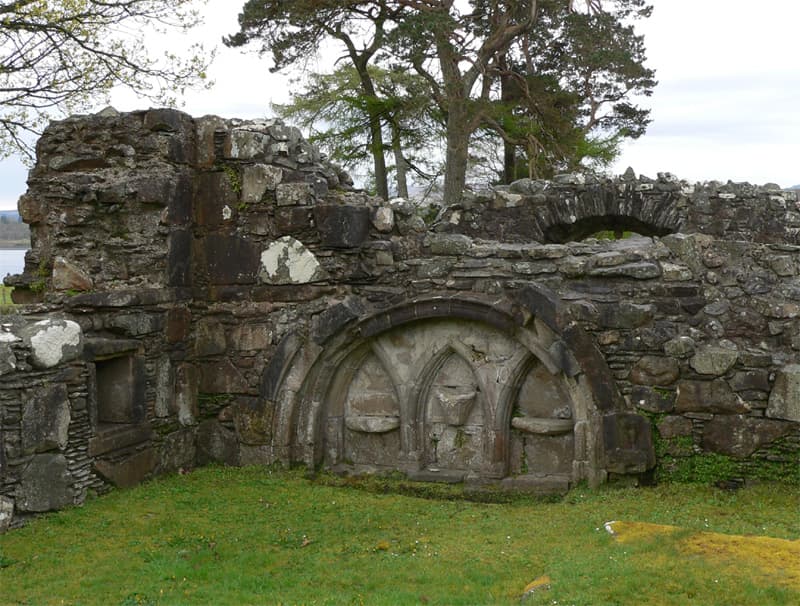
Ardchattan Priory was a Valliscaulian monastic community established in 1230 by Duncan Macdougall in Ardchattan, Argyll, Scotland. It holds historical significance as the site of a council of local chiefs held by Robert the Bruce in 1308, believed to be the last Gaelic-speaking parliament. Over time, the priory transitioned from its original monastic function, with parts converted into a dwelling and the church eventually falling into disuse and ruin.
Balmerino Abbey
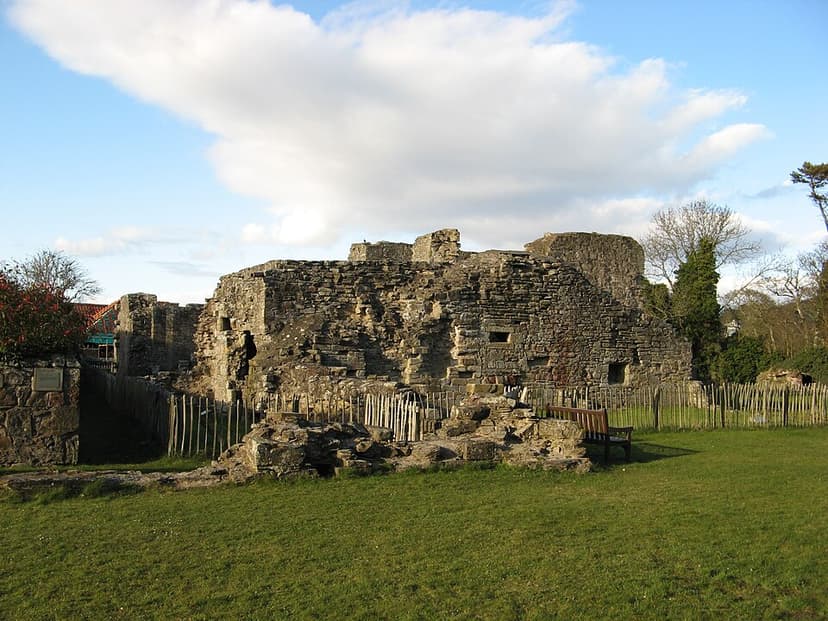
Balmerino Abbey, also known as St Edward's Abbey, was a Cistercian monastery located in Balmerino, Fife, Scotland. Founded between 1227 and 1229, it was patronized by Ermengarde de Beaumont and King Alexander II. The abbey suffered destruction during the War of the Rough Wooing and later during the Scottish Reformation, leading to its decline and eventual ruin by the 16th century. Today, the ruins are managed by the National Trust for Scotland.
Beauly Priory
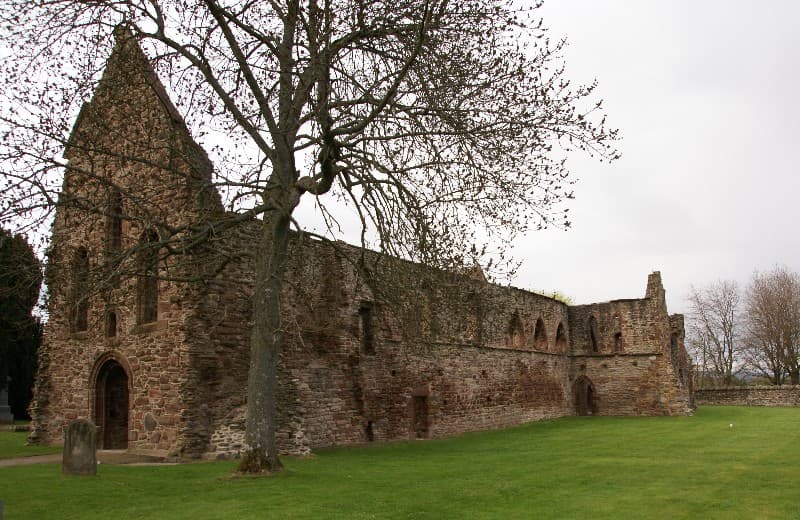
Beauly Priory was a monastic community established likely in 1230 in what is now Beauly, Inverness-shire. Originally founded by the Valliscaulian Order, it later became Cistercian in 1510 following the suppression of its original order. Today, the priory's extensive ruins are a significant visitor attraction, protected as a scheduled monument.