
Balmerino Abbey
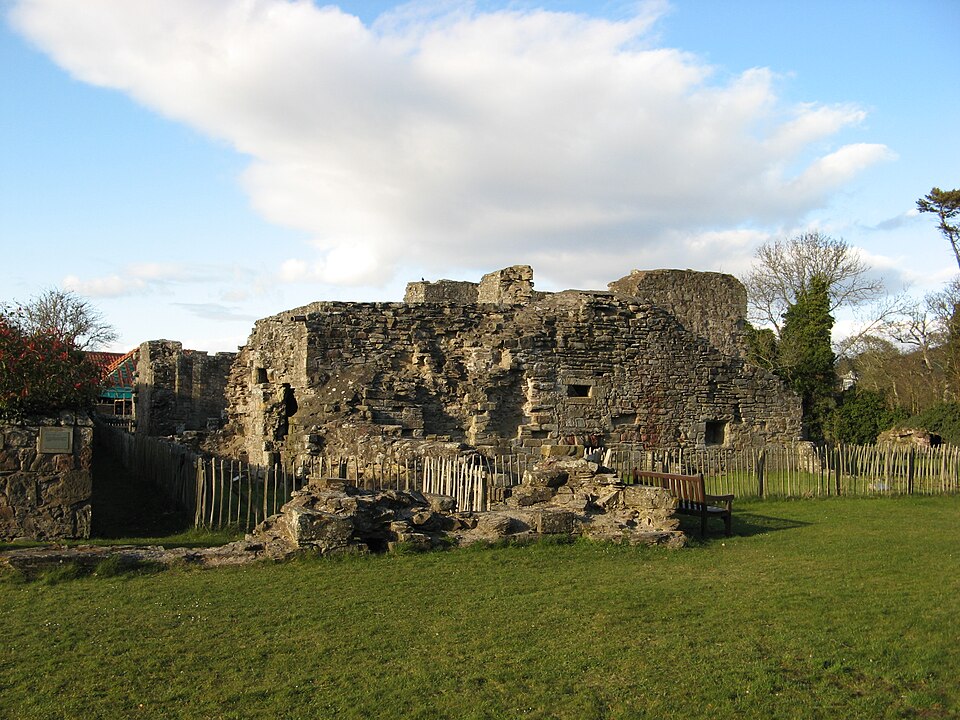
Balmerino Abbey, also known as St Edward's Abbey, was a Cistercian monastery located in Balmerino, Fife, Scotland. Founded between 1227 and 1229, it was patronized by Ermengarde de Beaumont and King Alexander II. The abbey suffered destruction during the War of the Rough Wooing and later during the Scottish Reformation, leading to its decline and eventual ruin by the 16th century. Today, the ruins are managed by the National Trust for Scotland.
Key Facts
- ›Founded between 1227 and 1229 by monks from Melrose Abbey.
- ›Patronized by Ermengarde de Beaumont and King Alexander II of Scotland.
- ›Ermengarde de Beaumont, Queen of Scotland, was buried there by 1233.
- ›Burned by an English force in December 1547 during the War of the Rough Wooing.
- ›Allegedly damaged by Scottish Protestants in 1559 during the Reformation.
- ›Managed by the National Trust for Scotland, with an honesty box for entrance fees.
Gothic
- Oldest Tree In Fife
- Remains of Cruciform Abbey Church
- Preserved Eastern Range of Claustral Buildings
- Vaulted Sacristy
- Original Chapter House With Surviving Quadripartite Vaulting
- Later, Larger Chapter House
St Edward's Abbey, Balmerinach, St Merinac's Place
Ermengarde De Beaumont, King Alexander Ii of Scotland, St Regulus, St Rule, St Merinac, Thomas Wyndham, John Hay, Sir James Elphistone, Francis William Deas
- Founded From Melrose Abbey
- Burial of Ermengarde De Beaumont
- Burned By English Force During War of the Rough Wooing
- Damaged By Scottish Protestants During Reformation
- Estate Made Into A Temporal Lordship
- Archaeological Excavation
- Repairs and Consolidation Program
About Balmerino Abbey
Balmerino Abbey, also known as St Edward's Abbey, stands as the evocative ruins of a former Cistercian monastery in Balmerino, Fife, Scotland. Its history stretches back to its founding between 1227 and 1229, originating from monks of Melrose Abbey and established with the significant patronage of Ermengarde de Beaumont, Queen of Scotland, and King Alexander II. The site itself may have earlier religious associations, potentially dating back to a chapel established by St Merinac around the 4th century.
History and Destruction
The abbey church was sufficiently developed by 1233 to serve as the burial place for Queen Ermengarde. As a daughter house of Melrose, Balmerino Abbey maintained a community of approximately 20 monks at the dawn of the 16th century. However, its fortunes declined significantly during that period. The abbey suffered considerable damage during the War of the Rough Wooing when an English force burned it in December 1547. Further destruction occurred in 1559, allegedly at the hands of Scottish Protestants as part of the Reformation's dismantling of religious structures. The monastic community subsequently faded, and by 1603, the estate was transformed into a temporal lordship.
Architectural Remains and Current Stewardship
While the abbey church is now largely reduced to its north wall, the eastern range of the claustral buildings has survived more substantially, partly due to its conversion into a residence after the Reformation. Notable surviving elements include the vaulted sacristy, which later became the house's kitchen, and the original 13th-century chapter house, with sections of its quadripartite vaulting still standing. A larger, 15th-century chapter house also existed but was altered during the residential conversion.
Today, the ruins are managed by the National Trust for Scotland. Access to the site is available, with a small entrance fee collected via an honesty box. The grounds are also noted for containing what is claimed to be the oldest tree in Fife, a Spanish chestnut. Despite ongoing preservation efforts, access to certain areas of the ruins remains restricted due to their fragile condition, with efforts underway for future stabilization.
Source: Wikipedia ↗
Frequently Asked Questions
When was Balmerino Abbey founded?
Balmerino Abbey was founded between 1227 and 1229. It was established by monks from Melrose Abbey with the support of Ermengarde de Beaumont and King Alexander II of Scotland.
What is the current status of Balmerino Abbey?
Balmerino Abbey is now in ruins and has been since the 16th century. The site is managed by the National Trust for Scotland.
Who is buried at Balmerino Abbey?
Ermengarde de Beaumont, Queen of Scotland, is buried at Balmerino Abbey. She was interred there by 1233, indicating the church was sufficiently complete by that time.
What happened to Balmerino Abbey during the Reformation?
During the Reformation, the abbey was allegedly damaged again in 1559 by Scottish Protestants, contributing to the destruction of perceived idolatrous structures. The monastic community appears to have died out shortly after this period.
Who manages Balmerino Abbey today?
The ruins of Balmerino Abbey are currently under the stewardship of the National Trust for Scotland. Visitors are requested to pay a small entrance fee via an honesty box.
Related Monasteries

Inchmahome Priory
Inchmahome Priory, founded in 1238 by Walter Comyn, Earl of Menteith, was a monastic institution for the Augustinian order situated on an island in the Lake of Menteith, Scotland. Despite its picturesque location and royal visits from figures like Robert the Bruce and Queen Mary, the priory experienced a decline following the Scottish Reformation and the shift in monastic leadership. Today, its 13th-century structures are largely in ruins, maintained by Historic Environment Scotland as a scheduled monument accessible to the public.
Crossraguel Abbey
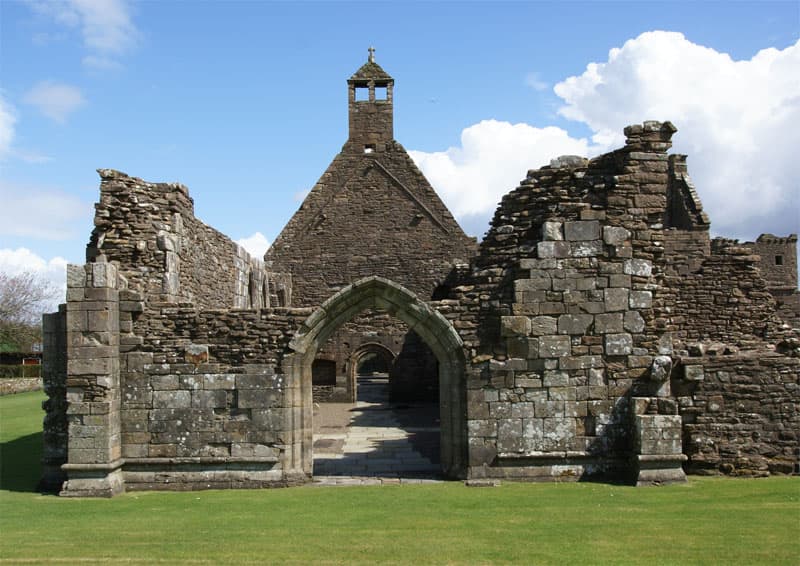
The Abbey of Saint Mary of Crossraguel is a significant ruin of a former Cluniac abbey located near Maybole, South Ayrshire, Scotland. Founded in 1244, it played a role in the Ayrshire pilgrims' trail and developed salt production and charcoal grinding in the early 16th century. Despite damage from historical conflicts and the Reformation, its ruins are among the most complete medieval religious structures in Scotland, maintained by Historic Environment Scotland and open to the public.
Ardchattan Priory
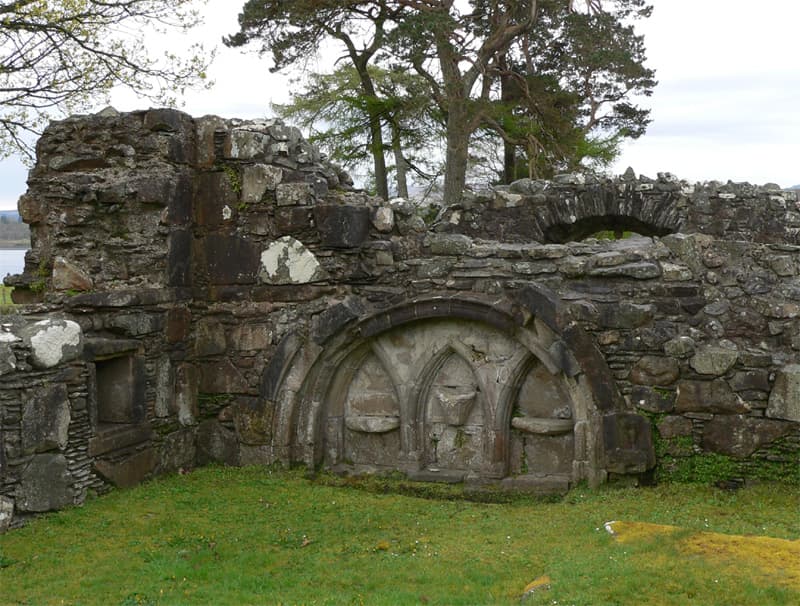
Ardchattan Priory was a Valliscaulian monastic community established in 1230 by Duncan Macdougall in Ardchattan, Argyll, Scotland. It holds historical significance as the site of a council of local chiefs held by Robert the Bruce in 1308, believed to be the last Gaelic-speaking parliament. Over time, the priory transitioned from its original monastic function, with parts converted into a dwelling and the church eventually falling into disuse and ruin.