
Melrose Abbey
St Mary's Abbey, Melrose, is a predominantly ruined Cistercian monastery in Melrose, Scottish Borders, founded in 1136 by King David I of Scotland. It served as the primary house of the Cistercian order in Scotland until the Reformation and is renowned for its intricate Gothic architecture and decorative carvings. Today, it is maintained by Historic Environment Scotland and is a significant historical and tourist site, notable for the purported burial of Robert the Bruce's heart.
Key Facts
- ›Founded in 1136 by Cistercian monks at the request of King David I of Scotland.
- ›Was the chief Cistercian house in Scotland until the Reformation.
- ›Features Gothic architecture and is built in the form of a St. John's Cross.
- ›Known for its detailed carved decorative elements, including saints, dragons, and gargoyles.
- ›Houses a museum in a structure dating from 1590.
- ›A lead container believed to hold the heart of Robert the Bruce was discovered on the site.
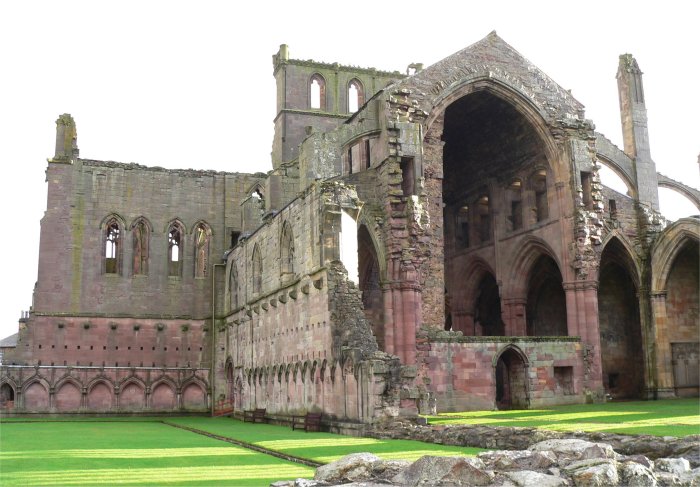
Gothic
- Intricate Carvings of Saints, Dragons, Gargoyles, and Plants
- Museum In A 1590 Structure
- Site of the Purported Burial of Robert the Bruce's Heart
- Original Floor Tiles Retained
- Borders Abbeys Way Walk Component
St Mary's Abbey, Melrose
King David I of Scotland, Saint Aidan of Lindisfarne, Saint Cuthbert, Saint Oduvald, Dryhthelm, Waltheof of Melrose, Robert the Bruce, Sir James Douglas, Alexander Ii of Scotland, Sir David Brewster, Sir Walter Scott
- Founded In 1136
- Church Dedicated In 1146
- Raided By Kenneth I of Scotland
- Town Attacked By Edward Ii of England In 1322, Much of the Abbey Destroyed
- Rebuilt By Order of Robert the Bruce
- Burned By Richard Ii of England In 1385
- Construction Still Unfinished In 1504
- Badly Damaged In 1544 During English Invasions
- Last Monk Died In 1590
- Bombarded By Oliver Cromwell's Troops
- Portion Converted To A Parish Church In 1618
- Heart of Robert the Bruce Discovered In 1921 and Reburied In 1998
- Ruins Given To the State In 1918
About Melrose Abbey
Melrose Abbey, officially St Mary's Abbey, Melrose, is a significant historical site located in Melrose, Roxburghshire, within the Scottish Borders. Founded in 1136 by Cistercian monks at the behest of King David I of Scotland, it rose to become the principal house of the Cistercian order in the country, maintaining this status until the period of the Reformation. The abbey's architecture is predominantly Gothic, with its layout designed in the form of a St. John's Cross. While much of the abbey complex is now in ruins, its historical importance and architectural merit continue to draw visitors.
History and Significance
An earlier monastic settlement, known as Old Melrose, was established by Saint Aidan of Lindisfarne approximately two miles east of the current site. The Cistercian abbey, established in 1136, was built on a new location chosen by the monks who deemed the original site less suitable for farming. The church was consecrated to St. Mary in 1146, and over the following five decades, the complex grew substantially. The abbey played a vital role in the region, not only as a religious center but also economically, with Cistercians implementing new farming techniques and trading wool across northern Europe. During times of hardship, the monastery provided sustenance to the needy, feeding four thousand starving people for three months at one point.
Melrose Abbey was a center of learning and sanctity, with notable abbots like Waltheof of Melrose, the stepson of King David. The abbey's "Chronicle of Melrose Abbey" contains one of the earliest accounts of the Magna Carta. The abbey suffered significant damage from English invasions, notably in 1322 by Edward II's army and again in 1385 by Richard II's forces, leading to extensive rebuilding. Further damage occurred in 1544 during an effort to secure a marriage alliance for Mary, Queen of Scots.
Notable Features and Legacy
The abbey is celebrated for its elaborate carved decorative details, which include depictions of saints, mythical creatures like dragons, and intricate floral motifs. A particularly poignant discovery was made in 1921 when a lead container believed to hold the embalmed heart of Robert the Bruce was found beneath the Chapter House floor; it was reburied on the site in 1998. The abbey’s motto, "Be halde to ye hende" ("Keep in mind, the end, your salvation"), inscribed by master mason John Morow, has become the motto of the town of Melrose. Today, the abbey is managed by Historic Environment Scotland, with a portion of the site housing a museum. While the church itself is closed for conservation, the cloisters, museum, and gardens are open to the public, making Melrose Abbey a key destination on Scotland's Borders Abbeys Way walk.
Source: Wikipedia ↗
Frequently Asked Questions
When was Melrose Abbey founded?
Melrose Abbey was founded in 1136 by Cistercian monks. It was established at the request of King David I of Scotland.
What is Melrose Abbey known for?
The abbey is renowned for its intricate Gothic architecture, detailed carvings of various figures, and the discovery of a container believed to hold the heart of Robert the Bruce. It was also the chief house of the Cistercian order in Scotland until the Reformation.
Is Melrose Abbey still an active monastery?
Melrose Abbey is no longer an active monastery. It is now maintained by Historic Environment Scotland as a scheduled monument and tourist attraction.
What historical figures are associated with Melrose Abbey?
Several Scottish kings and nobles are buried at Melrose Abbey, including Alexander II. A lead container believed to hold the embalmed heart of Robert the Bruce was also found there. Saint Waltheof, a former abbot, is also buried on the site and became a focus of pilgrimage.
What is the current status of Melrose Abbey?
The abbey is largely in ruins, but a structure dating from 1590 is maintained as a museum open to the public. Conservation work means the church itself is closed off to visitors, but the cloisters, museum, and gardens remain accessible.
What architectural style is Melrose Abbey?
Melrose Abbey was built in the Gothic manner. The church was dedicated in 1146, and other buildings were added over the subsequent 50 years.
Related Monasteries
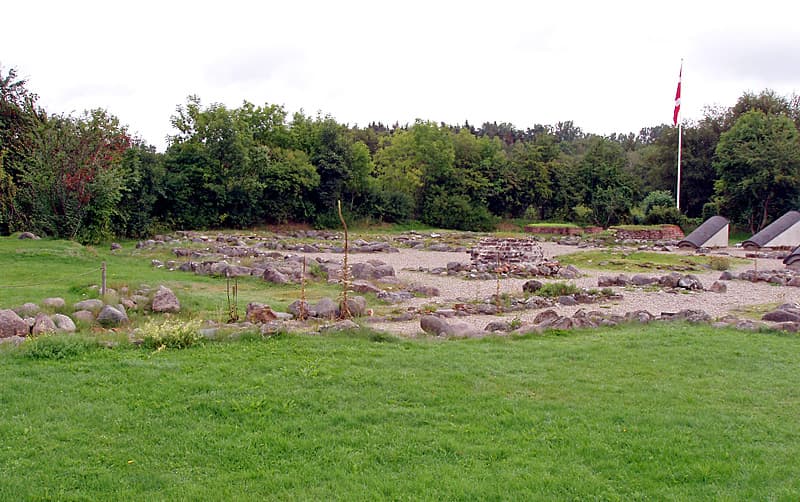
Kalvø Abbey
Øm Abbey was a significant Cistercian monastery in Denmark, founded in 1172 and operating until its dissolution in 1536 following the Reformation. Situated in central Jutland between two lakes, it was known for its extensive landholdings and a well-recognized hospital. Today, the site is managed by a museum that preserves its monastic heritage, with visible ruins of the church and chapter hall.

Mortemer Abbey
Mortemer Abbey was a significant Cistercian monastery founded in 1134 by Henry I of England, once ranking among the largest Cistercian foundations globally. Despite extensive rebuilding in the 17th century, it faced irreversible decline and dissolution during the French Revolution. Today, its 17th-century buildings are well-preserved and open to visitors, while the original 12th-century structures are largely reduced to ruins, though the cloisters remain relatively intact.
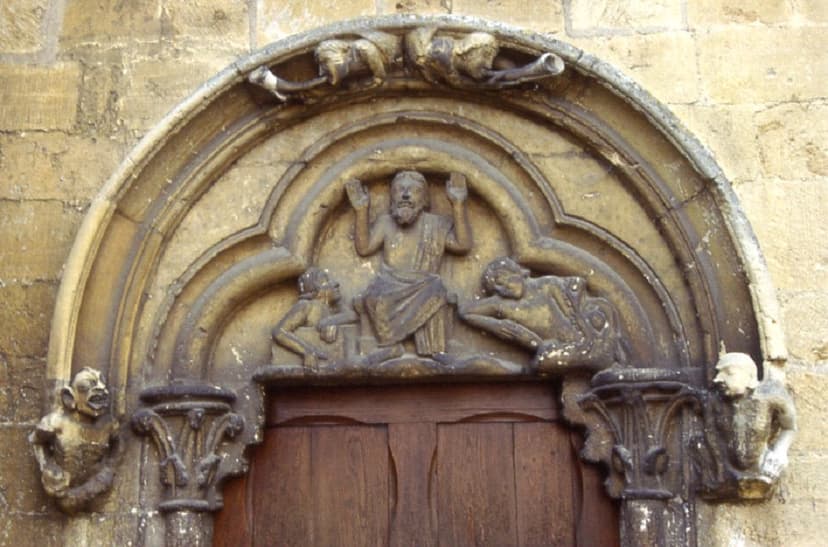
Gorze Abbey
Gorze Abbey was a significant Benedictine monastery in Gorze, Lorraine, founded around 757. It became prominent in the 930s as the origin of the Gorze Reform, a movement that revitalized monastic observance of the Rule of St. Benedict while preserving the independence of individual abbeys, influencing numerous other monasteries. The abbey eventually ceased its central spiritual role in the 12th century, was dissolved in 1572, and its buildings largely demolished, though its former territory persisted as the "Terre de Gorze".