
Beauly Priory
Beauly Priory was a monastic community established likely in 1230 in what is now Beauly, Inverness-shire. Originally founded by the Valliscaulian Order, it later became Cistercian in 1510 following the suppression of its original order. Today, the priory's extensive ruins are a significant visitor attraction, protected as a scheduled monument.
Key Facts
- ›Founded likely in 1230 at "Insula de Achenbady", now Beauly, Inverness-shire.
- ›Originally a Valliscaulian monastic community.
- ›Became Cistercian on April 16, 1510.
- ›The priory's lands were transferred to the bishop of Ross in 1634.
- ›The extensive ruins are a major visitor attraction.
- ›Protected as a scheduled monument.
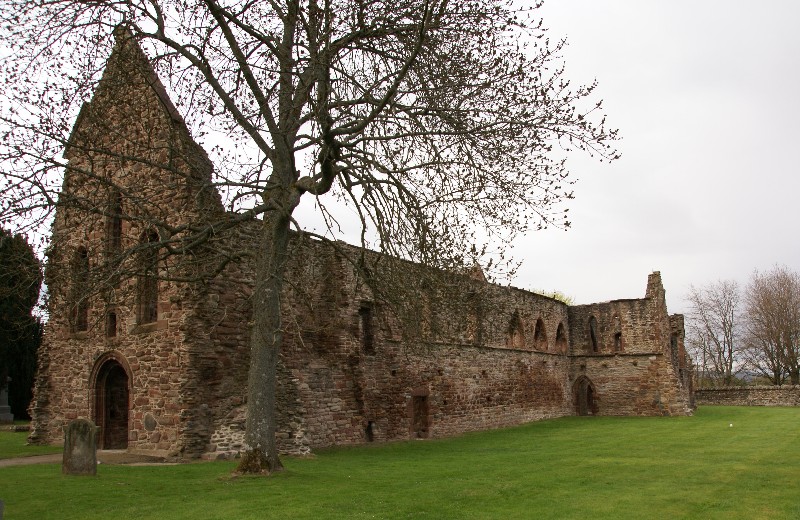
- Extensive Ruins
- Associated With John Keats' Poem 'On Some Skulls In Beauley Abbey, Near Inverness'
Beau Lieu
Alexander Ii of Scotland, John Byset, John Keats, Charles Brown, Hugh Fraser, 3rd Lord Lovat, Kenneth Mackenzie, 7th of Kintail, John Mackenzie, 9th of Kintail, Kenneth Mackenzie, 10th of Kintail, Colin Cam Mackenzie, 11th of Kintail, Walter Ross
- Suppression of the Valliscaulian Order
- Became Cistercian In 1510
- Priory's Lands Given To the Bishop of Ross In 1634
- John Keats' Visit In 1818
About Beauly Priory
Beauly Priory was a monastic community situated at "Insula de Achenbady", a location now known as Beauly in Inverness-shire, Scotland. The priory was likely founded in 1230, though the exact identity of its founder remains a subject of historical debate, with different sources pointing to Alexander II of Scotland, John Byset, or a combination of both. The strong French-speaking presence of the founding monks, alongside the landowner John Byset, is credited with giving the place and the nearby river the name "beau lieu," meaning "beautiful place."
History and Transition
Historically, Beauly Priory is not extensively documented, and information about its priors is sparse until the 14th century. A significant transition occurred on April 16, 1510, when the priory became Cistercian following the suppression of the Valliscaulian Order by papal decree. Over time, the priory underwent gradual secularization, being governed by a series of commendatory abbots. By royal charter on October 20, 1634, the priory's lands were formally transferred to the bishop of Ross.
Present Day
Today, the ruins of Beauly Priory are extensive and stand as one of the primary visitor attractions in Inverness-shire. The site is recognized for its historical significance and is protected as a scheduled monument. The priory's past is also touched by literary history, as the poet John Keats and his friend Charles Brown visited in August 1818, inspiring a collaborative poem.
Notable Burials
Beauly Priory served as the final resting place for several notable individuals, particularly members of the Mackenzie and Fraser families. Among those interred here are Hugh Fraser, 3rd Lord Lovat, who died at the Battle of the Shirts in 1544; Kenneth Mackenzie, 7th of Kintail (died 1492), whose tomb is reportedly still extant; John Mackenzie, 9th of Kintail (died 1561); Kenneth Mackenzie, 10th of Kintail (died 1568); Colin Cam Mackenzie, 11th of Kintail (died 1594); and Walter Ross (died 1721), who succumbed to wounds from the Battle of Glen Affric.
Source: Wikipedia ↗
Frequently Asked Questions
When was Beauly Priory founded?
Beauly Priory was likely founded in 1230. The exact founder is not known with certainty, with different historical accounts attributing its establishment to either Alexander II of Scotland, John Byset, or both.
What religious order was Beauly Priory initially part of?
The priory was initially part of the Valliscaulian Order. This order was suppressed by the Pope, leading to Beauly Priory becoming Cistercian on April 16, 1510.
What is the current status of Beauly Priory?
Today, Beauly Priory exists as extensive ruins, which are a significant visitor attraction in Inverness-shire. It is protected as a scheduled monument.
Are there any notable figures buried at Beauly Priory?
Yes, several notable figures are buried at Beauly Priory. These include Hugh Fraser, 3rd Lord Lovat, Kenneth Mackenzie, 7th of Kintail, John Mackenzie, 9th of Kintail, Kenneth Mackenzie, 10th of Kintail, Colin Cam Mackenzie, 11th of Kintail, and Walter Ross.
Is Beauly Priory associated with any famous literary figures?
Yes, the poet John Keats visited Beauly Priory in August 1818 with his friend Charles Brown. Their visit resulted in a collaborative poem titled 'On Some Skulls in Beauley Abbey, near Inverness'.
Related Monasteries
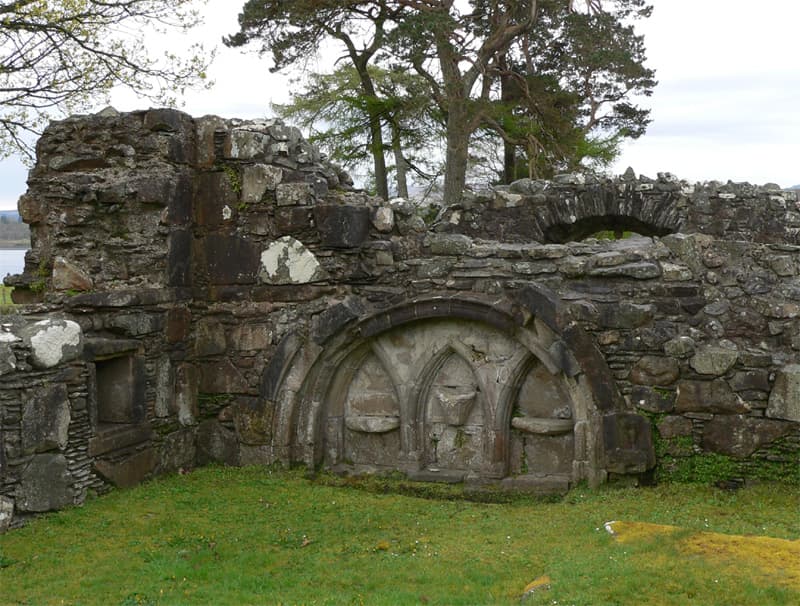
Ardchattan Priory
Ardchattan Priory was a Valliscaulian monastic community established in 1230 by Duncan Macdougall in Ardchattan, Argyll, Scotland. It holds historical significance as the site of a council of local chiefs held by Robert the Bruce in 1308, believed to be the last Gaelic-speaking parliament. Over time, the priory transitioned from its original monastic function, with parts converted into a dwelling and the church eventually falling into disuse and ruin.
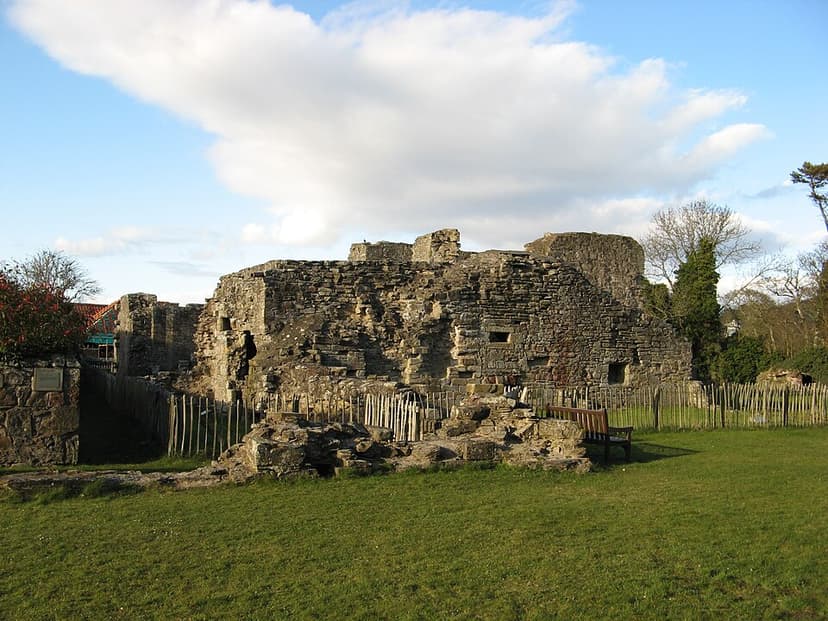
Balmerino Abbey
Balmerino Abbey, also known as St Edward's Abbey, was a Cistercian monastery located in Balmerino, Fife, Scotland. Founded between 1227 and 1229, it was patronized by Ermengarde de Beaumont and King Alexander II. The abbey suffered destruction during the War of the Rough Wooing and later during the Scottish Reformation, leading to its decline and eventual ruin by the 16th century. Today, the ruins are managed by the National Trust for Scotland.
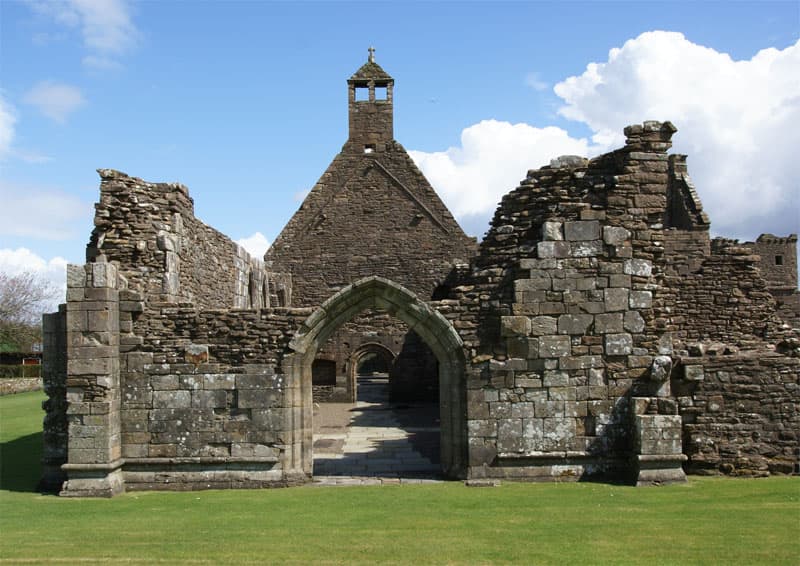
Crossraguel Abbey
The Abbey of Saint Mary of Crossraguel is a significant ruin of a former Cluniac abbey located near Maybole, South Ayrshire, Scotland. Founded in 1244, it played a role in the Ayrshire pilgrims' trail and developed salt production and charcoal grinding in the early 16th century. Despite damage from historical conflicts and the Reformation, its ruins are among the most complete medieval religious structures in Scotland, maintained by Historic Environment Scotland and open to the public.