
Paisley Abbey
Paisley Abbey, originally founded as a Cluniac priory in 1163, is a significant Gothic church in Scotland that has served as a parish church for the Church of Scotland since the Reformation. The abbey church stands on a site believed to have been founded by Saint Mirin in the 7th century, and its current Gothic building largely dates from the 14th and 19th centuries. It holds considerable historical importance as the burial place of several High Stewards of Scotland and members of the royal family, and is known for its architectural features and the unique Paisley Abbey Drain.
Key Facts
- ›Founded as a Cluniac priory in 1163 by Walter fitz Alan.
- ›The present Gothic building dates primarily from the 14th and 19th centuries.
- ›It is the burial place of six High Stewards of Scotland and Marjorie Bruce, mother of Robert II.
- ›The abbey church was rebuilt after being burned down by Edward I of England in 1307.
- ›Features include the Celtic Barochan Cross and the Wallace Memorial Window.
- ›The Paisley Abbey Drain, dating from the late 14th century, is a Scheduled Ancient Monument.

Gothic
Celtic Barochan Cross, Wallace Memorial Window, Paisley Abbey Drain, Stained Glass Windows, Cavaillé-Coll Organ, Tomb of Marjorie Bruce, Tomb of Robert Iii
Passeleg
Saint Mirin, Walter Fitz Alan, Marjorie Bruce, Robert I of Scotland, William Wallace, Robert Ii of Scotland, James Iv of Scotland, George Shaw, Edward Burne-Jones, Douglas Strachan, John Clark, Cavaillé-Coll, Pilkington Jackson, Sir Robert Lorimer
- Founded As A Priory In 1163
- Burned Down By Edward I In 1307
- Rebuilt In the 14th Century
- Marjorie Bruce Gave Birth To Robert Ii In 1316
- Absolution Granted To James Iv In 1491
- Tower Collapsed In the 15th and 16th Centuries
- Reconstruction of the North Porch and Eastern Choir From 1858 To 1928
- 10-Year Restoration Project Began In 2002
About Paisley Abbey
Paisley Abbey is a historic church located in Paisley, Renfrewshire, Scotland, situated on the east bank of the White Cart Water. It stands on a site believed to have been an ecclesiastical centre since the 7th century, with Saint Mirin credited with founding a community there. The abbey was formally established as a Cluniac priory in 1163 by Walter fitz Alan, the first High Steward of Scotland, and was dedicated to SS. Mary, James, Mirin, and Milburga. The present building is primarily Gothic in style, with significant portions dating from the 14th and 19th centuries.
History and Significance
The abbey's history is marked by periods of destruction and rebuilding. It was burned down by Edward I of England in 1307 and subsequently rebuilt in the 14th century. Paisley Abbey holds considerable historical importance as a royal burial site, with the remains of six High Stewards of Scotland interred there, as well as Marjorie Bruce, daughter of Robert the Bruce and mother of King Robert II, who also died and was buried at the abbey. The abbey church was raised to the status of an abbey in 1245 and later became a parish kirk of the Church of Scotland following the Reformation in the 16th century.
Notable Features and Discoveries
Beyond its historical and royal connections, Paisley Abbey is known for several points of interest. The Celtic Barochan Cross, dating from the 10th century, is housed within the abbey. Another significant discovery associated with the site is the Paisley Abbey Drain, a subterranean passage believed to date from the late 14th century. This drain, designated a Scheduled Ancient Monument, has yielded numerous artifacts, including what is thought to be the oldest example of polyphonic music found in Scotland. The abbey also boasts impressive stained glass windows, including works by Edward Burne-Jones and Douglas Strachan, and a renowned Cavaillé-Coll organ. Architectural details include angel corbels by Pilkington Jackson and ceiling bosses designed by Sir Robert Lorimer.
Source: Wikipedia ↗
Frequently Asked Questions
When was Paisley Abbey founded?
Paisley Abbey was founded as a priory in 1163 by Walter fitz Alan. However, it is believed that a monastic community was first established on the site in the 7th century by Saint Mirin.
What is the architectural style of Paisley Abbey?
The present Gothic building of Paisley Abbey largely dates from the 14th and 19th centuries. It has undergone significant reconstruction and modification over its history.
Who is buried at Paisley Abbey?
Paisley Abbey is the burial place for all six High Stewards of Scotland, Marjorie Bruce (daughter of Robert the Bruce), and the wives of Robert II, among other notable figures including King Robert III.
What is the significance of the Paisley Abbey Drain?
The Paisley Abbey Drain is a subterranean passage dating from around 1350-1400. It has been designated a Scheduled Ancient Monument and contains stonemasons' marks and evidence of former gates, with archaeological investigations revealing numerous artifacts.
Is Paisley Abbey still an active place of worship?
Yes, Paisley Abbey is used for worship services every Sunday and serves as a parish church for the Church of Scotland.
Are there any notable artworks or features within Paisley Abbey?
Yes, notable features include the Celtic Barochan Cross, the Wallace Memorial Window, stained glass by artists like Edward Burne-Jones and Douglas Strachan, and an organ built by Cavaillé-Coll. Internal architectural details include work by sculptors like Pilkington Jackson and designers like Sir Robert Lorimer.
Related Monasteries
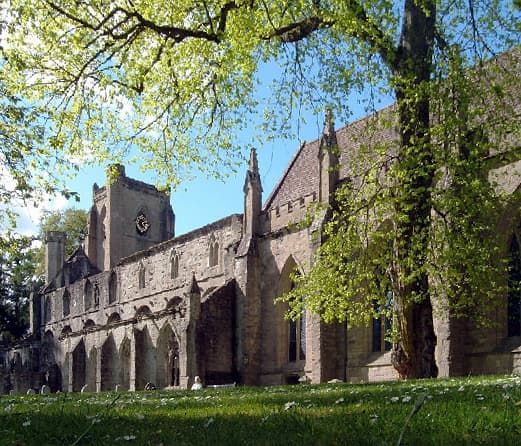
Dunkeld Monastery
Dunkeld Monastery, originally a Culdee monastery, evolved into Dunkeld Cathedral, a significant religious site on the north bank of the River Tay in Scotland. Its construction began in 1260 and concluded in 1501, showcasing a blend of Gothic and Norman architectural styles. Although partly in ruins, the cathedral remains an active Church of Scotland parish church and is open to the public, housing relics and notable burials.
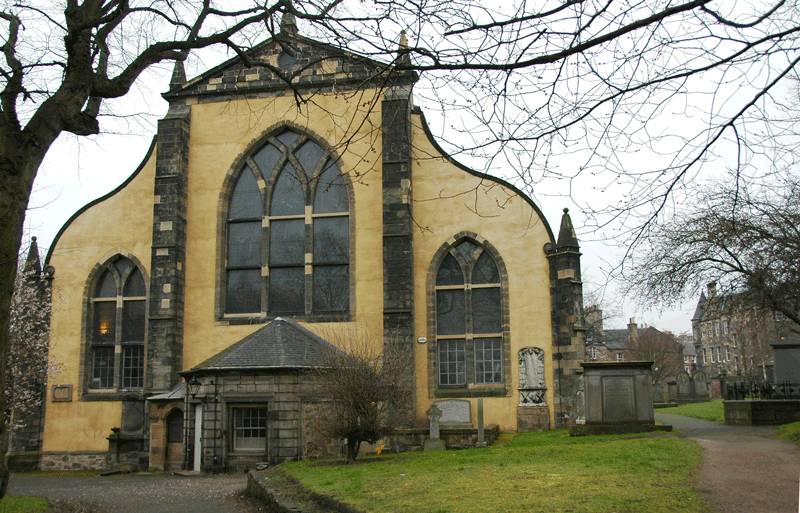
Edinburgh Greyfriars
Greyfriars Kirk, located in Edinburgh's Old Town, originated from the 1598 founding of the south-west parish of Edinburgh, though its name derives from the 15th-century Franciscan friary that once occupied the site. Constructed between 1602 and 1620, the church has been a pivotal site for significant historical events, including the signing of the National Covenant in 1638 and occupation by Oliver Cromwell's troops. Over centuries, it has undergone multiple reconstructions and partitions to accommodate changing congregations, notably after a fire in 1845 and the union of Old and New Greyfriars in 1929.
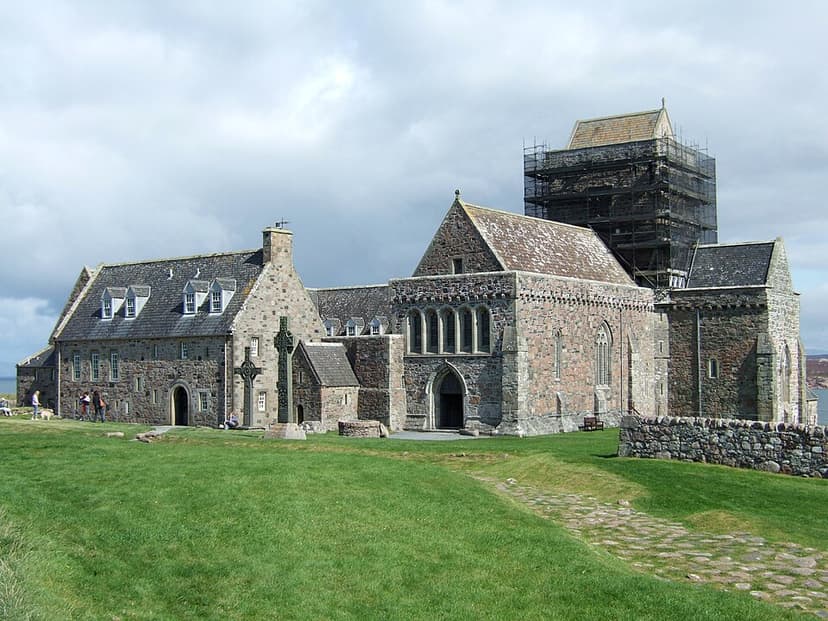
Iona Abbey
Iona Abbey is one of the oldest Christian centers in Western Europe, established on the island of Iona off the west coast of Scotland. Founded by Saint Columba in 563, it served as a crucial hub for the spread of Christianity throughout Scotland. After periods of Viking raids and rebuilding, it became a Benedictine abbey and later the ecclesiastical capital for the Macdonald Lords of the Isles. Today, it is the spiritual home of the Iona Community, an ecumenical Christian order, and remains a significant site for Christian pilgrimage.