
Edinburgh Greyfriars
Greyfriars Kirk, located in Edinburgh's Old Town, originated from the 1598 founding of the south-west parish of Edinburgh, though its name derives from the 15th-century Franciscan friary that once occupied the site. Constructed between 1602 and 1620, the church has been a pivotal site for significant historical events, including the signing of the National Covenant in 1638 and occupation by Oliver Cromwell's troops. Over centuries, it has undergone multiple reconstructions and partitions to accommodate changing congregations, notably after a fire in 1845 and the union of Old and New Greyfriars in 1929.
Key Facts
- ›The site was originally granted to Franciscan friars in the MID-15th century.
- ›The current church was constructed between 1602 and 1620 on the grounds of the former friary.
- ›The National Covenant was first signed within Greyfriars Kirk in 1638.
- ›The church was damaged during Oliver Cromwell's occupation and later partitioned into two congregations.
- ›A significant fire in 1845 led to extensive reconstruction and liturgical innovations.
- ›Greyfriars Kirk continues to hold weekly Gaelic services, maintaining a long-standing tradition.
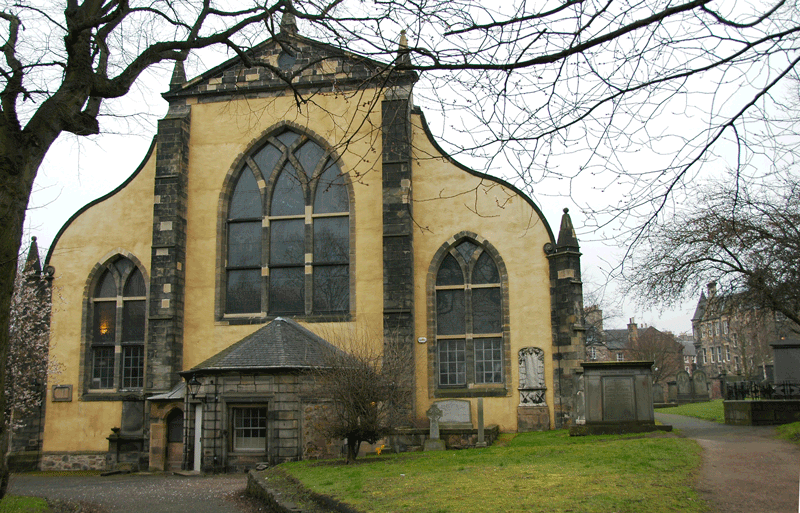
Survival Gothic, Baroque
- Historic Stained Glass Windows By James Ballantine
- 17th Century Monument To Margaret, Lady Yester
- Original Copy of the National Covenant of 1638
- Greyfriars Charteris Centre
Eaglais Nam Manach Liath
Cornelius of Zierikzee, James I of Scotland, Mary of Guelders, Henry Vi of England, James Iv of Scotland, John Patrick, Mary, Queen of Scots, Robert Rollock, Peter Hewat, William Couper, John Spottiswoode, Patrick Galloway, James Vi of Scotland, Charles I of England, William Laud, James Fairlie, Andrew Ramsay, Archibald Johnston of Warriston, Oliver Cromwell, General Monck, Robert Traill, William Ii of England, William Carstares, Alexander Mcgill, William Robertson, Thomas Guthrie, John Sym, Hugh Miller, David Cousin, Robert Lee, Henry F. Kerr
- Arrival of Franciscan Friars In Scotland
- Granting of Land For A Friary
- Ransacking of the Friary During the Scottish Reformation
- Departure of Franciscan Friars From Scotland
- Grounds of the Friary Repurposed As A Burial Ground
- Town Council Edict To Divide Edinburgh Into Four Parishes, Leading To the Formation of the South-West Parish
- Construction of the Church Commences
- First Use of the Kirk For A Funeral
- Congregational Worship First Held
- Attempted Imposition of A Service Book, Leading To Tumult
- Signing of the National Covenant
- Occupation By Oliver Cromwell's Troops
- General Monck's Announcement of His March South
- Explosion Destroying the Church Tower
- Partition of the Church To Hold Two Congregations
- Disruption of 1843, With Minister John Sym Leaving For the Free Church
- Fire Gutting Old Greyfriars
- Introduction of Liturgical Innovations By Robert Lee
- Union of Old and New Greyfriars Congregations
- Restoration of the Church Interior and Arcades
- Union With Highland, Tolbooth, St John's Kirk
- Development of A Church Museum
- Union With Kirk O' Field Parish Church
About Edinburgh Greyfriars
Greyfriars Kirk
Greyfriars Kirk is a historic parish church of the Church of Scotland situated in the Old Town of Edinburgh, Scotland, and is notable for its significant role in the nation's religious and political history. The church's origins are tied to the 15th-century Franciscan friary that occupied its site, from which it derives its name. Following the Scottish Reformation, the friary's grounds were repurposed as a cemetery, and the current church was constructed between 1602 and 1620.
Historical Significance
The Kirk has been the stage for pivotal moments in Scottish history. In 1638, it was the site where the National Covenant, a declaration against religious innovations, was first signed by Scottish nobility and gentry. During the Protectorate, the church was occupied by Oliver Cromwell's troops and used as barracks, suffering damage. Over the centuries, it has undergone numerous alterations and reconstructions, including a devastating fire in 1845, after which its minister, Robert Lee, introduced significant liturgical reforms that influenced Presbyterianism.
Architectural Development and Current Status
Architecturally, Greyfriars Kirk is characterized by a blend of 'Survival Gothic' and Baroque elements. Originally a single structure, it was later divided to accommodate two congregations, Old Greyfriars and New Greyfriars, following repairs after a tower explosion in 1718. These congregations eventually reunited in 1929, and further mergers with neighbouring congregations have occurred since. The church remains an active place of worship, maintaining traditions such as weekly Gaelic services, and its grounds are a significant historical kirkyard.
Source: Wikipedia ↗
Frequently Asked Questions
What is the origin of Greyfriars Kirk?
Greyfriars Kirk traces its origins to the south-west parish of Edinburgh, established in 1598. However, its name comes from the Grey Friars, Franciscan monks who were granted land for a friary on the site in the mid-15th century.
What historical events took place at Greyfriars Kirk?
A significant event was the first signing of the National Covenant within the Kirk in 1638, a pivotal moment in Scottish history. The church also served as barracks for Oliver Cromwell's troops and underwent extensive reconstruction after a major fire in 1845.
How has Greyfriars Kirk evolved over time?
After the Reformation, the friary grounds became a cemetery, and the church was built there. It has been damaged, reconstructed, and divided into two congregations (Old and New Greyfriars) before eventually being restored as a single sanctuary in 1929. It has also seen mergers with neighbouring congregations.
What is the architectural style of Greyfriars Kirk?
The church's architecture is described as 'Survival Gothic' fused with Baroque elements. It features an eight-bay nave, with later additions including a Palladian north porch and internal restorations.
Does Greyfriars Kirk still hold services today?
Yes, Greyfriars Kirk is an active parish church of the Church of Scotland. It continues to hold weekly services, including a tradition of Gaelic worship.
Related Monasteries

Kaltern Friary
Kaltern Friary is a Franciscan religious house located in the center of Kaltern, South Tyrol, Italy. Its establishment in the mid-17th century was part of a broader expansion of Franciscan foundations, supported by local authorities and the Tyrolean regent Claudia de' Medici. The friary has undergone several renovations and changes in patronage throughout its history, and in recent decades has introduced new spiritual programs.

Bârnova Monastery
Bârnova Monastery is a Romanian Orthodox monastery located in Bârnova, within the Iași metropolitan area of Moldavia, Romania. It was established in 1628 by Miron Barnovschi-Movilă, a Moldavian Voivode, and is recognized on the National Register of Historic Monuments. The monastery's courtyard hosts the oldest tree in Iași County, a 675-year-old hybrid lime tree, predating the first mention of Iași as an urban settlement.

Căldărușani Monastery
Căldărușani Monastery is a Romanian Orthodox monastery founded in 1638 by Wallachian ruler Matei Basarab. Situated by Căldărușani Lake in Gruiu, Ilfov County, Romania, it is recognized as a historic monument and has been a vital center for Orthodox spirituality and Romanian culture. The monastery is known for its significant art collection, scriptorium, and its role in developing the Romanian literary language, attracting prominent figures like painter Nicolae Grigorescu.