
Kaltern Friary
Kaltern Friary is a Franciscan religious house located in the center of Kaltern, South Tyrol, Italy. Its establishment in the mid-17th century was part of a broader expansion of Franciscan foundations, supported by local authorities and the Tyrolean regent Claudia de' Medici. The friary has undergone several renovations and changes in patronage throughout its history, and in recent decades has introduced new spiritual programs.
Key Facts
- ›Founded in 1638 with land provided by Claudia de' Medici.
- ›Built on the site of the former 'Schloss Rottenburg'.
- ›The friary church was dedicated to Saint Claudia but later became associated with Saint Anthony of Padua.
- ›Temporarily closed and auctioned off in 1810, but repurchased and returned to the Franciscans.
- ›Once housed a theology college for up to seven students.
- ›Introduced new spiritual offerings under 'Project Tau' in 1993.

Former 'Schloss Rottenburg' Site, Church Dedicated To Saint Anthony of Padua
Claudia De' Medici, Sigismund Greiff, Christoff Greiff
- Establishment of A Franciscan Friary In Kaltern
- Closure and Auction of the Friary
- Repurchase and Return To Franciscans
- Introduction of 'Project Tau'
About Kaltern Friary
Kaltern Friary is a Franciscan religious community situated in the heart of Kaltern, a town in the South Tyrol region of Italy, also known as Kaltern an der Weinstraße.
History and Establishment
The origins of Kaltern Friary trace back to the mid-17th century. While the first Franciscan friary in the broader area was founded in Bolzano in 1221, the establishment in Kaltern was part of a second wave of Franciscan foundations, influenced by reforms in the 15th century. In 1638, two local brothers, Sigismund and Christoff Greiff, proposed the creation of a friary in Kaltern. Their initiative gained support from the local council and notably from Claudia de' Medici, the Tyrolean regent, who provided the ruined site of "Schloss Rottenburg" for the new foundation. Due to cost considerations, a plan to restore the castle was abandoned, and the ruins were demolished in 1640. Construction of the new friary commenced with a foundation stone laid on March 27, 1640, and the accommodation buildings were erected that same year, with significant labor contributed by the local townsfolk. The friary church was subsequently built between 1642 and 1643 and was initially dedicated to Saint Claudia.
Development and Changes
Over the centuries, the friary church became increasingly recognized for its association with Saint Anthony of Padua, particularly due to a revered image of the saint. This growing devotion led to the church's extension to its current size at the beginning of the 18th century. A significant disruption occurred in 1810 when, under the Kingdom of Italy, the friary was closed and its property auctioned. However, a group of twenty local citizens purchased the friary and, following a change in governance in 1814, returned it to the Franciscans. The friary experienced a period of flourishing throughout the remainder of the 19th century, at one point hosting 23 friars and operating an on-site theology college that accommodated up to seven students. The 20th century saw the friary undergo several renovations. In 1974, the formal patronage of the church was officially transferred from Saint Claudia to Saint Anthony of Padua. Since 1993, Kaltern Friary has also been offering new spiritual experiences through "Project Tau."
Source: Wikipedia ↗
Frequently Asked Questions
When was Kaltern Friary founded?
The proposal for the friary was made in 1638, and the new foundation stone was laid on March 27, 1640. The accommodation section was built that same year, and the church was added in 1642-1643.
What is the religious order of Kaltern Friary?
Kaltern Friary belongs to the Franciscan order. The first Franciscan friary in the region was established in Bolzano in 1221, and the Kaltern foundation was part of a later wave of Franciscan expansion.
Who supported the establishment of Kaltern Friary?
The friary was proposed by local brothers Sigismund and Christoff Greiff and secured the agreement of the local council. The Tyrolean regent Claudia de' Medici was a keen supporter and provided the site for the new foundation.
Has the church at Kaltern Friary always been dedicated to Saint Anthony of Padua?
Initially, the friary church was dedicated to Saint Claudia. However, over time, it became increasingly associated with Saint Anthony of Padua due to a picture near the altar that attracted pilgrims. The patronage was formally transferred to Saint Anthony in 1974.
What happened to the friary in the early 19th century?
In 1810, during the period when the region was part of the Kingdom of Italy, the friary was closed and its premises were auctioned. Twenty local citizens purchased it and later returned it to the Franciscans after a change in regime.
Are there any special programs at Kaltern Friary?
Yes, since 1993, new forms of spirituality have been offered at the friary under the initiative known as 'Project Tau'.
Related Monasteries
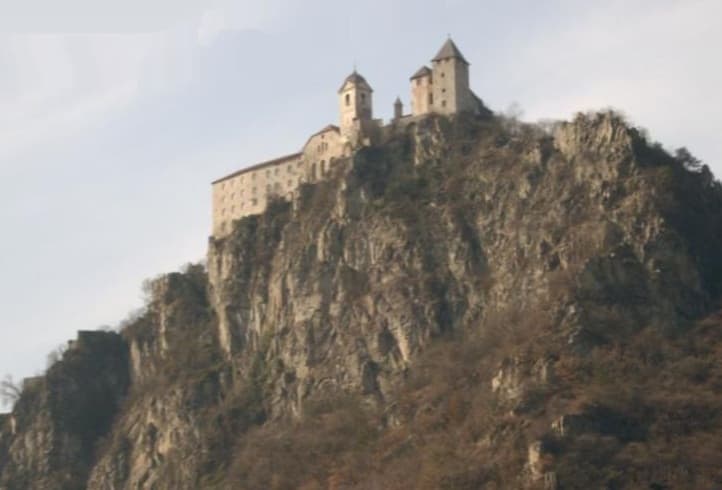
Säben Abbey
Säben Abbey was a Benedictine nunnery located near Klausen in South Tyrol, northern Italy, operational from 1687 until 2021. Situated on a historically significant hill known as the 'holy mountain,' the site previously hosted a bishopric from the 6th century to around 960 and later served as a fortress. The modern abbey was established by nuns from Nonnberg Abbey and adopted the Beuronese mode of life, eventually being formally accepted into the Benedictine Confederation in 1974.

Farneta Charterhouse
Farneta Charterhouse, also known as Certosa di Santo Spirito di Farneta or Certosa di Maggiano, is a Carthusian monastery located north of Lucca, Tuscany, Italy. Founded in the early 14th century, it gained tragic notoriety in September 1944 when Nazi troops massacred twelve of its monks and lay brothers, along with thirty-two partisans and Jews they were sheltering. Despite this devastating event, the monastery has a history of artistic contributions and continued monastic life, though it remains a site of remembrance for the wartime atrocities.

Florence Charterhouse
Florence Charterhouse, also known as Certosa di Firenze or Certosa del Galluzzo, is a historic Carthusian monastery situated in Galluzzo, a suburb of Florence, Italy. Founded in 1341 by Niccolò Acciaioli, it was intended to house a school of theology and philosophy and has since undergone continuous expansion. The monastery is now home to Cistercian monks and preserves significant artworks, including lunettes by Pontormo, and serves as a center for medieval Latin culture studies.