
Dunkeld Monastery
Church of Scotland·Scotland·Active parish church, partly in ruins, museum·6th or 7th century
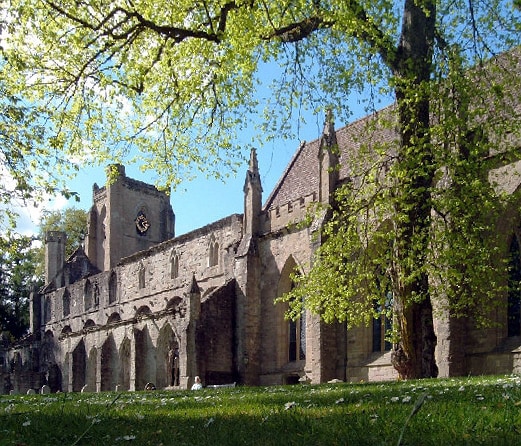
Dunkeld Monastery, originally a Culdee monastery, evolved into Dunkeld Cathedral, a significant religious site on the north bank of the River Tay in Scotland. Its construction began in 1260 and concluded in 1501, showcasing a blend of Gothic and Norman architectural styles. Although partly in ruins, the cathedral remains an active Church of Scotland parish church and is open to the public, housing relics and notable burials.
Key Facts
- ›The site was originally a Culdee Monastery dating from the sixth or early seventh century.
- ›The current cathedral construction began in 1260 and was completed in 1501.
- ›It exhibits a MIX of Gothic and Norman architectural elements due to its long construction period.
- ›Relics of Saint Columba were historically housed here until the Reformation.
- ›Dunkeld Cathedral is still in regular use as a Church of Scotland parish church.
- ›Notable figures, including Alexander Stewart, Earl of Buchan, are buried within the cathedral.
Gothic, Norman
Site of Former Culdee Monastery, Relics of Saint Columba, Chapter House Museum, Tomb of Alexander Stewart, Earl of Buchan
Culdee Monastery of Dunkeld
Saint Columba, CausantíN Mac Fergusa, Alexander Stewart, Earl of Buchan, John Scotus, Geoffrey De Liberatione, Richard De Inverkeithing, William Sinclair, Michael De Monymusk, 1st Earl of Atholl, Robert Cockburn, Charles Edward Stuart, Count Roehenstart
- Foundation of the Original Monastery
- Construction of A More Substantial Cathedral In the 9th Century
- Removal of Saint Columba's Relics To Ireland At the Reformation
- Battle of Dunkeld
About Dunkeld Monastery
Dunkeld Monastery, established on the north bank of the River Tay in Dunkeld, Scotland, has a history stretching back to the sixth or early seventh century. Initially a simple collection of wattle huts founded after an expedition by Saint Columba, it evolved into a significant religious center. During the ninth century, Causantín mac Fergusa oversaw the construction of a more substantial cathedral and declared Dunkeld the primacy of the faith in Alba. The site is now recognized as Dunkeld Cathedral.
History and Architecture
The current cathedral structure, built in a square-stone style with predominantly grey sandstone, began in 1260 and was completed in 1501. This extended construction period has resulted in a fascinating blend of architectural styles, with both Gothic and Norman elements incorporated throughout the building. Although parts of the cathedral are in ruins, it remains a place of worship and is open to the public. Historically, relics of Saint Columba were housed at Dunkeld until the Reformation, when they were moved to Ireland; there is speculation that some relics may still be undiscovered within the cathedral grounds.
Present Day Significance
Dunkeld Cathedral continues to serve as the Church of Scotland parish church for the town, holding services each Sunday, though a smaller church is used during winter. The cathedral is a Crown property managed by Historic Environment Scotland and is a scheduled monument. A small Chapter House Museum on-site offers visitors a collection of relics from monastic and medieval times, alongside exhibits on local history. The cathedral also holds the tombs of several notable figures, including Alexander Stewart, Earl of Buchan, known as "the Wolf of Badenoch."
Source: Wikipedia ↗
Frequently Asked Questions
What is the history of Dunkeld Monastery?
The original monastery at Dunkeld dates back to the sixth or early seventh century, founded after an expedition by Saint Columba. It was a simple collection of wattle huts before a more substantial cathedral was constructed in the ninth century. The current cathedral structure was built between 1260 and 1501 on the site of the former monastery.
What is the architectural style of Dunkeld Cathedral?
Due to its long construction period, Dunkeld Cathedral features mixed architecture, with Gothic and Norman elements intermingled throughout the structure. The main construction utilized square-stone style, predominantly in grey sandstone.
Is Dunkeld Cathedral still an active religious site?
Yes, Dunkeld Cathedral is still used as the town's Church of Scotland parish church, with services held every Sunday. However, the congregation uses the smaller 'Little Dunkeld' Church during the winter months.
What historical relics are associated with Dunkeld Monastery?
Relics of Saint Columba, including his bones, were said to have been kept at Dunkeld until the Reformation, after which they were moved to Ireland. Some believe there may still be undiscovered Columban relics buried within the cathedral grounds.
Who is buried at Dunkeld Cathedral?
Several notable individuals are buried at Dunkeld Cathedral, including Alexander Stewart, Earl of Buchan (known as "the Wolf of Badenoch"), whose tomb with an armoured effigy is still visible. Other burials include various Bishops of Dunkeld and Charles Edward Stuart.
Is Dunkeld Cathedral open to the public?
Yes, although partly in ruins, Dunkeld Cathedral is in regular use today and is open to the public for visits.
Related Monasteries

Paisley Abbey
Paisley Abbey, originally founded as a Cluniac priory in 1163, is a significant Gothic church in Scotland that has served as a parish church for the Church of Scotland since the Reformation. The abbey church stands on a site believed to have been founded by Saint Mirin in the 7th century, and its current Gothic building largely dates from the 14th and 19th centuries. It holds considerable historical importance as the burial place of several High Stewards of Scotland and members of the royal family, and is known for its architectural features and the unique Paisley Abbey Drain.

Holy Virgin Mary Coptic Orthodox Monastery
The Holy Virgin Mary Coptic Orthodox Monastery, also known as Deir el-Muharraq or the Muharraq Monastery, is a significant monastic complex of the Coptic Orthodox Church located in Asyut Governorate, Upper Egypt. Its history is deeply intertwined with early Christian traditions in Egypt, featuring ancient structures like a 6th or 7th-century fortress and the Church of al-Adhra, which is believed to be built over a cave where Mary and Jesus may have stayed. The monastery houses an active community of monks and preserves important manuscript collections.

Mozac Abbey
Mozac Abbey, located in Auvergne, France, was founded in the 6th or 7th century and later became affiliated with the Cluniac Order in 1095. Despite significant damage from earthquakes in the late 15th century, the abbey church, which now serves as the local parish church, retains notable Romanesque architectural elements, particularly its sculpted capitals. The abbey was dissolved during the French Revolution in 1790, and its collection of relics, including those of Saint Austremonius, are still preserved.